

A short request such as “send your best price” rarely produces a useful cabin fishing boat quotation. The supplier still needs to understand the target market, model direction, power package, equipment, quantity, destination and inspection requirements.
This checklist helps dealers, importers and fleet operators prepare a request for quotation that can be compared across suppliers. It focuses on decisions that affect project fit and quotation clarity; final specifications and terms must still be confirmed in writing.
The eight inputs to include in your RFQ
| RFQ section | Minimum information to provide | What it helps clarify |
|---|---|---|
| Buyer and market | Company, buyer type, country and intended customer | Market fit and commercial context |
| Application | Coastal fishing, charter, family use or fleet role | Deck, cabin and equipment priorities |
| Model direction | Compact, core or larger platform | Size, power and configuration scope |
| Quantity and timing | Trial order, annual estimate or fleet phase | Production and shipment planning |
| Power and controls | Engine direction, steering and local supply responsibilities | Package inclusions and interfaces |
| Fishing and cabin equipment | Rod storage, seating, flooring, lighting and comfort needs | Standard versus optional equipment |
| Inspection and documents | Required checks, records and destination questions | Handover and verification scope |
| Shipping and trailer | Destination, delivery boundary and trailer requirement | Logistics scope and responsibilities |
The goal is not to answer every engineering question before contacting a supplier. It is to make the first discussion specific enough to identify the right platform and the missing decisions.
1. Describe the buyer, market and sales role
State whether you are a dealer, importer, charter operator, rental fleet or project buyer. Name the target market and explain how the boat will be sold or operated.
For a dealer, include the expected buyer profile and price position. For an operator, include route, water, trip duration, crew workflow and typical load. These details help prevent a cabin layout from being evaluated without its commercial context.
2. Shortlist the platform before discussing options
Kinocean’s current Cabin Fishing Boat page presents three enclosed-cabin aluminum directions:
| Model shown | Listed capacity | Listed power direction | Useful first comparison |
|---|---|---|---|
| CB-186 | 6 people | 90–200 HP | Compact cabin platform; 5733 mm overall length |
| CB-220 | 6 people | Up to 300 HP | Core 22 ft 2 in platform with walk-through cabin access |
| CB-270 | 6 people | Twin 225 HP minimum direction | Larger project platform with a 2.6 m beam |
These are page references for initial model selection, not a final offer. Confirm the current specification, capacity, engine package and equipment for the exact unit and destination.
If you are unsure which platform fits, explain the intended market and operating profile first. A supplier can then identify what still needs to be compared without forcing the buyer into an early option list.
3. Define power, steering and package responsibility
State whether the engine will be supplied with the boat or sourced locally. Ask the quotation to separate hull, engine, controls, steering, installation and commissioning responsibilities.
Your RFQ should include:
- preferred single- or twin-engine direction, if already known;
- expected speed or load requirements without inventing an unverified performance guarantee;
- local engine brand or service constraints;
- steering and control expectations;
- who supplies batteries, electronics and other interface equipment;
- which tests or commissioning steps are included.
Final power selection depends on the confirmed model, load, operation and applicable local requirements.
4. Map deck workflow and fishing equipment
The deck should support how crew and customers move, store gear and handle catch. Ask where rod holders, storage, working space, seating and access points are located.
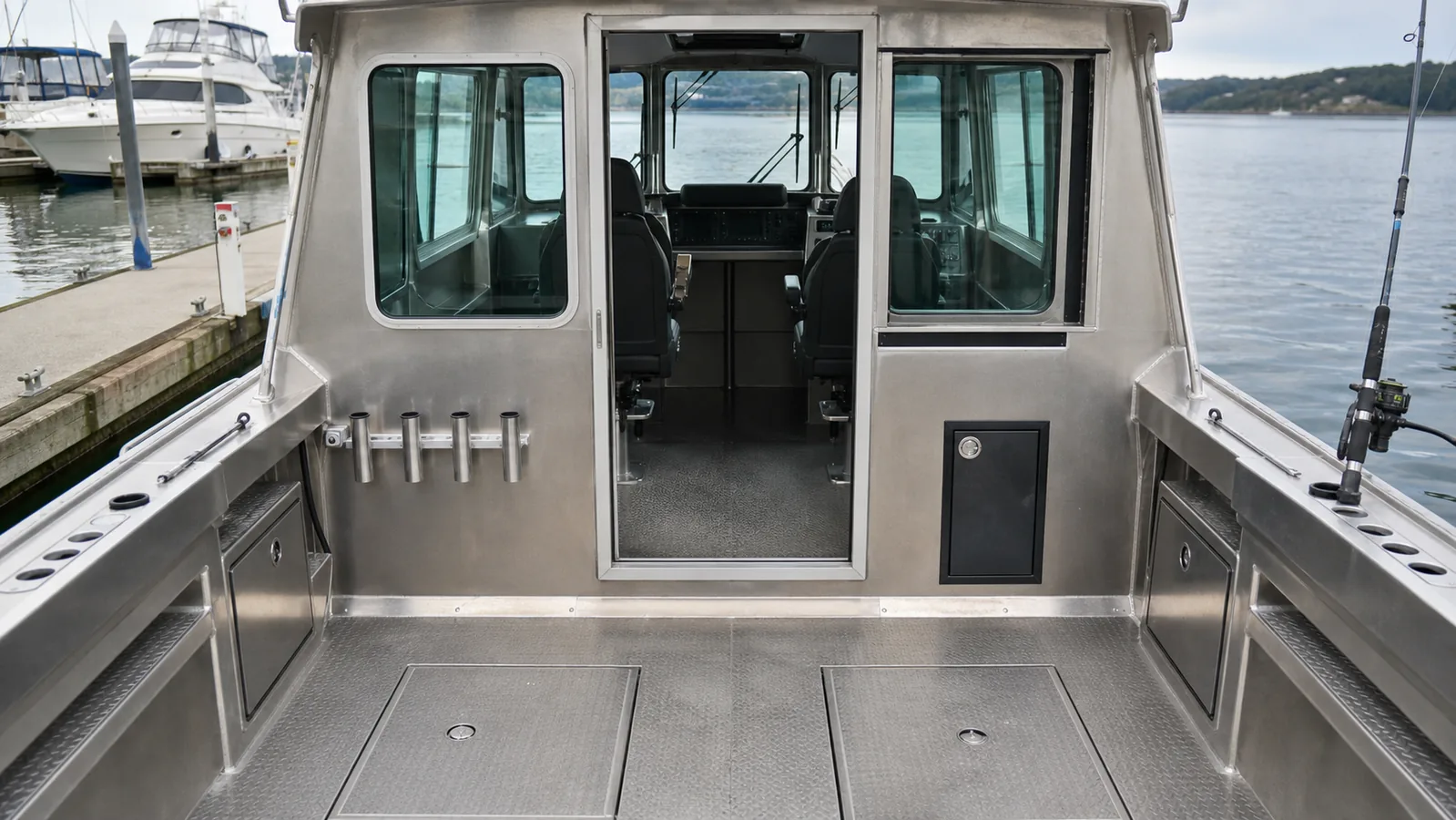
Separate essential equipment from optional equipment. This makes it easier to create a repeatable dealer package and prevents the first quotation from becoming overloaded with low-priority accessories.
5. Define cabin and comfort priorities
Cabin buyers may prioritize weather protection, visibility, seating, toilet options, lighting, heating or cooling interfaces, storage and noise control differently. State which needs are essential for the target market.
For each item, ask whether it is standard, optional or unavailable on the selected model. The current Kinocean page shows different equipment directions by model, including walk-through access, suspension-style seating, flooring, lighting, toilet, refrigerator and other model-specific options. Do not assume one model’s option applies to another.
6. State quantity, rollout and dealer standardization
Include the expected first-order quantity and whether it is a trial, a phased fleet order or part of an annual dealer program. If future units are expected, identify which configuration elements should remain standardized.
Standardization can make quotations, marketing, spare-parts planning and after-sales communication easier. Customization should solve a market requirement, not create variation without a commercial reason.
7. Define inspection, documents and compliance questions
List the checks and documents needed before shipment. Depending on the project, the discussion may include configuration records, equipment schedules, inspection photos, manuals and destination-market questions.
Registration, safety, passenger, equipment and commercial-operation rules vary by jurisdiction. Buyers should verify the applicable obligations with the relevant local authority or a qualified marine professional. A supplier quotation should not be treated as regulatory approval.
8. Clarify trailer, shipping and delivery boundary
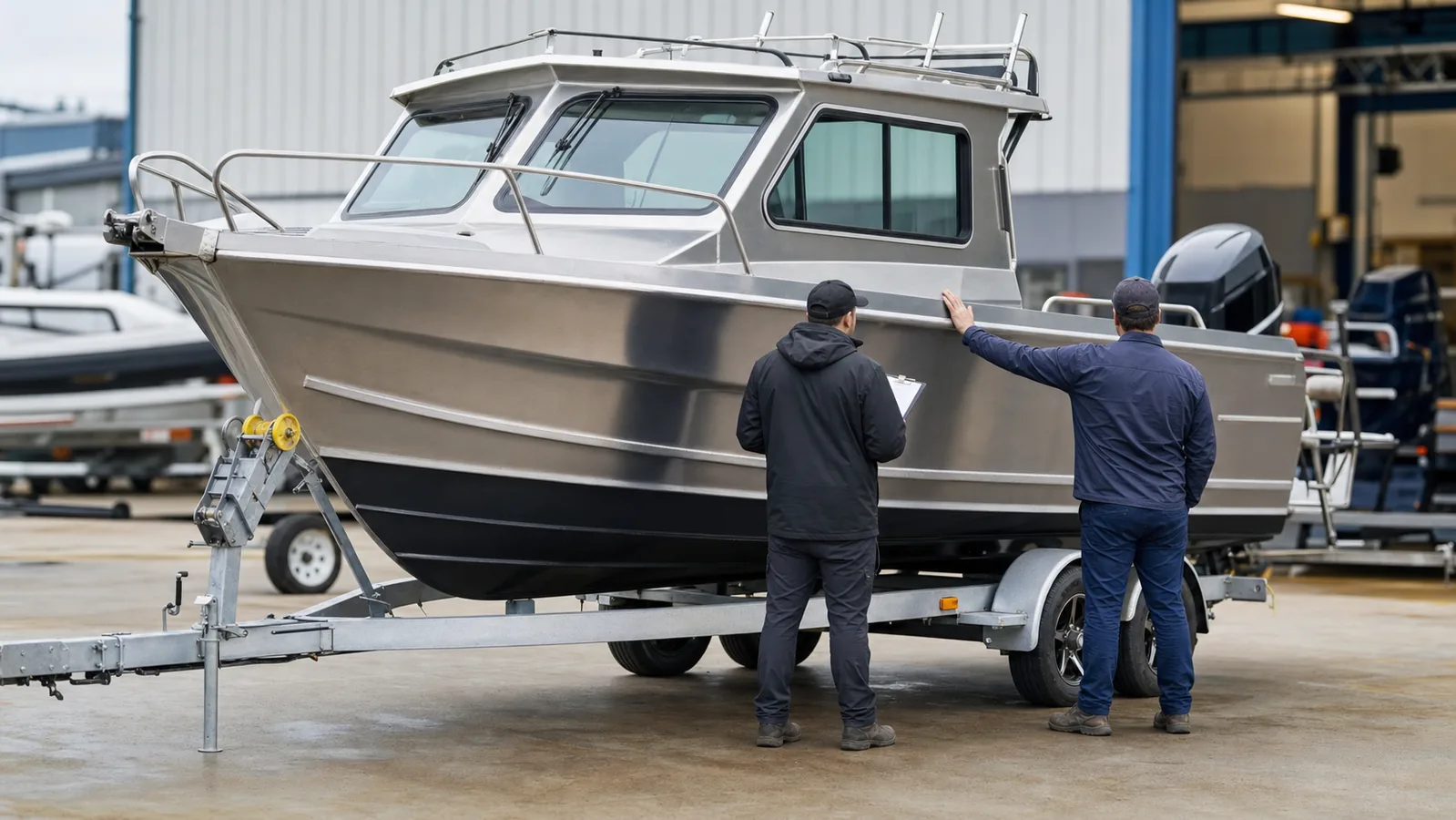
Provide the destination port or delivery location and state whether a trailer is required. Ask the supplier to define the shipment method, packing or preparation scope, delivery boundary and excluded destination costs.
Also identify who is responsible for import procedures, inland transport, unloading, local assembly and commissioning. A complete comparison should show both included and excluded responsibilities.
A copy-ready cabin fishing boat RFQ checklist
Send the following information in your first inquiry:
- Company and buyer type: dealer, importer, charter, fleet or project buyer.
- Target market: country or region and expected end user.
- Application: fishing, charter, family boating or mixed commercial use.
- Model direction: CB-186, CB-220, CB-270 or “supplier to recommend.”
- Quantity: first order and expected follow-on volume.
- Operating profile: water, route, load, daily use and storage.
- Power package: engine supply, steering, controls and local service constraints.
- Deck and cabin priorities: fishing gear, seating, flooring, lighting, toilet or other essentials.
- Branding and finish: color, dealer branding and standardization needs.
- Inspection and documents: required checks, records and destination questions.
- Logistics: trailer, destination and requested delivery boundary.
- Timing: target operational date, subject to supplier confirmation.
Compare quotations on the same scope
Create a comparison sheet with four columns: confirmed included, optional, buyer-supplied and not yet answered. Do not compare only the total price. Compare the selected platform, equipment, engine responsibility, inspection, documents, trailer and delivery boundary.
Buyers still comparing open and enclosed platforms can review the main aluminum fishing boat range. For a broader supplier due-diligence process, use the center-console supplier checklist without duplicating its general factory-evaluation role.
Ready to discuss a dealer or fleet quotation?
Send Kinocean your target market, preferred model direction, quantity, operating use, equipment priorities and destination through the project quote form. A complete RFQ helps the next response focus on confirmed scope, gaps and suitable options.
Final specifications, capacity, equipment, commercial terms and suitability must be confirmed for the selected project and destination. This checklist is procurement guidance, not a fixed offer or regulatory approval.
Share this article
Have a boat project in mind?
Share your market, quantity plan and boat use. Kinocean can help narrow the model direction before you request a detailed quote.