

A double-decker pontoon boat price cannot be compared responsibly from one headline number. The final quotation depends on the platform, passenger target, route, equipment, destination and documentation required for the project.
For a resort, rental fleet or sightseeing operator, the better question is: which inputs must be fixed before suppliers can quote the same scope? This guide explains nine cost drivers and gives buyers a practical request-for-quotation checklist. It does not publish a fixed price because a generic number can hide important differences in configuration and delivery scope.
Quick view: what changes a double-decker pontoon boat quote?
| Quote input | What the buyer should define | Why it affects the quotation |
|---|---|---|
| Platform | Preferred size and passenger target | Changes hull, deck and layout scope |
| Operating route | Water, trip length, docking and storage | Guides configuration and operating fit |
| Guest layout | Seating, stairs, shade and circulation | Changes deck planning and furniture |
| Power and control | Engine, steering and buyer-supplied items | Changes package scope and interfaces |
| Onboard facilities | Changing room, wash room, bar table or lighting | Adds systems, space and installation work |
| Finish and branding | Color, fence, upholstery and OEM/ODM details | Changes materials and production preparation |
| Quantity | Trial order, dealer program or fleet phase | Affects production and shipment planning |
| Destination | Port, inland delivery and trailer needs | Changes logistics scope |
| Documents and inspection | Required drawings, tests and destination-market documents | Changes verification and handover work |
Use the same completed scope sheet for every supplier. Otherwise, a lower quotation may simply exclude equipment or services that another supplier included.
1. Model size and passenger target
Start with the commercial use case and the passenger target. Kinocean currently presents two directions on its Double Decker Series page:
| Platform shown | Listed size | Listed capacity | Typical positioning shown on the page |
|---|---|---|---|
| 25ft Double Decker | 7600 × 2475 × 2600 mm | 12 passengers | Resorts, rentals and lower-capacity sightseeing routes |
| 30ft Double Decker | 9600 × 3000 × 3600 mm | 20 passengers | Tourism fleets and larger project buyers |
These references help narrow the first discussion; final dimensions, passenger arrangement and suitability must be confirmed for the selected project and destination. A buyer should not select a platform from capacity alone. Dock space, storage, route conditions, passenger rules and operating workflow still matter.
2. Route, water and operating schedule
Describe where and how the boat will operate. Include sheltered or exposed water, typical trip duration, daily cycles, docking frequency, seasonal use and storage method.
This information helps the supplier understand the project context. It also prevents an attractive leisure layout from being discussed without enough attention to boarding, turnaround, crew access and local operating obligations.
3. Guest layout, upper deck and stairs
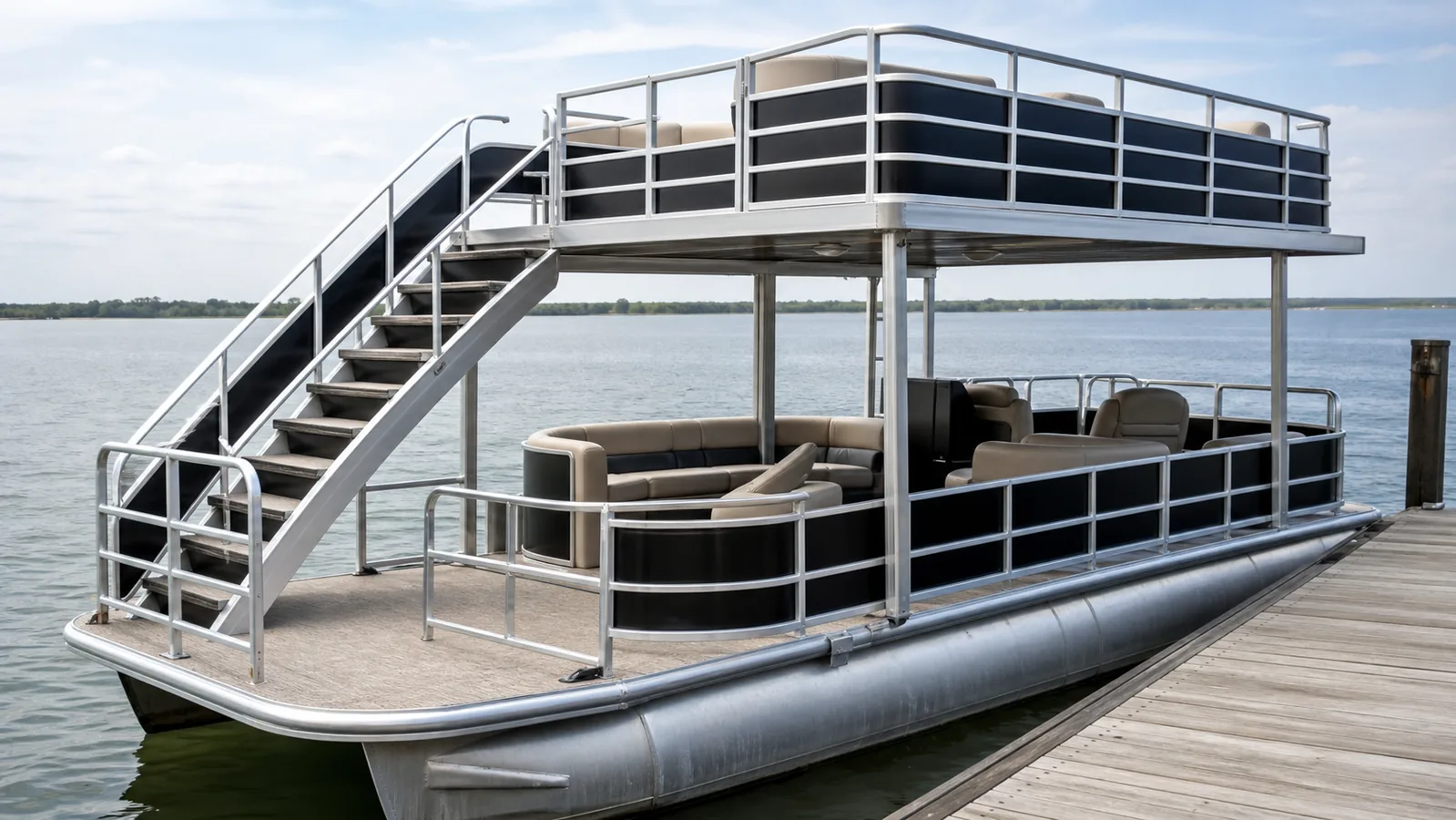
The upper deck is the main reason many tourism buyers evaluate this boat type, but it also creates layout decisions. Define how guests board, where they wait, how they move between decks and which areas must remain clear for crew.
Clarify:
- lower- and upper-deck seating priorities;
- stair position and circulation space;
- shade coverage and weather exposure;
- storage for guest and crew items;
- expected boarding direction at the dock;
- whether bar-table or lounge areas are required.
4. Engine, steering and control package
A quotation must state what is included, optional or buyer-supplied. Confirm the intended engine direction, steering requirement, controls, gauges and installation responsibility. Do not compare a hull-only price with a complete operating package.
If the buyer plans to source an engine locally, ask the supplier to confirm the required interfaces and which commissioning responsibilities remain with each party. Final power selection must follow the confirmed model, load, operating conditions and applicable rules.
5. Comfort and onboard facilities
Kinocean’s current product page lists discussion options such as a changing room, wash room, bar table, lighting and model-specific furniture. These items should be selected from the guest experience and route plan, not added as an unprioritized wish list.
For each facility, record:
- who uses it;
- how often it is used;
- where it fits without blocking circulation;
- what cleaning or maintenance it requires;
- whether it is essential for the first order or a later fleet phase.
6. Safety, compliance and destination requirements
Passenger, equipment, inspection and licensing requirements vary by location. Tell the supplier the destination market and intended operation, then verify obligations with the relevant local authority or qualified marine professional.
Ask which drawings, equipment schedules and production records can be provided for the quoted scope. Do not assume that a product description or capacity label alone proves approval for a commercial route.
7. Finish, furniture and branding
Color, fence style, upholstery, seating and OEM/ODM details can change material selection and production preparation. Provide brand colors and artwork in an agreed format, but keep functional decisions ahead of cosmetic ones.
For a dealer program, decide which elements should remain standard across the range. A repeatable package is usually easier to sell, document and service than a different configuration for every unit.
8. Trailer, shipment and destination handling
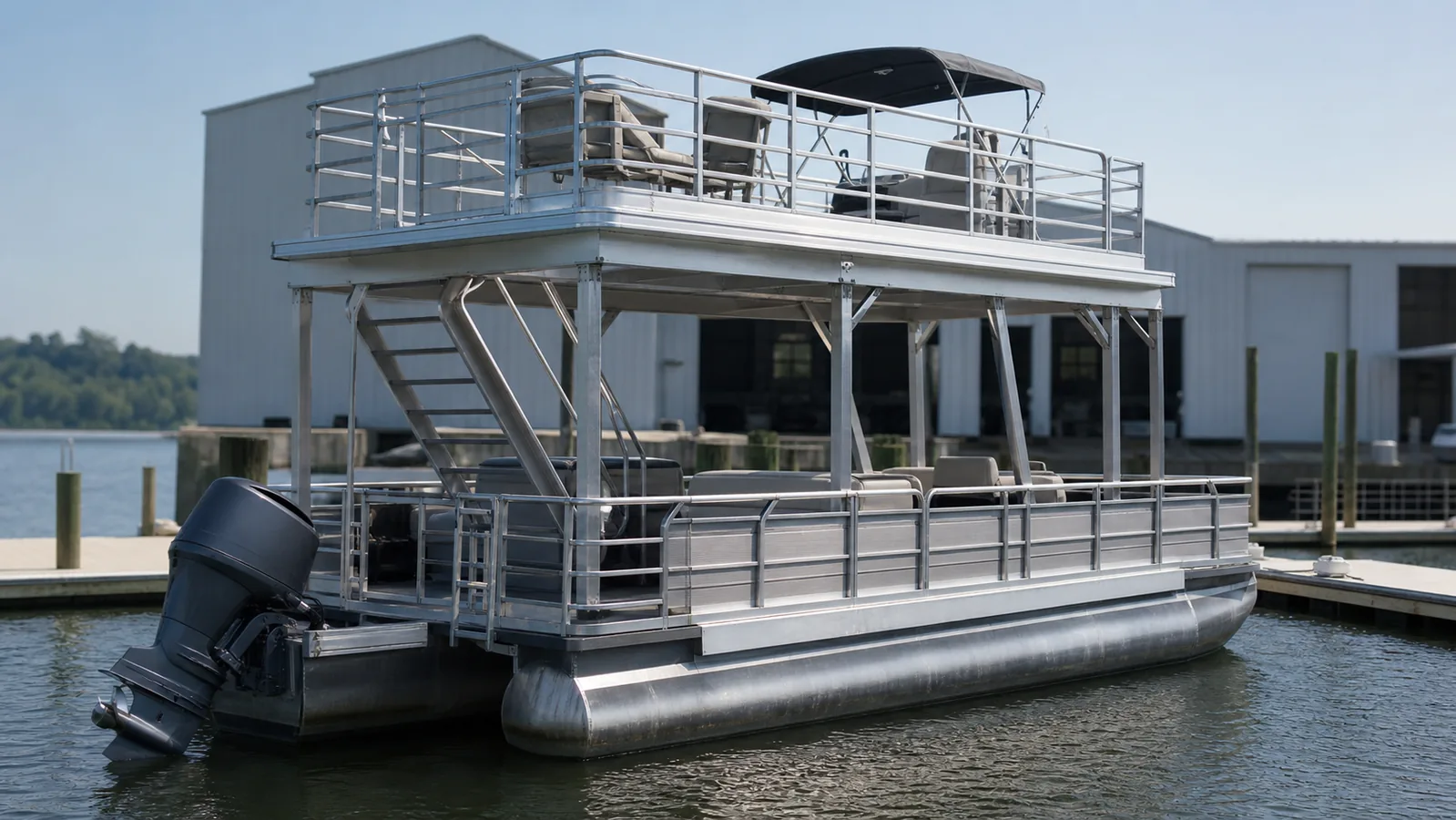
State the destination, expected shipping method, delivery point and whether a trailer is required. Also confirm who handles inland transport, import procedures, unloading and local assembly or commissioning.
Logistics should be compared as a defined scope, not as an unexplained freight line. A buyer needs to know where the supplier’s responsibility ends and which destination costs remain outside the quotation.
9. Quantity, schedule and handover package
Tell the supplier whether the project is a trial order, a phased fleet purchase or a dealer program. Include the estimated quantity and the date by which the boat must be operational, but ask for the supplier to confirm production and delivery timing in writing.
The handover discussion should also identify the final configuration record, manuals, spare-parts expectations, inspection points and contact path for after-sales questions.
A quotation-ready brief buyers can copy
Before requesting a double-decker pontoon boat price, prepare these inputs:
- company, buyer type and target market;
- resort, sightseeing, rental, club or project use;
- preferred 25ft or 30ft direction;
- passenger target and crew plan;
- route conditions, trip length and daily operating cycles;
- seating, stair, shade, storage and facility priorities;
- engine, steering, trailer and buyer-supplied equipment direction;
- preferred color, furniture and branding scope;
- estimated quantity and rollout plan;
- destination port or delivery location;
- required documents, inspection steps and local compliance questions.
How to compare supplier quotations fairly
Use a three-column review: included, optional and excluded. Compare the same platform, equipment, documentation and delivery boundary. Record unanswered items instead of assuming they are included.
Buyers still evaluating the broader category can review the pontoon boat range and the commercial resort layout guide. Dealers can also review the dealer program.
Ready to request a project-specific quotation?
Send Kinocean your preferred model direction, passenger target, operating use, quantity, destination and priority options through the project quote form. The first response can then focus on scope and unanswered decisions instead of a generic number.
Final specifications, capacity, equipment, commercial terms and suitability must be confirmed for the selected project and destination. This article provides procurement guidance, not regulatory approval or a fixed price.
Share this article
Have a boat project in mind?
Share your market, quantity plan and boat use. Kinocean can help narrow the model direction before you request a detailed quote.