

Choosing a center console fishing boat supplier is a business decision, not a catalog exercise. Dealers and fleet buyers must compare market fit, product evidence, configuration control, inspection steps and the quality of the quotation process.
Use this checklist to prepare supplier conversations and reduce gaps before requesting pricing.
1. Start with the buyers you plan to serve
Define whether the boat will serve coastal anglers, charter operators, rental fleets or mixed fishing-and-family demand. Record typical water conditions, expected passenger use, storage priorities and the common engine range in your market.
A supplier can only recommend a useful direction when the target use is clear.
2. Compare model roles, not only dimensions
Ask each supplier to explain the role of every shortlisted model. A compact platform and a larger platform should create a clear step-up story for your sales team or operation.
Kinocean currently presents two center-console aluminum fishing boat directions: the compact KV-180 and the larger KV-230. Buyers should confirm the current specification and option list in the quotation rather than relying on a general web summary.
3. Request traceable specification evidence
A useful specification identifies dimensions, capacity, recommended power direction, material notes, weight basis and standard versus optional equipment. Confirm which values apply to the exact model and configuration being quoted.
Avoid assumptions when a brochure, page and quotation use different wording. Ask the supplier to resolve the difference in writing.
4. Review the fishing workflow
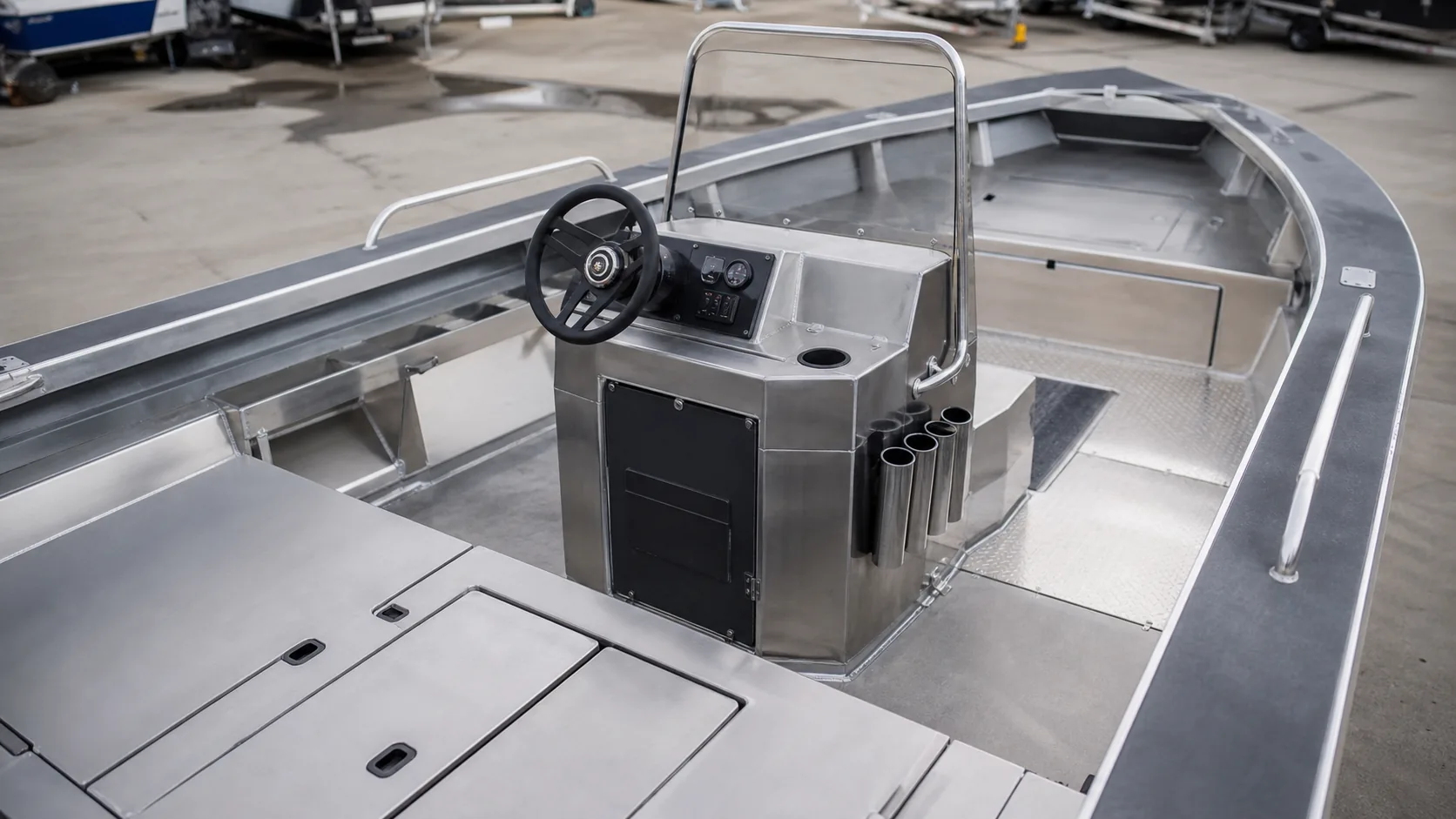
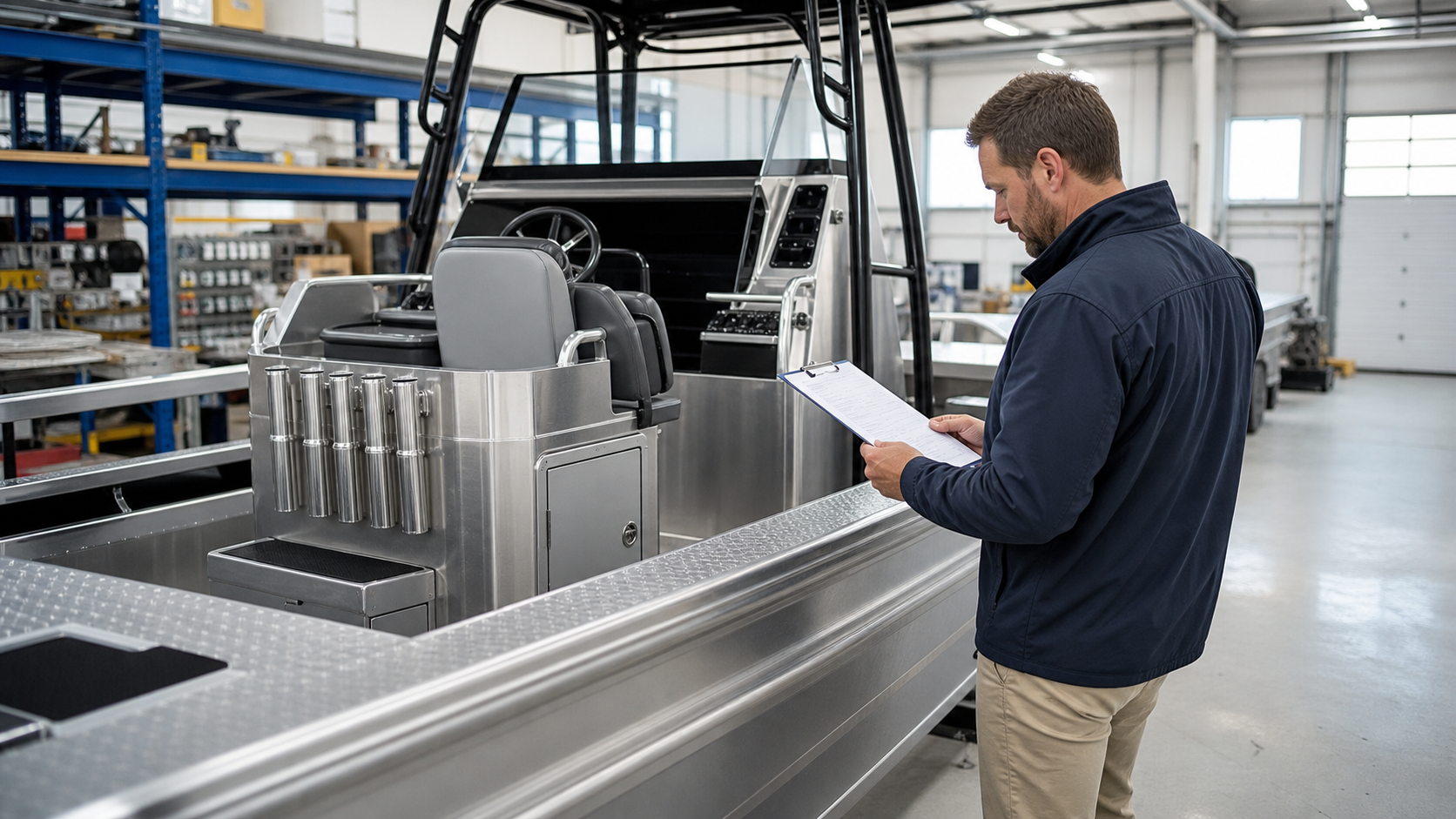
The deck should support the actual sequence of fishing activities. Walk through casting, rod access, bait preparation, catch storage, washdown and movement around the console.
The BoatTEST center-console checklist highlights the value of checking console visibility, controls, handholds, storage and equipment access. Adapt any checklist to your target market and local requirements.
5. Separate standard equipment from options
Request a clear matrix showing what is standard, optional, supplied by the buyer or installed locally. This is especially important for engines, steering, electronics, trailers, livewell systems, seating and branding.
The objective is a comparable quotation, not the longest equipment list.
6. Check customization control
Customization should solve a market or operating need. Ask how color, branding, seating, deck equipment, steering and electrical choices are approved before production.
Confirm who signs off drawings or option lists and how changes are recorded. Do not rely on informal messages for configuration-critical decisions.
7. Define inspection and documentation steps
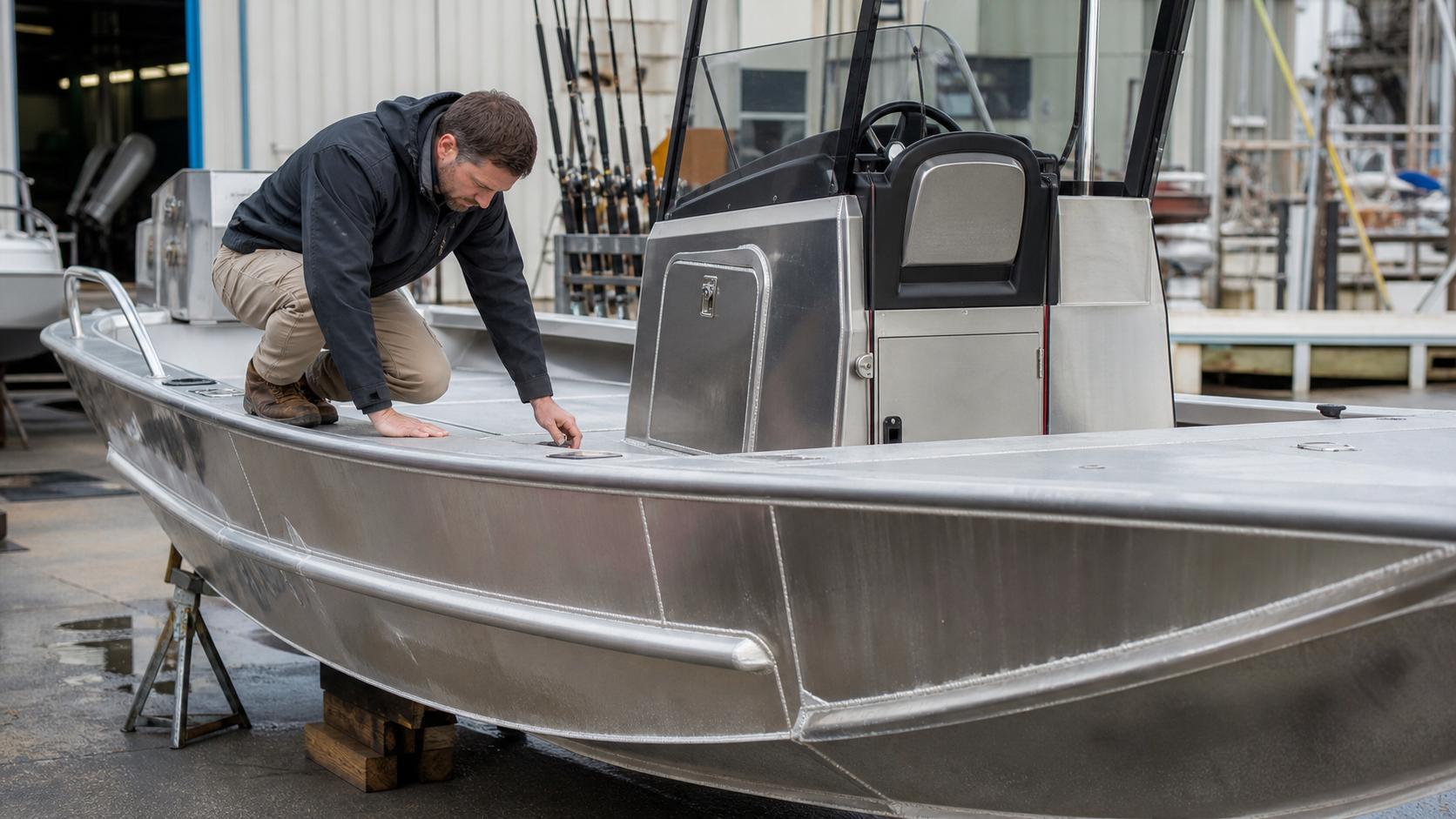
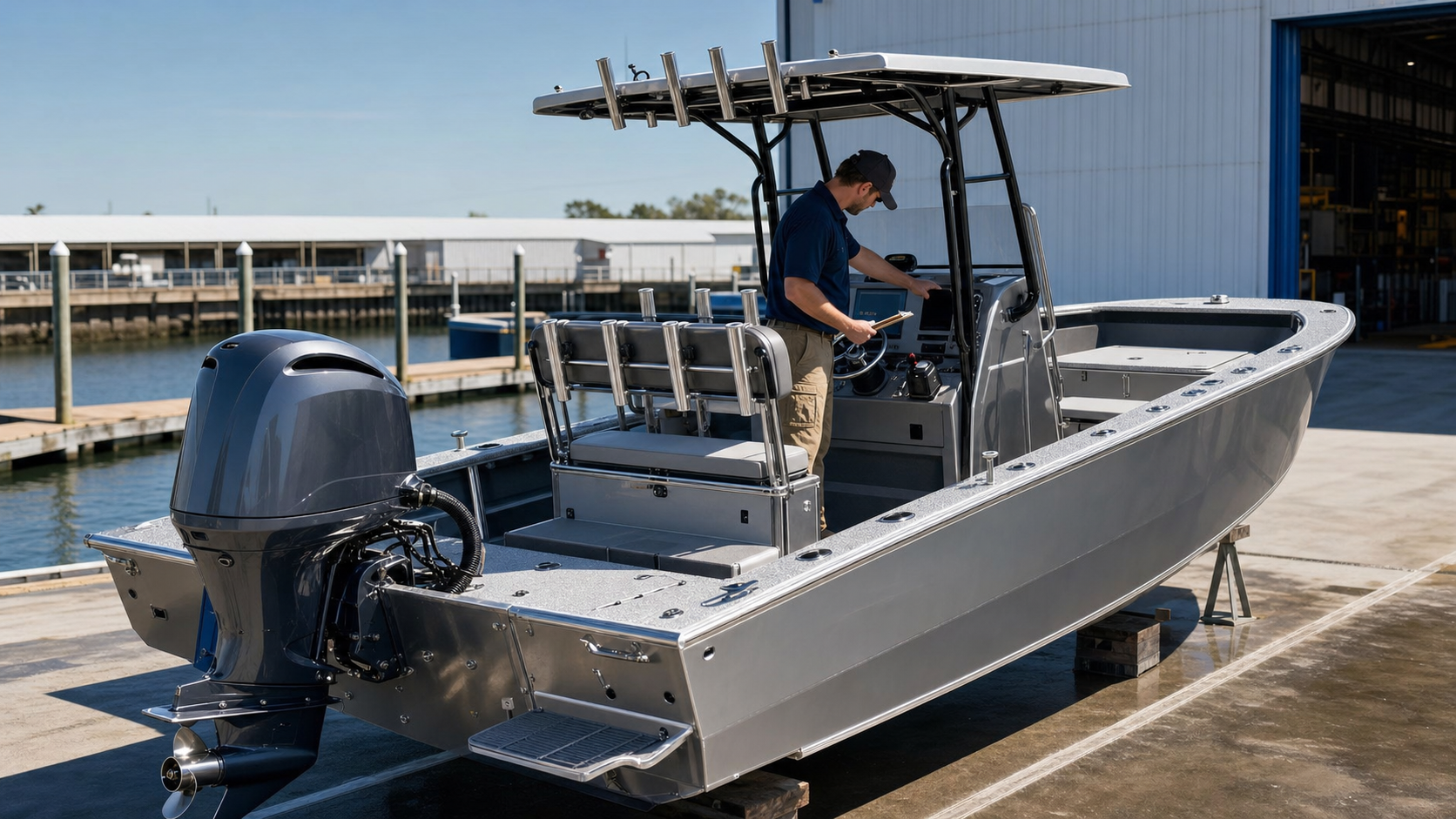
Discuss the evidence available during production and before shipment. The exact inspection method depends on the project, but the plan should identify what is checked, who checks it and how exceptions are documented.
Never assume a certification, test or warranty applies unless it is named and supported in the project documents.
8. Prepare shipping and delivery inputs
Tell the supplier the destination, preferred shipment structure, engine-supply plan and whether trailers or loose equipment are included. Ask what must be confirmed before packing.
Import, registration and safety obligations vary by country. The buyer should verify local requirements with the relevant authorities and service providers.
9. Use a comparable supplier scorecard
| Area | Questions to ask | Evidence to collect |
|---|---|---|
| Market fit | Which model fits our buyer and water conditions? | Model rationale and current specification |
| Fishing workflow | How do deck, rod, bait and storage systems work together? | Layout images and equipment list |
| Configuration | What is standard, optional or buyer-supplied? | Itemized quotation |
| Quality | What process and inspection evidence supports the build? | Confirmed project documents |
| Change control | How are options and revisions approved? | Signed option list or drawing record |
| Delivery preparation | What shipping and packing inputs are required? | Packing and documentation checklist |
| Commercial terms | What quantity, payment and scope assumptions apply? | Written quotation and contract |
10. Send a quote-ready project brief
Include your country, buyer type, expected quantity, target model direction, water conditions, engine plan and essential fishing equipment. This gives the supplier enough context to ask better follow-up questions.
Compare Kinocean’s center console fishing boat platforms and review the dealer inquiry route. When your shortlist is ready, request a project quotation with the market and configuration details that matter.
*Always verify current specifications, compliance requirements and commercial terms in the formal project documents.*
Share this article
Have a boat project in mind?
Share your market, quantity plan and boat use. Kinocean can help narrow the model direction before you request a detailed quote.