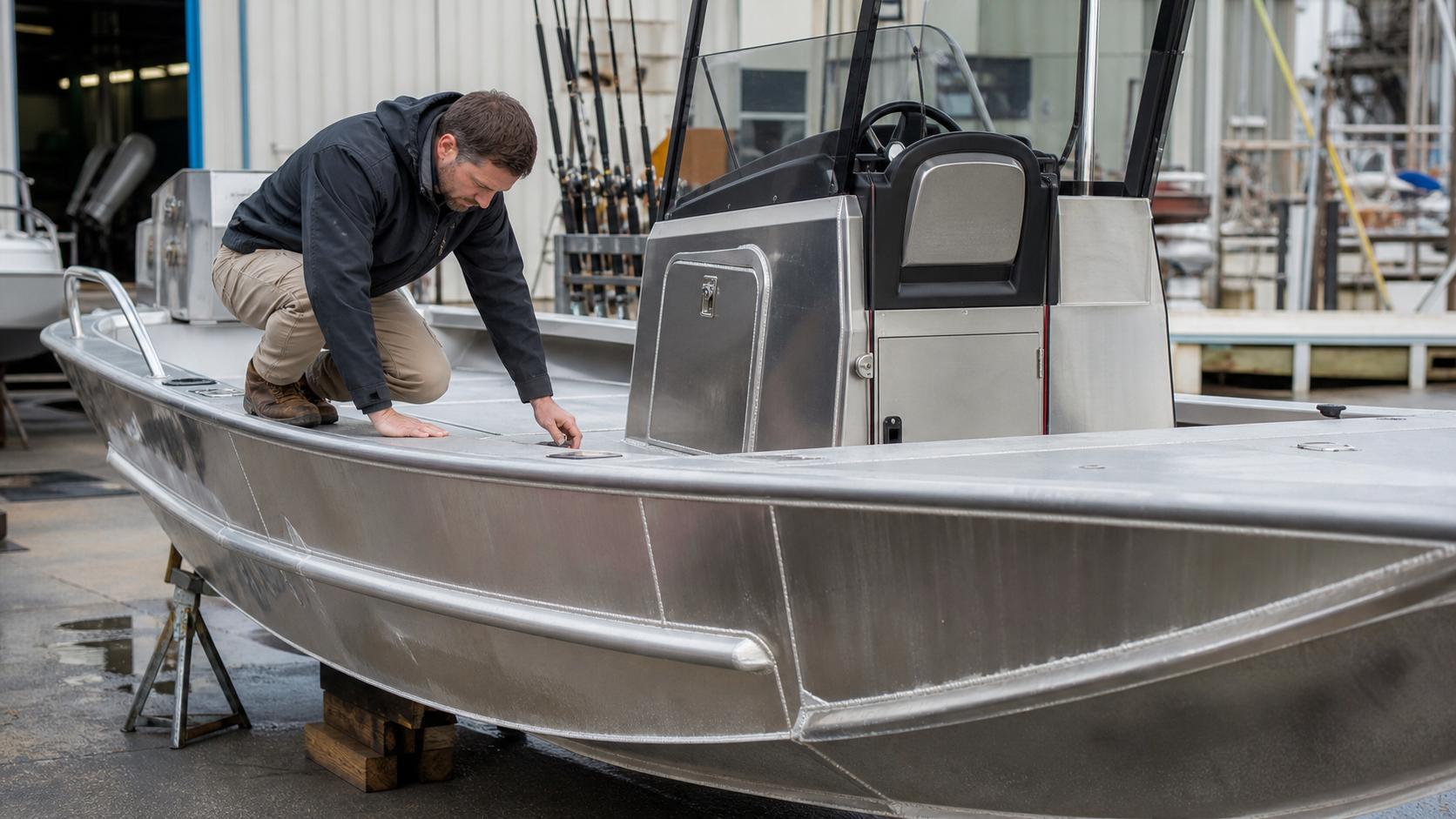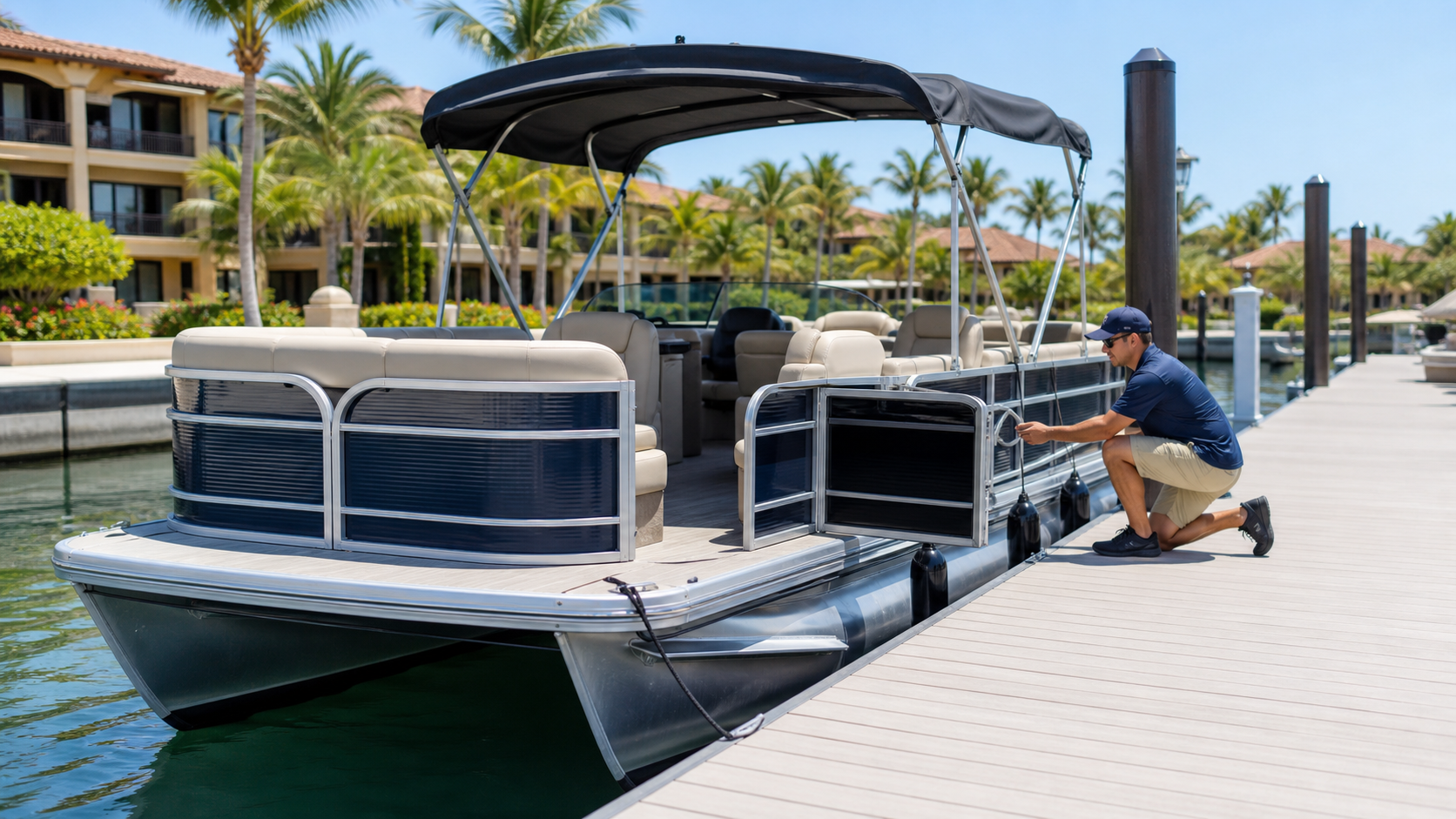


Importing aluminum fishing boats requires more than selecting a model and requesting freight. Dealers need a clear product scope, destination inputs, document list, inspection plan and handover boundary before quotations can be compared fairly.
This checklist is designed for dealers and importers preparing an RFQ. It does not replace customs, tax, registration or marine compliance advice. Requirements vary by market and must be verified with the relevant authorities and qualified service providers.
Import planning matrix
| Workstream | Dealer input | Supplier confirmation |
|---|---|---|
| Market | Country, customer segment and intended use | Available model and configuration direction |
| Product | Model, quantity, engine and options | Included, optional and excluded scope |
| Documents | Destination and required document list | Documents available for the quoted configuration |
| Inspection | Review points and acceptance process | Production and pre-shipment inspection scope |
| Shipping | Port, delivery boundary and trailer needs | Packing and shipment responsibilities |
| Handover | Unloading, assembly, rigging and commissioning | Supplier and buyer responsibilities |
| Support | Parts planning and technical contact | After-sales communication process |
1. Validate product-market fit
Define the dealer’s target customer before choosing inventory. A coastal fishing customer, inland angler, charter operator and utility buyer may prioritize different layouts and equipment.
Record:
- intended customer and water environment;
- common passenger and fishing use;
- local engine and trailer preferences;
- storage and towing constraints;
- expected retail or fleet configuration;
- initial quantity and replenishment plan.
This prevents a supplier comparison from becoming a list of unrelated models.
2. Select a model direction with verified source data
Kinocean currently presents the KV-180 and KV-230 on its fishing boat page. The source page lists the following reference data:
| Model | Listed length | Listed capacity | Listed power direction | Additional source-page detail |
|---|---|---|---|---|
| KV-180 | 5.5 m | 6 people | Up to 150 HP | Source-listed weight: 890 kg |
| KV-230 | 6.3 m | 6 people | 150-200 HP | 5052 marine-grade aluminum, 5 mm hull; source-listed hull weight: 1,350 kg |
Treat these as starting references. Final material, dimensions, capacity, weight, engine compatibility and configuration must be confirmed in the project quotation and supporting documents.
3. Freeze the quotation scope
Every quotation should identify the base boat and all options. Ask the supplier to mark each component as included, optional, buyer-supplied or excluded.
The discussion may cover steering, controls, livewell or bait systems, rod storage, washdown, seating, color, branding, trailer and rigging. Exact availability and scope must be confirmed for the selected model.
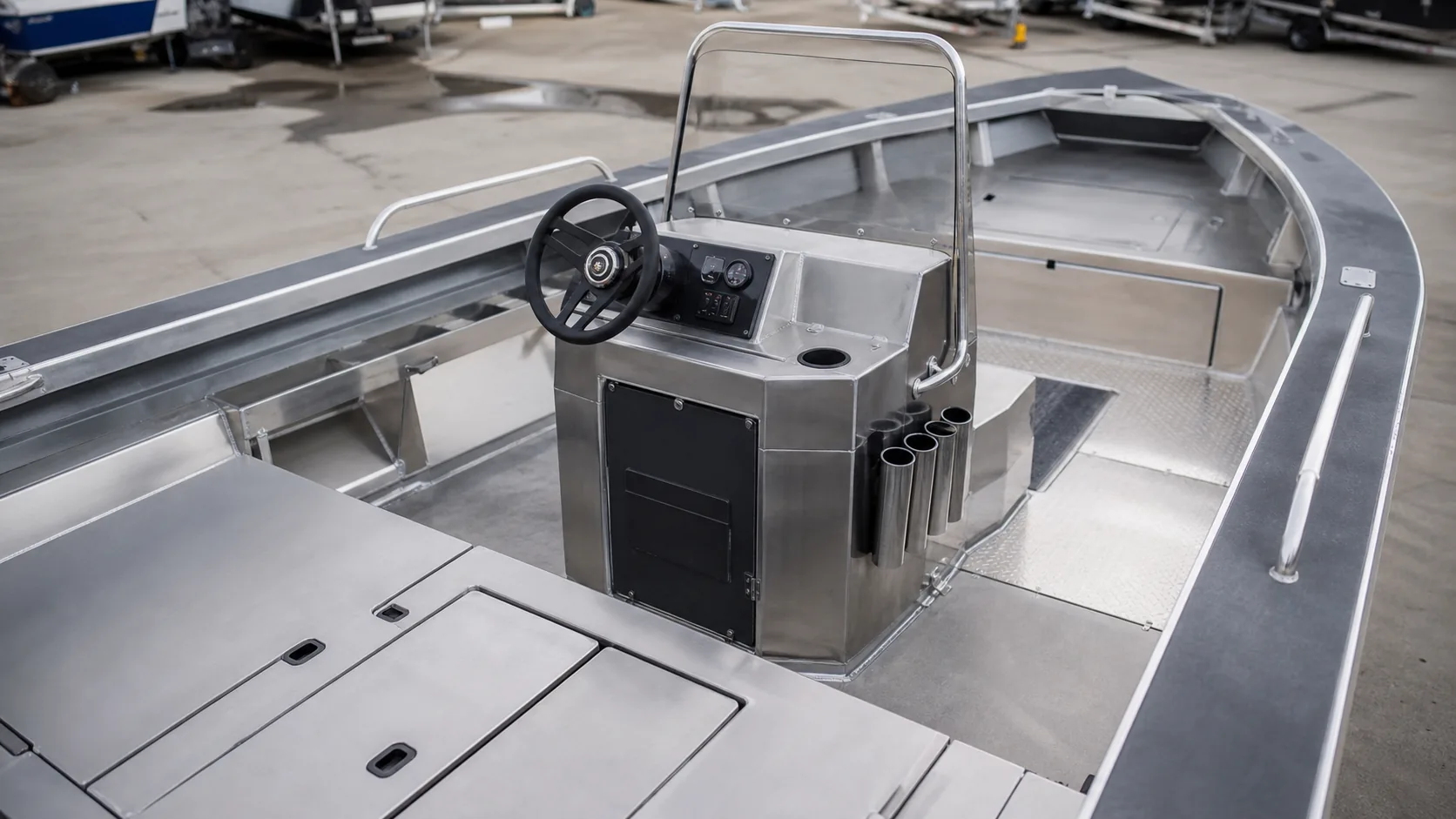
If the engine will be sourced locally, document the required interfaces and determine who is responsible for installation, commissioning and final checks.
4. Build a destination-specific document list
Do not request “all export documents” without defining the destination and use. Ask the relevant customs broker, registration authority and qualified marine professional which documents are required for the intended transaction and operation.
Then send the resulting list to the supplier and request a written response showing:
- documents available for the quoted configuration;
- documents that require additional preparation;
- information the buyer must provide;
- items outside the supplier’s scope;
- timing dependencies that must be confirmed.
Never assume that a brochure, specification table or invoice proves destination compliance.
5. Agree inspection and acceptance points
The RFQ should explain how the dealer plans to verify the order. Depending on the agreed scope, review points may include configuration records, visible workmanship, installed equipment, identification details, packing and document completeness.
Ask which production records, photos, videos or inspection opportunities can be provided. The final acceptance method should be written into the commercial agreement rather than inferred from general marketing claims.
Dealers still comparing suppliers can use the broader center-console fishing boat supplier checklist.
6. Define packing, shipping and delivery boundaries
State the destination port or delivery point, expected shipping method, trailer requirement and planned sales or operating date. Ask the supplier to explain the proposed packing and which logistics tasks are included.
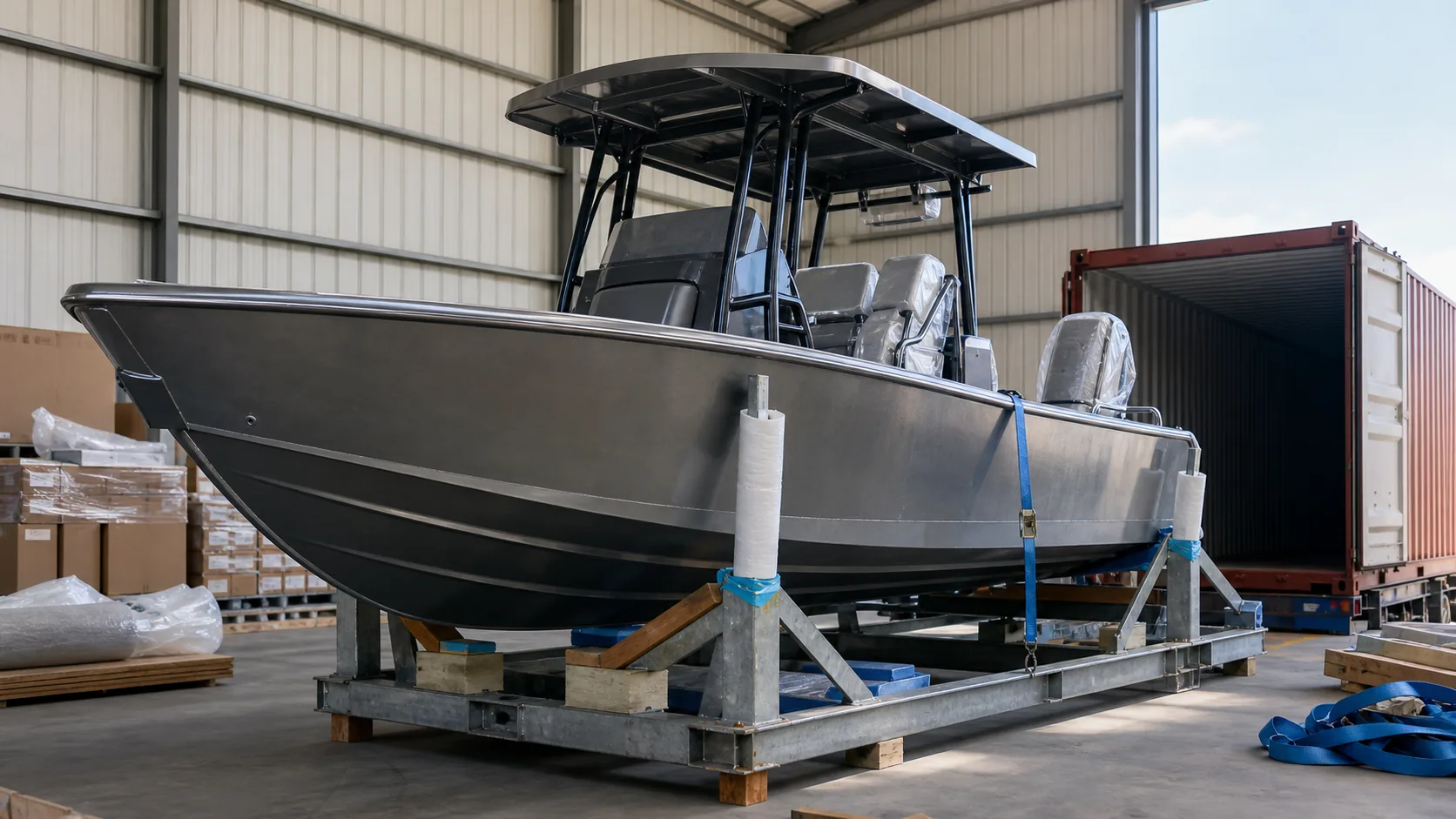
Clarify responsibility for:
- export-side transport and handling;
- shipment booking and insurance, if applicable;
- destination customs and taxes;
- port and inland charges;
- unloading and storage;
- trailer, engine rigging and commissioning;
- damage reporting and claim documentation.
The supplier should confirm actual terms in the quotation. Dealers should obtain destination cost and legal advice from qualified local providers.
7. Plan parts and after-sales communication
Before ordering, identify the items that local service teams can support and the parts that may require supplier coordination. Ask for the communication process, information required for a technical question and available manuals for the final configuration.
For a dealer program, keep a configuration record for every unit. This makes parts identification and customer support more reliable than relying on photos or informal messages.
8. Use a landed-scope comparison, not a headline-price comparison
Create a worksheet with four columns: included, optional, excluded and locally sourced. Compare the same model direction, equipment, documentation, packing and delivery boundary.
Keep taxes, duties and local charges separate unless they are explicitly confirmed by a qualified destination provider. This avoids presenting an incomplete estimate as a guaranteed landed cost.
Dealer RFQ checklist
Send suppliers:
- company, sales territory and buyer type;
- target customer and intended use;
- preferred model direction and quantity;
- required engine, steering and equipment scope;
- local trailer or towing constraints;
- destination port or delivery point;
- required documents based on destination verification;
- inspection and acceptance expectations;
- packing and shipping boundary;
- local rigging and commissioning plan;
- parts and support questions;
- target timing, subject to written supplier confirmation.
Prepare the next dealer discussion
Review Kinocean’s fishing boat range, request the current boat catalog, or read the cuddy cabin fishing boat quote checklist for another procurement format.
Dealers can submit the target market, preferred model, quantity, destination and equipment direction through the project quote form or review the dealer program.
Final specifications, materials, capacity, equipment, documents, commercial terms and destination suitability must be confirmed for the selected order. This article is procurement guidance, not customs, tax, legal or regulatory advice.
Share this article
Have a boat project in mind?
Share your market, quantity plan and boat use. Kinocean can help narrow the model direction before you request a detailed quote.