

For a charter, rental or commercial fishing operation, hull material affects more than purchase price. It can influence towing and launch logistics, maintenance routines, impact response, ride characteristics, layout choices and how the boat fits a specific route.
There is no universal winner in the aluminum vs. fiberglass fishing boat comparison. The better choice is the one that matches the operating environment and business model.
Quick comparison for commercial buyers
| Decision factor | Aluminum tendency | Fiberglass tendency |
|---|---|---|
| Weight | Usually lighter for comparable size | Usually heavier |
| Impact behavior | More likely to dent than crack under some impacts | Can crack or chip under impact |
| Routine finish care | No gelcoat waxing requirement | Gelcoat finish needs appropriate care |
| Ride and wind response | Lower weight can feel more active | Added weight can support a smoother, more planted feel |
| Hull-form complexity | Welded construction supports practical custom layouts | Molding supports complex curves and integrated forms |
| Repair planning | Requires suitable aluminum repair capability | Requires suitable composite repair capability |
| Best fit | Depends on water, route, load and service resources | Depends on water, route, load and service resources |
These are general tendencies, not guarantees. Hull design, construction quality, size, loading and sea conditions can be more important than material alone.
When aluminum may fit a commercial operation
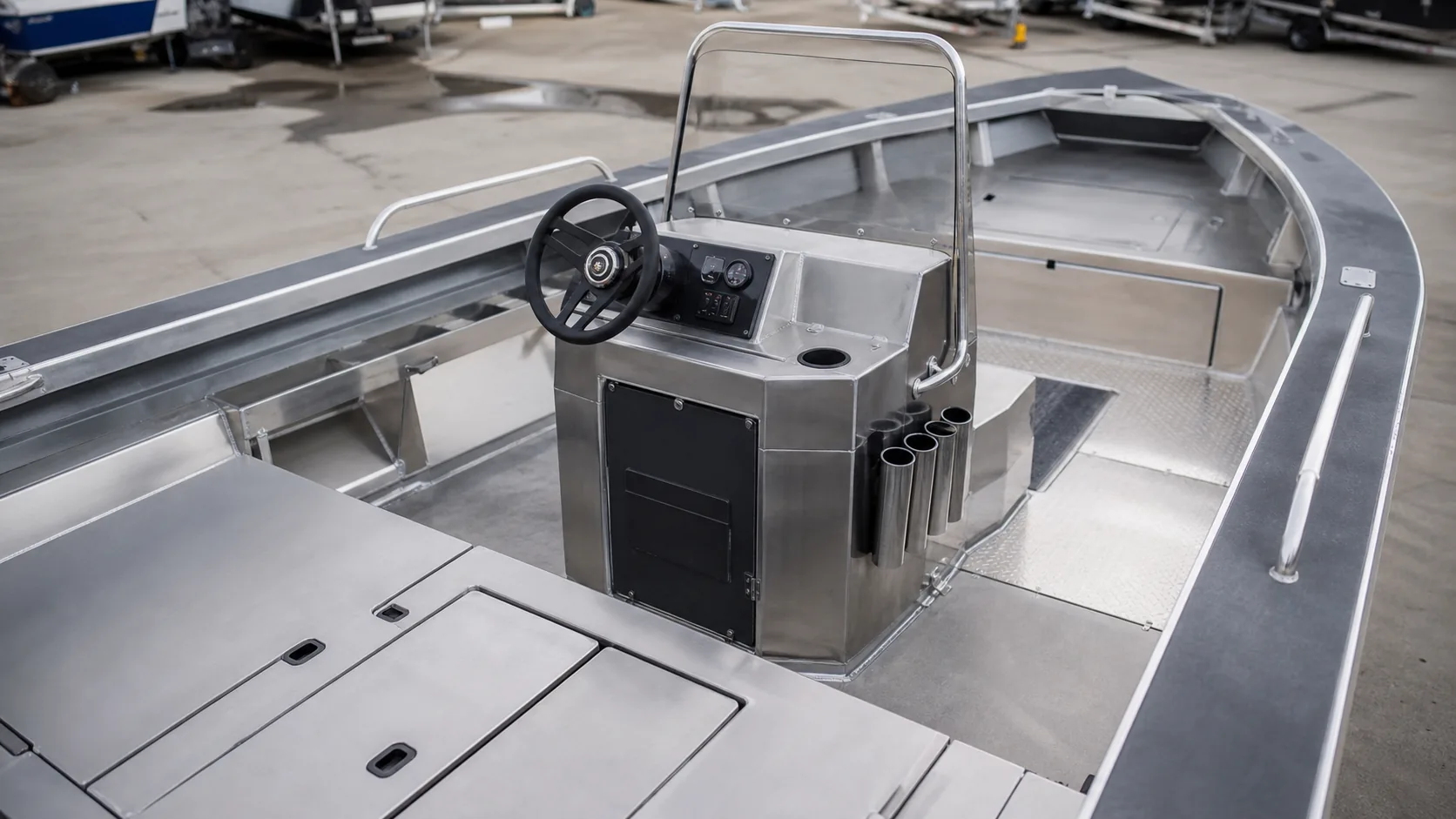
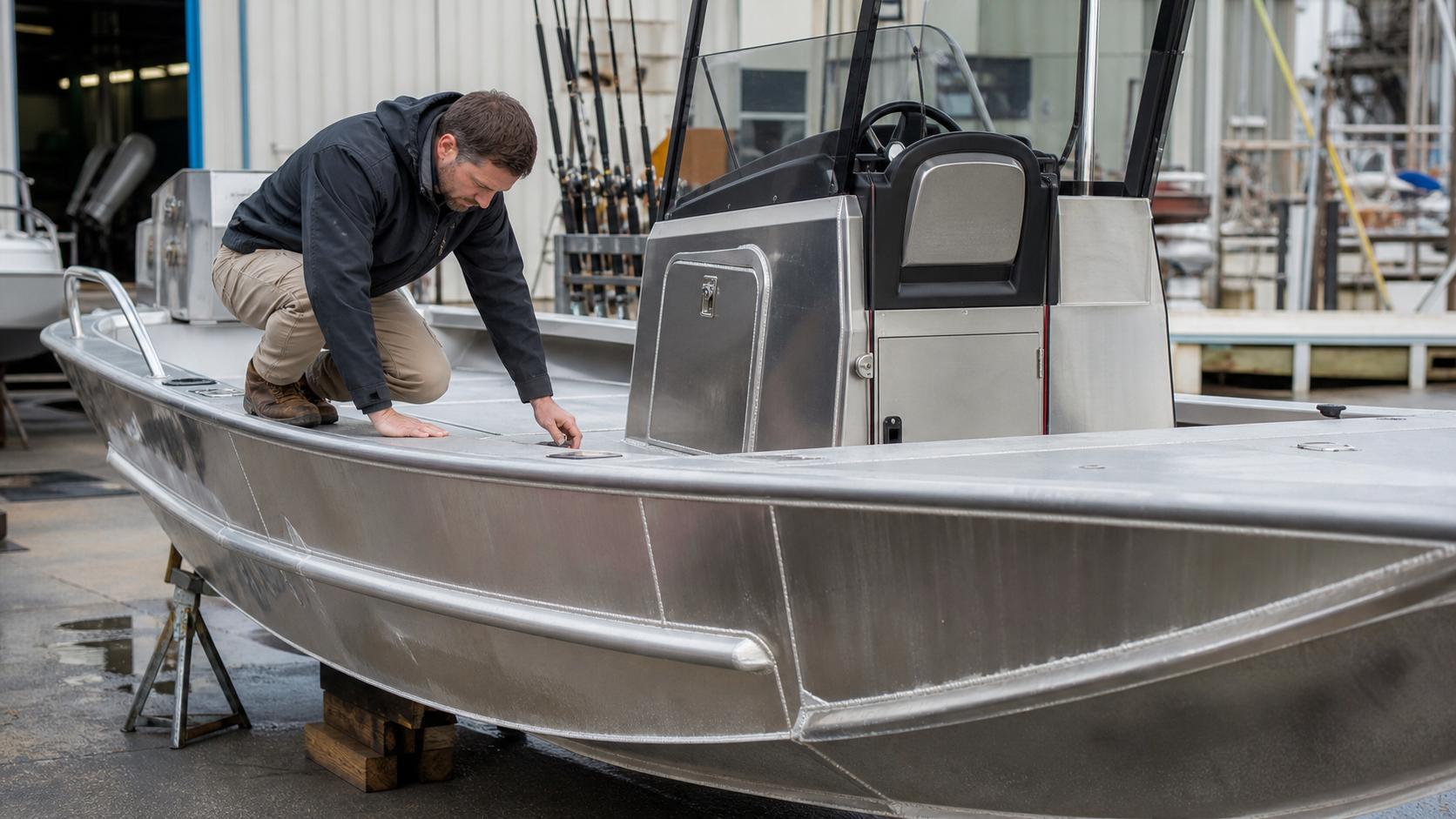
According to Discover Boating, aluminum boats are commonly lighter, can require less finish maintenance and may dent rather than crack during some impacts. Lower weight can also simplify towing and launching.
Those characteristics can be useful for operations that move boats between sites, work in shallower areas or prioritize a practical deck and equipment layout. However, aluminum still requires correct material selection, workmanship, electrical isolation and corrosion-aware maintenance.
When fiberglass may fit better
Fiberglass construction can support complex molded hull forms and integrated seating, storage and equipment modules. Its additional weight may provide a more planted feel and slower wind drift in some conditions.
Commercial operators prioritizing a particular ride, finish or highly molded layout may prefer fiberglass. They should also plan for gelcoat care and access to qualified composite repair.
Compare total operating fit, not stereotypes
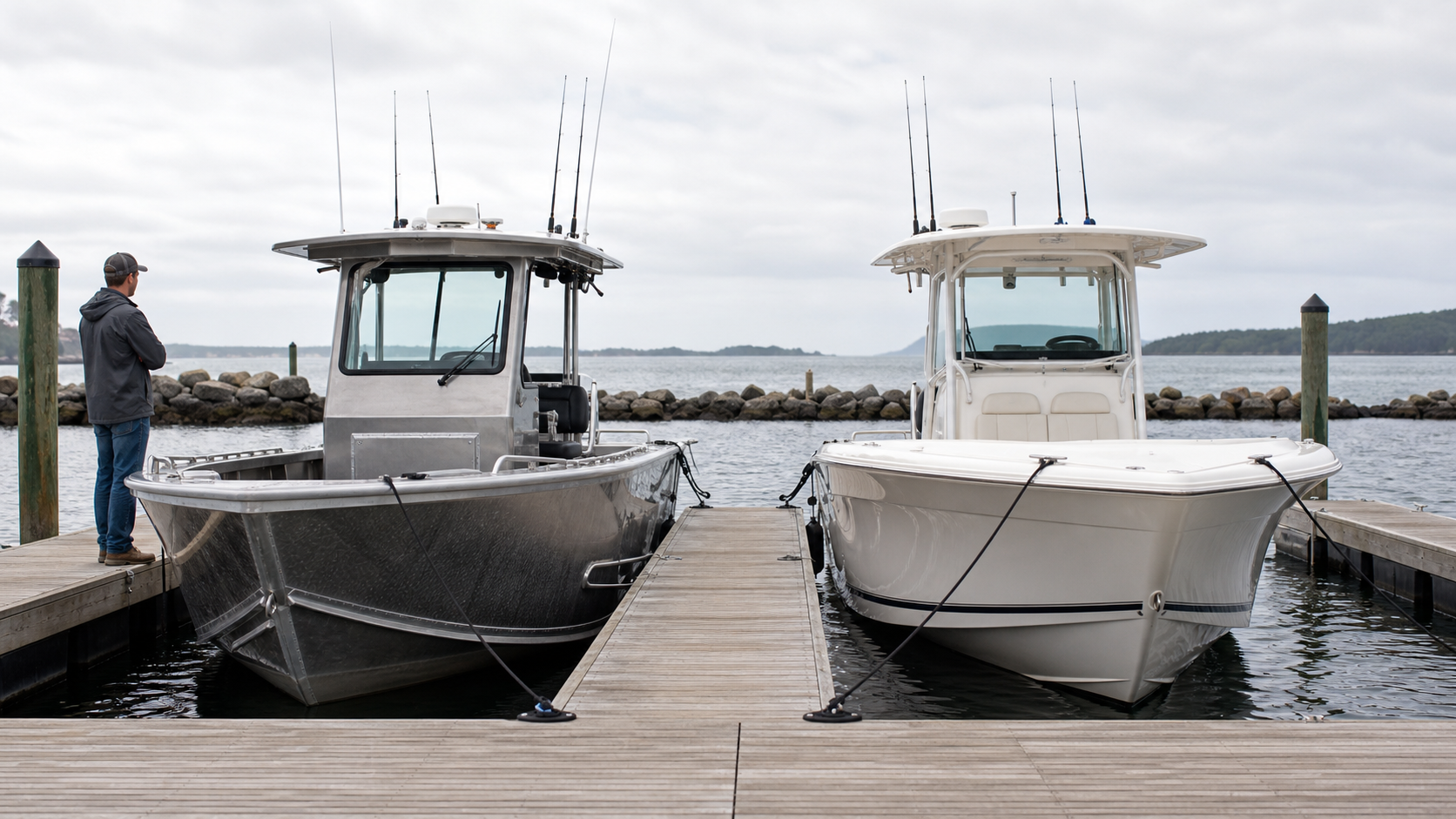
Do not reduce the decision to “aluminum is durable” or “fiberglass rides better.” Instead, document how the boat will be used.
Route and water conditions
Record typical wave exposure, shallow-water risk, docking frequency and whether the boat regularly touches beaches or rough working docks.
Transport and launch logistics
Consider towing limits, launch facilities, storage and whether the boat moves between operating locations.
Maintenance capability
Identify the repair skills and materials available locally. A theoretically repairable hull is not useful if the required expertise is inaccessible.
Guest and crew priorities
Charter guests may value ride comfort and finish, while a working crew may prioritize deck access, cleaning and equipment placement. Many operations need a balance.
Configuration control
Compare how each builder documents standard equipment, options, wiring, steering, fuel systems and installed accessories.
A five-step decision process
- 1. Write the operating profile. Define route, water, passengers, equipment, daily hours and storage.
- 2. Rank the trade-offs. Decide whether weight, ride, impact response, finish, layout or maintenance is most important.
- 3. Compare complete boats. Evaluate hull design, construction, loading and equipment—not material in isolation.
- 4. Verify local obligations. Confirm registration, inspection, passenger and safety requirements with the relevant authority.
- 5. Request project-specific evidence. Ask the supplier to confirm current specifications, options and terms in writing.
Questions to include in your supplier inquiry
- – What operating environment is the model designed to serve?
- – Which material and construction details are confirmed for the quoted model?
- – How do deck, storage, bait and rod systems support the intended workflow?
- – Which components are standard, optional or buyer-supplied?
- – What maintenance and inspection points should the operator plan for?
- – What documents will define the final configuration?
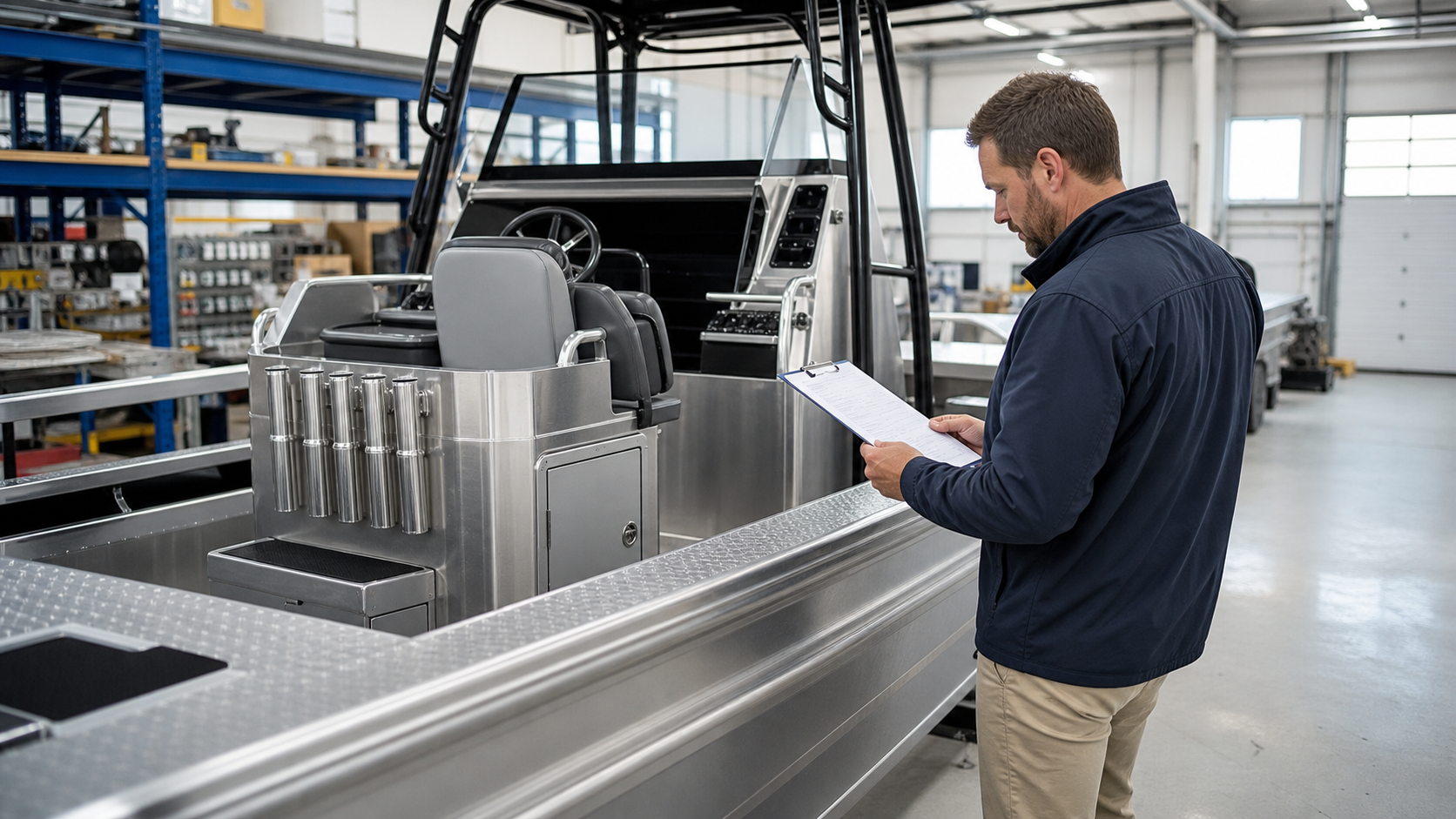
Kinocean offers aluminum center-console platforms for dealer and commercial discussions. Review the fishing boat range and Kinocean’s quality approach, then share your operating profile to discuss a suitable model and configuration direction.
*This guide provides general purchasing considerations. Final suitability depends on the complete boat design, operating conditions and applicable local requirements.*
Share this article
Have a boat project in mind?
Share your market, quantity plan and boat use. Kinocean can help narrow the model direction before you request a detailed quote.