

A fishing boat pre-shipment inspection should answer one central question: does the finished boat match the configuration and handover scope the buyer approved? A general factory tour cannot answer that question. The inspection needs an identifiable boat, a controlled specification and a written method for recording exceptions.
This checklist is designed for dealers, importers, charter operators and fleet buyers preparing an aluminum fishing boat order. It complements Kinocean’s broader supplier checklist and import checklist. It is procurement guidance, not a marine survey, regulatory inspection or certification.
Freeze the inspection baseline before checking the boat
Do not begin with photographs of the finished boat. Begin with the documents that define what should have been built. The buyer and supplier should identify the current approved version of the model, layout, option list, drawings, color or branding references and quotation scope.
| Baseline record | What the buyer should confirm | Common gap to avoid |
|---|---|---|
| Model and unit identity | Model, quantity and a unit-level identifier where available | Inspecting a similar boat instead of the ordered unit |
| Approved configuration | Current drawing, layout and option revision | Using an outdated message or screenshot |
| Commercial scope | Included, optional, buyer-supplied and excluded items | Treating a partial quotation as a complete package |
| Inspection method | Who checks, when, evidence format and response time | Raising issues without an agreed close-out process |
| Handover boundary | Packing, shipment, local rigging and destination responsibilities | Assuming delivery tasks are included |
If a later change affected price, production, packing or delivery, make sure the updated decision appears in the same baseline. An inspection cannot resolve an undocumented scope disagreement.
Verify identity and visible configuration first
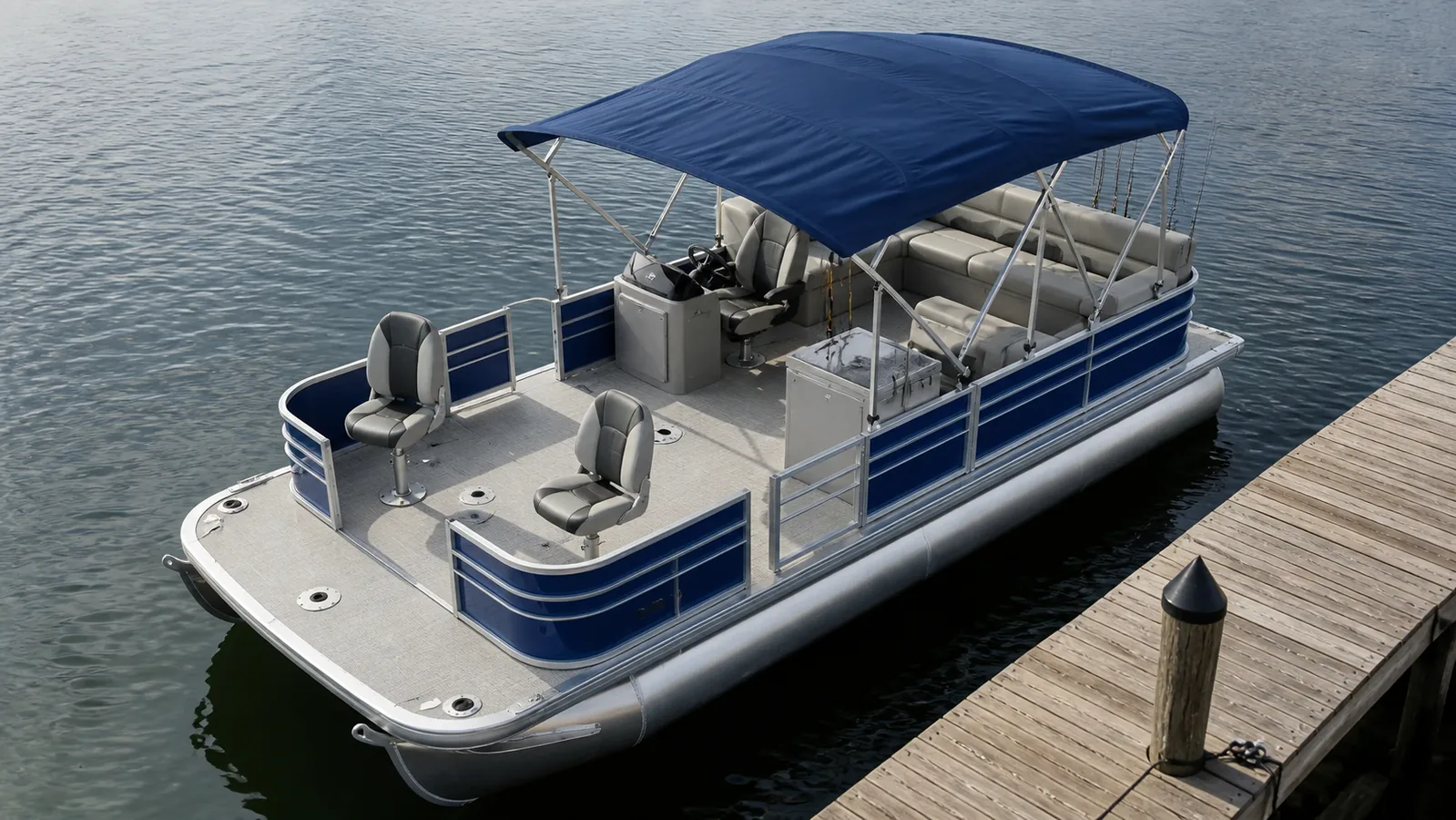
Start with the easiest high-impact checks. Confirm that the boat being reviewed corresponds to the model and configuration record. Compare the visible deck arrangement, console, seating, rails, storage, flooring, color direction and selected options with the approved reference.
For Kinocean’s current center-console range, buyers can review the published aluminum fishing boat page before preparing the order brief. Published model data is only a starting reference. The formal quotation and approved documents must control the inspection because options and project scope can change the finished boat.
Photograph the overall boat from consistent angles before moving to details. This creates context for later close-ups and helps the buyer connect an issue to the correct location.
Review hull, structure and visible workmanship
The inspection plan should identify which structural and workmanship points are available for review at the pre-shipment stage. The Kinocean quality page organizes its buyer discussion around material, structure, welding, fit-out, final appearance and delivery readiness. Use those stages to build questions for the exact order.
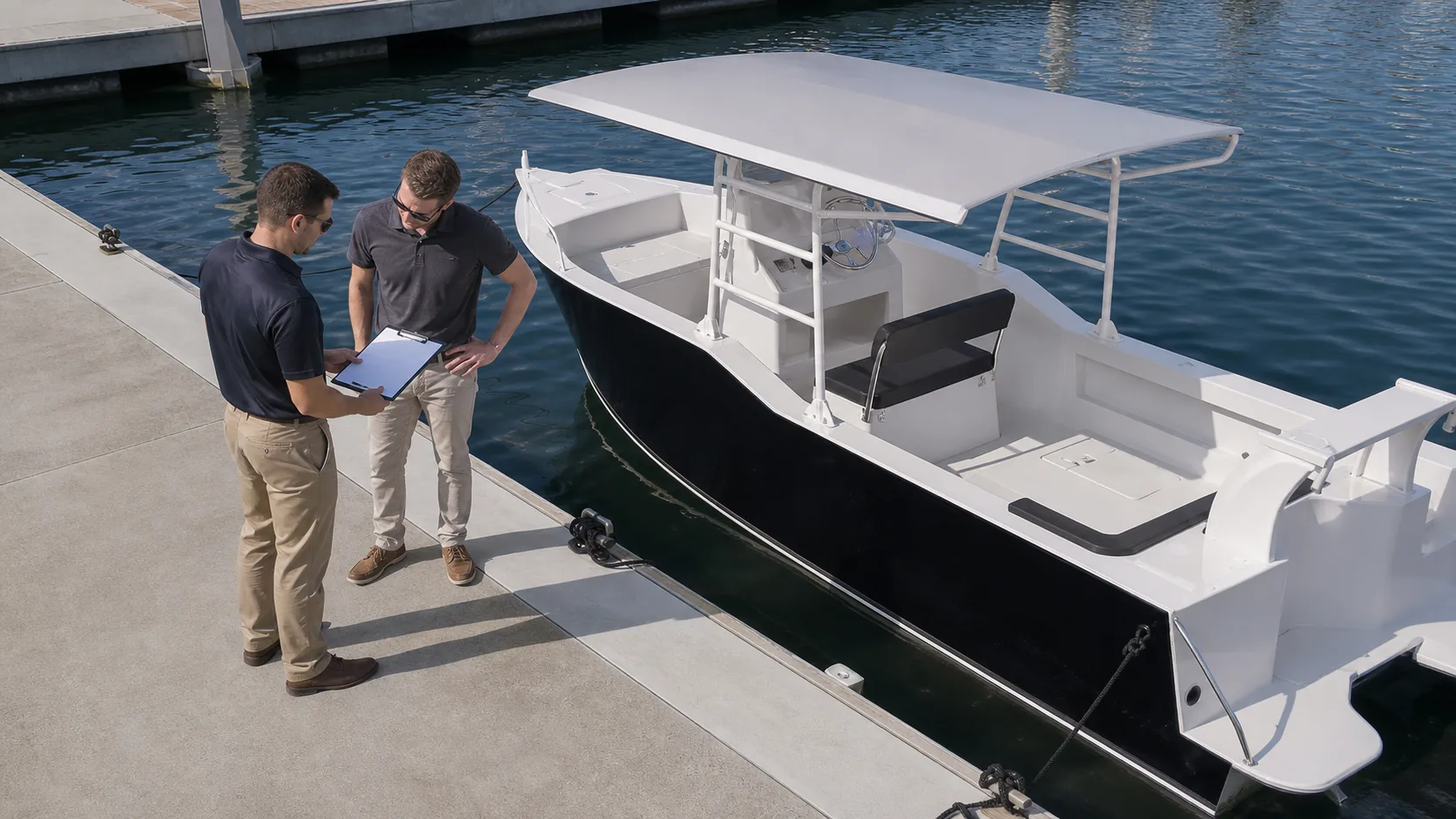
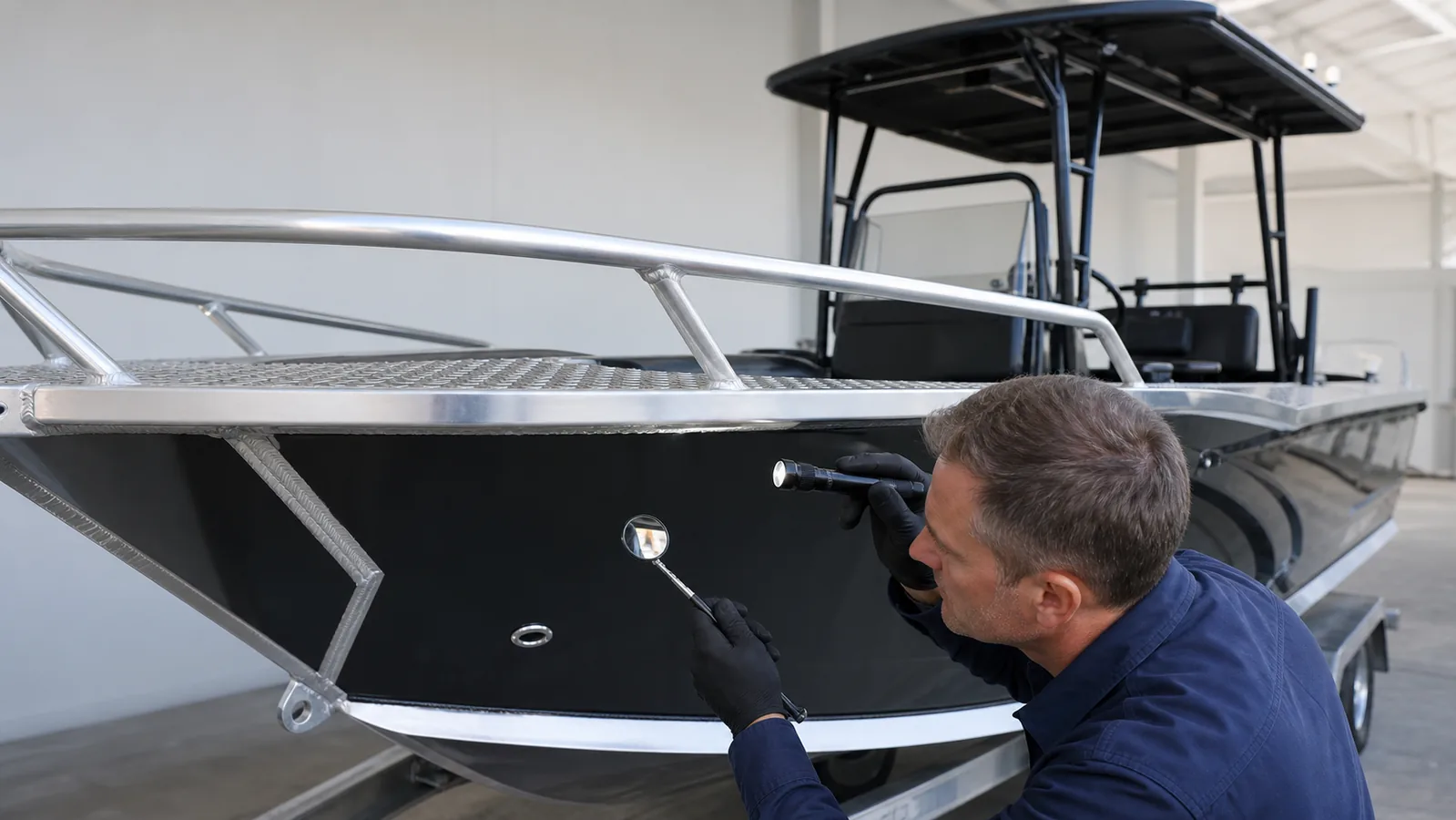
At final inspection, buyers may ask to review accessible hull surfaces, pontoons or plating where applicable, visible weld areas, rails, supports, deck surfaces and structural connection points. Record dents, distortion, sharp edges, unfinished areas or visible damage without guessing the engineering cause.
Do not approve a material grade, thickness, weld procedure or structural performance claim from appearance alone. Compare available markings and supplier documents with the agreed specification, and use a qualified independent surveyor or inspector when the project requires technical verification.
Check deck flow and installed fit-out
Walk through the normal fishing and operating sequence. Confirm that gates, hatches, storage, seating, console access and fishing work areas open and move as expected. Look for interference between doors, lids, furniture and removable equipment.
The purpose is not to invent a universal pass or fail rule. It is to check the finished configuration against the buyer’s defined use. A dealer may prioritize showroom presentation and a complete option package. A charter operator may prioritize repeated access to storage, cleaning points and the helm. A fishing fleet may require a consistent deck arrangement across multiple units.
Use photos or short videos to record operation of agreed moving parts. If an item cannot be checked before shipment because a buyer-supplied engine or local component is missing, mark it as pending rather than passing it by assumption.
Reconcile equipment item by item
Create a line-by-line equipment list. Each row should state the approved item, quantity, supplied status, installed status, test status and any open comment.
Potential categories include steering and controls, pumps, lighting, batteries, switches, electronics, fishing equipment, seating, shade, trailer, loose accessories and branded elements. The exact categories depend on the selected boat and order.
| Status | Meaning | Required next step |
|---|---|---|
| Installed and checked | Item is present and reviewed under the agreed method | Keep the evidence with the unit record |
| Supplied loose | Item is included but not installed | Confirm packing location and local installation responsibility |
| Buyer-supplied | Item is outside the supplier package | Confirm interface and commissioning plan |
| Pending correction | Item does not match the approved record or needs work | Assign owner, action and recheck evidence |
| Not applicable | Item is not part of this configuration | Reference the approved exclusion |
A list with explicit status is more reliable than a general statement that accessories are complete.
Test functions only within the agreed setup
Agree in advance which systems can be functionally checked before shipment. A boat may not be fully commissioned if the engine, electronics or destination-supplied equipment will be installed later. The inspection record should separate factory checks from local rigging, launching and on-water commissioning.
Functional checks may include accessible switches, lighting, pumps, hatches, steering movement or other installed items, but the exact method should come from the supplier, equipment instructions and qualified personnel. Never improvise electrical, fuel, engine or on-water tests without the correct setup and safety controls.
Where a test is not possible, record the reason and identify who will complete it at the next handover stage. This prevents an untested item from being recorded as accepted.
Review finish, branding and customer-facing details
Dealers and OEM buyers should compare visible color, graphics, upholstery, flooring, labels and presentation details with the approved references. Check for transport-sensitive parts, protective film and loose items that need special packing.
Photographs should show the whole area as well as the detail. Avoid approving color only from a phone photo because lighting and display settings can change appearance. If color matching is commercially important, define the approval method before production.
Match documents to the boat and destination
Prepare a project-specific document register. The list may include the final configuration record, invoice and packing references, manuals, supplier inspection records, material or test documents, identification information and destination documents that have been confirmed for the order.
Do not copy a generic document list from another market. Registration, import, safety, passenger, fishing and operating requirements vary by country and use. The buyer should verify destination requirements with customs providers, authorities, surveyors or other qualified professionals before shipment.
If a document is pending, give it an owner and due date. If a requested certificate or report does not apply to the selected model or configuration, resolve that point before acceptance rather than using a broad website claim.
Inspect packing and the handover boundary
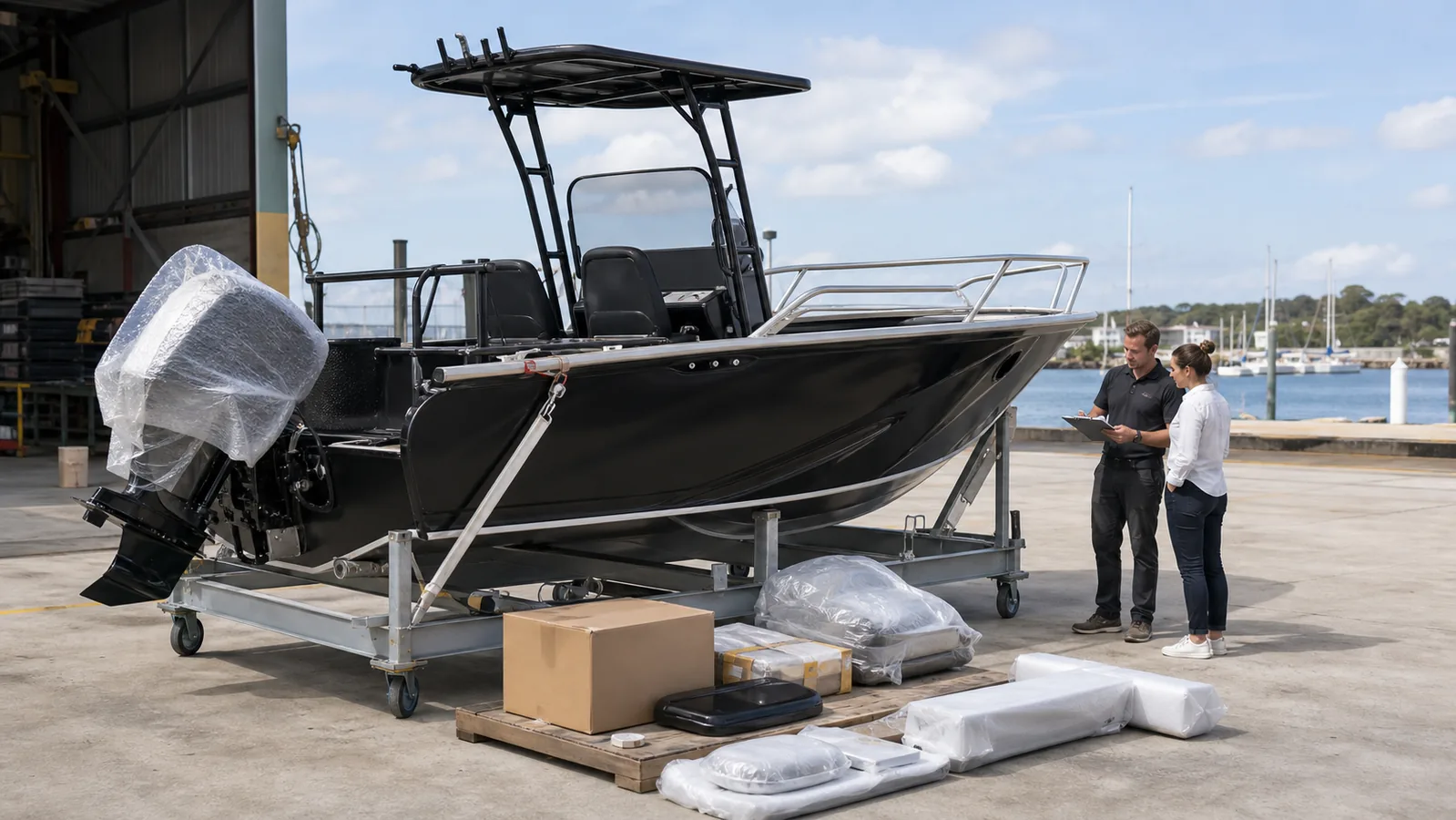
The final review should connect the boat to the shipping plan. Confirm which components are installed, removed, protected or packed separately. Record trailers, cradles, covers, loose accessories, manuals and keys where they are part of the agreed scope.
Ask how the boat will be protected at exposed contact points and how loose items will be identified. Confirm who handles loading, inland transport, export procedures, unloading, local assembly, engine installation and commissioning. These responsibilities should match the quotation and logistics documents.
Close exceptions before final acceptance
Every exception needs a unique reference, description, evidence, owner, agreed action and status. Avoid resolving issues only in chat messages. Keep the close-out record with the unit and configuration it affects.
Use a simple structure:
- Record the observation without guessing the cause.
- Link it to the approved specification or inspection item.
- Ask the supplier to confirm the proposed action.
- Record any effect on scope, price or schedule separately.
- Obtain recheck evidence after correction.
- Mark the item closed, accepted with a documented exception or still open.
The buyer should define who has authority to accept open items. Shipment should not silently become the acceptance mechanism.
Quote-ready inspection questions for the supplier
Ask these questions while the order is still being defined:
- Which model, drawing and option revision will control production and inspection?
- How will each unit be identified in the evidence set?
- Which production and pre-shipment inspection stages can the buyer review?
- What photos, videos, measurements, records or independent access can be arranged?
- Which systems will be installed and testable before shipment?
- Which items will be supplied loose, buyer-supplied or completed locally?
- How will exceptions, corrections and rechecks be documented?
- Which documents apply to the selected boat and destination?
- How will the boat and loose equipment be packed and identified?
- Who controls the final acceptance and shipment release decision?
Build inspection into the quotation, not after production
A useful inspection plan begins before the boat is complete. Review Kinocean’s fishing boat range, quality evidence and boat catalog. Dealers can also review the OEM customization brief to control revisions before inspection.
When the model direction, quantity, destination and inspection expectations are clear, submit the project requirements. Kinocean can then identify the next specification and quotation questions for the proposed order.
Final specifications, materials, equipment, inspection scope, documents, commercial terms, shipping responsibilities and destination suitability must be confirmed in the formal project documents.
Share this article
Have a boat project in mind?
Share your market, quantity plan and boat use. Kinocean can help narrow the model direction before you request a detailed quote.