

A pontoon fishing boat layout should be planned as an operating system, not as a list of accessories. Dealers need a configuration they can explain to buyers. Resorts and rental fleets need a deck that staff can prepare, inspect and clean. Fishing-tour operators need a practical route from boarding to fishing and back to the dock.
Kinocean currently presents a Fishing Series within its pontoon boat range. This guide helps a commercial buyer organize the questions that should be answered before a supplier prepares a model and option proposal. It does not assume that every feature is available on every model.
Start with the market role, not the equipment list
Define who will use the boat and how the business expects to earn from it. A dealer may need a clear fish-and-cruise showroom package. A resort may want one boat that supports casual fishing in the morning and guest cruising later in the day. A dedicated fishing operator may put more weight on open working zones, equipment access and a repeatable cleaning routine.
Use a short operating brief before discussing individual options:
| Buyer input | Questions to document | Why it changes the layout |
|---|---|---|
| Customer group | Anglers, families, resort guests or mixed users? | Changes the balance between fishing stations and lounge seating |
| Operating water | Lake, river, sheltered coast or another verified route? | Affects the model, power and equipment discussion |
| Trip format | Self-drive rental, guided trip, club use or dealer sale? | Changes staff access, storage and handover priorities |
| Fishing style | Casting, trolling, bait fishing or mixed use? | Changes working zones and equipment placement |
| Order plan | Trial boat, first batch or repeat fleet purchase? | Changes how many configurations should be standardized |
Keep local passenger, registration, safety and operating requirements outside the marketing assumption. Confirm them with the relevant destination authorities and qualified providers.
Separate the fishing zone from the passenger zone
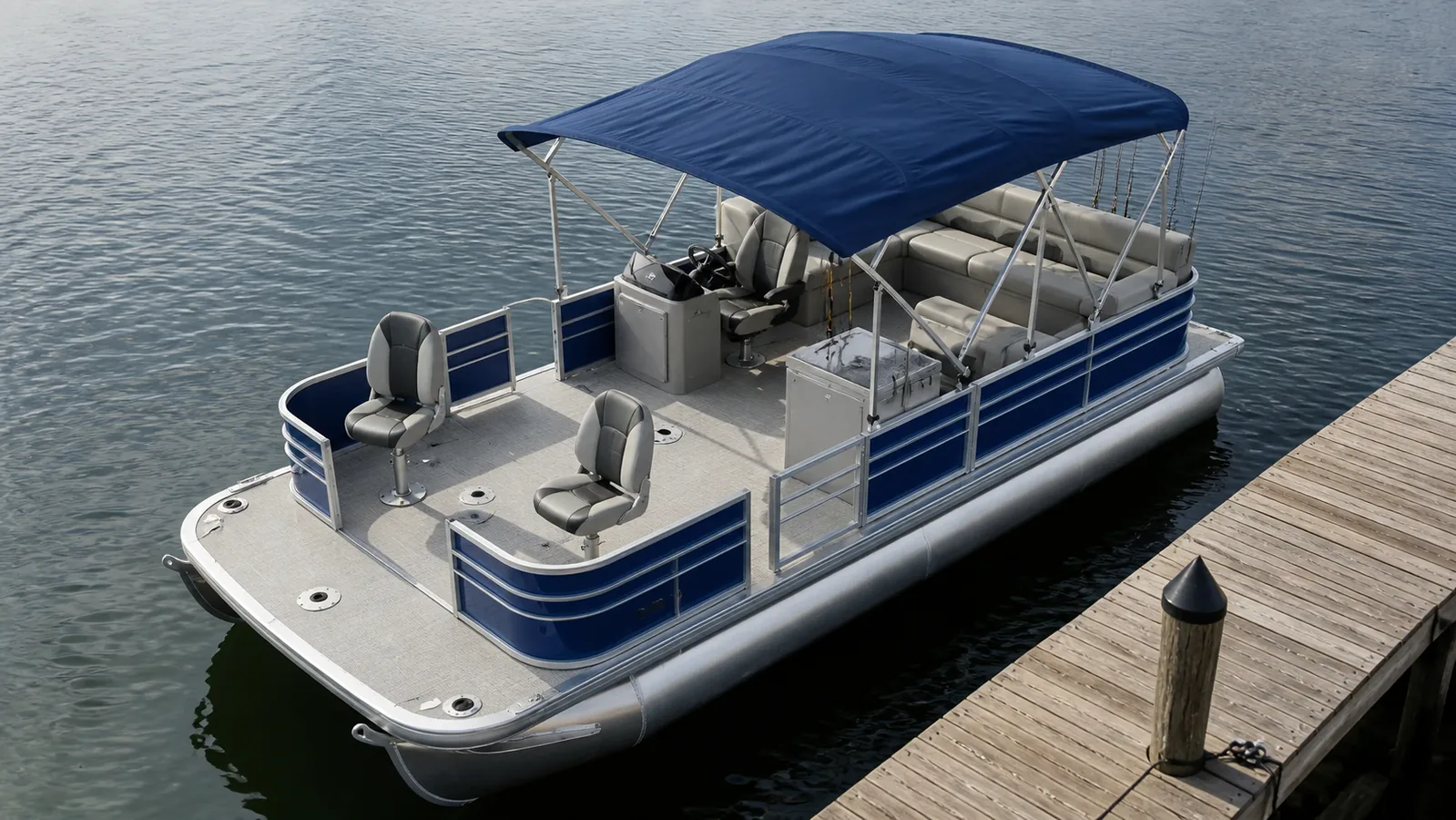
A useful deck plan makes movement visible. Mark where passengers board, where anglers stand, where rods are handled, where loose equipment is stored and how the operator reaches the helm. If a fish-and-cruise layout is required, identify which seats support social use and which positions must remain clear during fishing.
Avoid creating a deck in which every available area carries a different feature. Too many seat styles, tables, coolers and fishing accessories can make the boat difficult to explain, clean and reorder. A dealer package is easier to sell when the base arrangement has a clear purpose and a controlled list of upgrades.
Plan fishing stations around the actual workflow
Write the fishing sequence from start to finish. Consider how rods are prepared, where tackle is opened, where bait or catch-handling equipment is used, how anglers move when a fish is landed and how the deck is reset after the trip. This is more useful than requesting generic fishing features without a location or operating reason.
Potential discussion points may include fishing seats, rod storage, rod holders, a bait-preparation area, livewell direction, tackle storage, washdown access and electronics placement. Treat each as a question for the selected model. The quotation should state whether an item is included, optional, buyer-supplied or unavailable.
The layout must also preserve safe access to gates, controls, service points and required safety equipment. A rendering is not a substitute for engineering confirmation or destination approval.
Decide between dedicated fishing and fish-and-cruise use
The search results for pontoon fishing boat layouts show two common buyer expectations: a dedicated fishing arrangement and a mixed fish-and-cruise arrangement. A commercial buyer should choose the role before approving the seating plan.
| Layout direction | Best fit to evaluate | Main trade-off to confirm |
|---|---|---|
| Dedicated fishing | Fishing operators and specialist dealer demand | More working space may reduce lounge seating |
| Fish and cruise | Resorts, rental fleets and mixed-use dealer markets | More seating may reduce open fishing zones |
| Modular package | Dealers testing more than one customer segment | Removable or optional items need clear storage and approval records |
Do not use these labels as fixed specifications. Ask the supplier to show the exact arrangement for the quoted boat, including gates, furniture, equipment, helm position and clear deck space.
Treat storage as part of deck safety and turnaround
Storage decisions affect both the customer experience and the work between trips. Rods, tackle, personal bags, required safety equipment, cleaning tools and removable accessories should not compete for the same space.
Create a storage map with three categories:
- During-use access: items the angler or operator needs without interrupting deck movement.
- Protected storage: equipment that should remain secured or dry when not in use.
- Turnaround storage: cleaning tools, covers or staff items used at the dock.
For a rental or resort fleet, ask how each compartment can be checked and cleaned. For a dealer package, ask whether the storage story is visible enough for sales staff to demonstrate without removing multiple seats or panels.
Confirm livewell and water-system questions without guessing
If the project requires a livewell, describe the intended use instead of naming an assumed tank size or performance claim. Tell the supplier the fishing style, likely holding time, freshwater or saltwater environment, cleaning routine and any buyer expectations that need technical review.
The supplier discussion may cover intake, recirculation, aeration, drainage, access and cleaning. Exact capacity, plumbing, pump specification and availability must be confirmed for the selected model. Operators should also follow current fisheries guidance and local rules for fish handling, release and the movement of water between locations.
The existing livewell fish care guide provides operational context. Use it as a prompt for questions, not as a substitute for the final system specification or local fisheries advice.
Keep the helm and equipment package serviceable
Fishing electronics, steering, controls and other helm equipment can create hidden scope gaps when buyers compare quotations. Identify which items are factory-installed, locally installed, buyer-supplied or excluded. Confirm how cables, mounts and service access will be handled for the approved configuration.
Ask whether optional equipment changes the console layout, electrical scope, battery plan, deck movement or packing method. A clean quotation should connect every selected item to one configuration record rather than leaving important decisions in separate messages.
Standardize the dealer or fleet package
Dealers and multi-boat operators usually benefit from fewer controlled configurations. Start with a base package, then limit upgrades to options that support a clear market role.
| Package layer | What to record | Commercial purpose |
|---|---|---|
| Base boat | Model direction, deck arrangement and standard scope | Creates one comparable quotation baseline |
| Fishing package | Confirmed fishing stations, storage and equipment | Makes the product role easy to explain |
| Comfort package | Confirmed seating, shade and passenger-use items | Supports mixed-use or resort demand |
| Local scope | Engine, electronics, registration or rigging handled locally | Prevents a partial quote from appearing complete |
| Brand package | Color, graphics and dealer presentation items | Supports repeatable showroom presentation |
Dealers planning a first order can also use the pontoon dealer model-mix guide to define the role of each boat in the lineup. Rental buyers should use the pontoon fleet buying checklist for the wider operating, delivery and support scope.
Review the layout before quotation approval
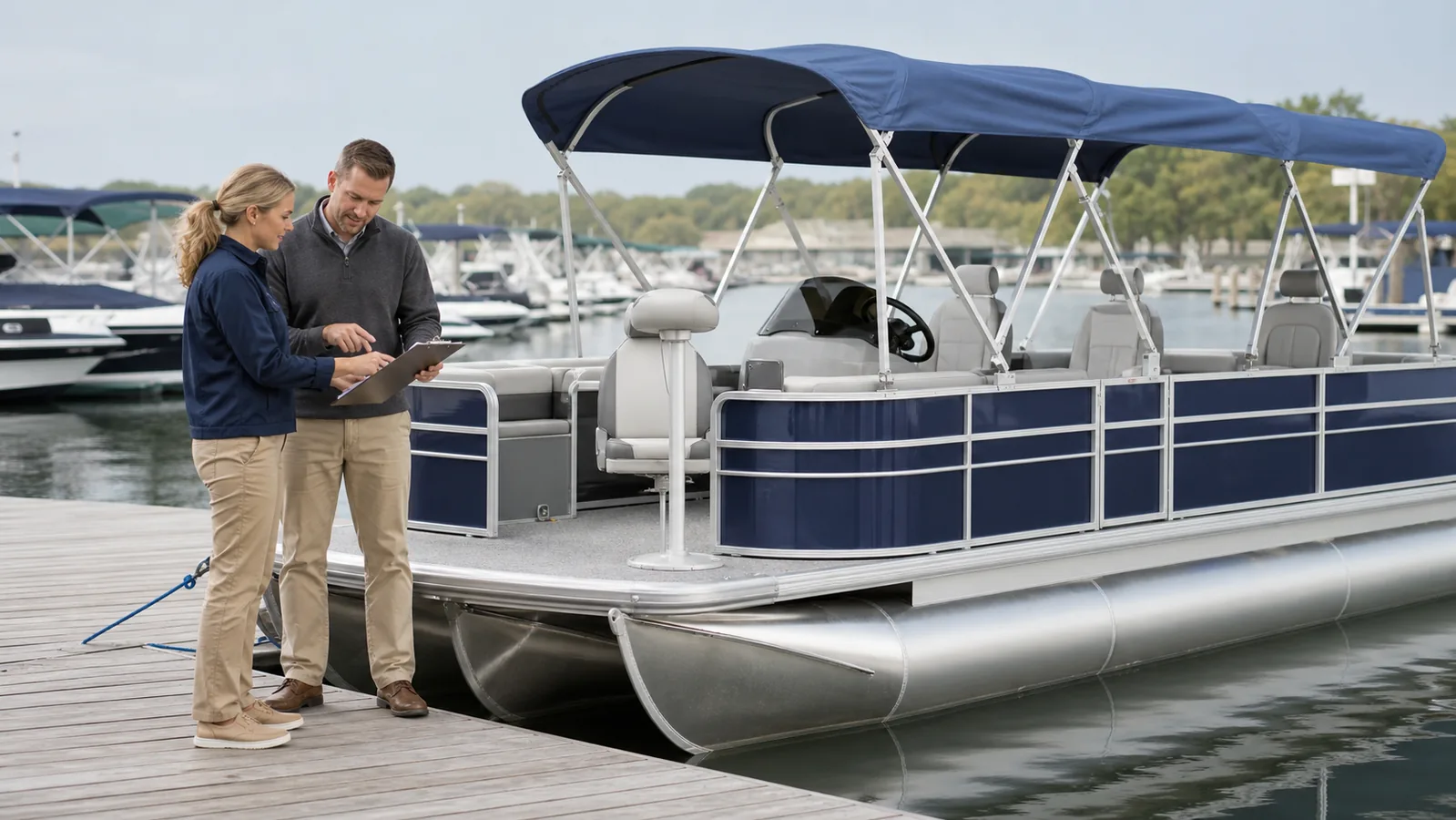
Use the same review order for every proposed configuration:
- Confirm the target market and commercial use.
- Identify the closest pontoon series and model direction.
- Mark boarding, helm, seating, fishing and storage zones.
- List each requested item as included, optional, buyer-supplied or excluded.
- Check access for operation, inspection, cleaning and service.
- Confirm local compliance and documentation questions separately.
- Record the approved layout, option list and buyer approver.
- Reconfirm any effect on price, production, packing and delivery in writing.
This process gives the supplier a usable brief and gives the buyer a stable comparison point. It also reduces the risk that a repeat order is based on memory rather than an identifiable configuration.
Prepare a quote-ready pontoon fishing boat brief
Include the following information in the first supplier discussion:
- target country and customer segment;
- intended use and operating water;
- dedicated fishing or fish-and-cruise direction;
- estimated quantity and first-order plan;
- preferred pontoon series or size direction;
- passenger, boarding, seating and shade priorities;
- fishing workflow, storage and equipment priorities;
- engine, electronics, trailer and local rigging boundary;
- brand or dealer presentation requirements;
- destination documents and inspection questions;
- planned operating date, subject to supplier confirmation.
Review the current Kinocean pontoon boat range, boat catalog and dealer program. When the market role, quantity and layout priorities are clear, send the project brief for a model and configuration discussion.
Final model availability, dimensions, capacity, equipment, price, production, delivery and destination suitability must be confirmed in the formal quotation and project documents.
Share this article
Have a boat project in mind?
Share your market, quantity plan and boat use. Kinocean can help narrow the model direction before you request a detailed quote.