

A pontoon dealer’s first order should test a market hypothesis, not fill every possible product slot. A smaller, clearly structured model mix is easier to present, quote, display and evaluate than a collection of unrelated sizes and options.
This guide helps dealers and importers prepare a first-order plan for supplier discussions. It does not predict sales or prescribe a universal inventory quantity. Market demand, specifications, commercial terms and destination requirements must be verified for the final order.
First-order model-mix matrix
| Planning area | Dealer input | Decision to document |
|---|---|---|
| Target buyers | Customer groups, applications and buying priorities | Which customer each model is meant to serve |
| Model roles | Entry, core, premium or commercial-use need | Why each selected platform belongs in the lineup |
| Configuration | Essential functions and controlled upgrade options | Base package versus optional package |
| Quantity direction | Trial purpose and stock-risk tolerance | Initial mix to validate, subject to quotation |
| Dealer readiness | Showroom, launch, rigging, storage and sales materials | Local tasks before customer delivery |
| Delivery | Destination, trailer, packing and handover point | Supplier and dealer responsibility boundary |
| Reorder logic | Signals to collect after launch | Evidence needed before expanding the mix |
1. Start with the buyers in your territory
List the buyers your dealership already reaches or can credibly serve. These may include leisure families, fishing customers, resorts, rental operators, clubs or tourism businesses. Each group may value a different combination of layout, comfort, ease of use, price position and commercial practicality.
Use real local evidence where available: customer enquiries, existing boat categories, water access, towing habits, marina constraints, season length and competitor inventory. Separate facts from assumptions. A first order can test an assumption, but it should not present the assumption as guaranteed demand.
2. Give every selected model a clear role
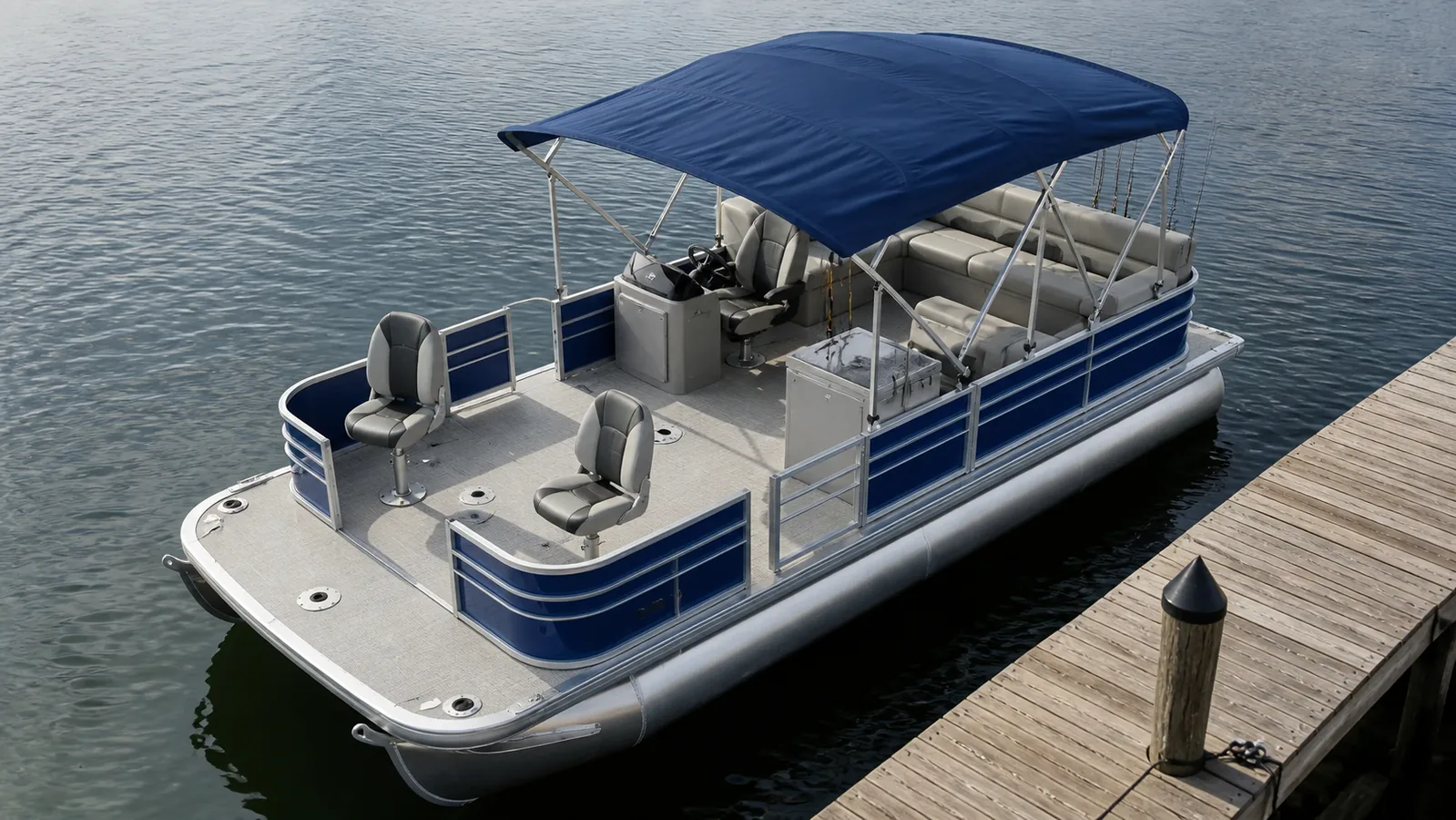
Review Kinocean’s pontoon boat range and the relevant series pages. Do not begin by selecting the largest number of models. Begin by defining the roles the dealer needs to cover.
A practical role framework is:
- Entry role: a straightforward starting point for buyers who want the essential pontoon experience.
- Core role: the configuration the dealer expects to present most often.
- Upgrade role: a stronger comfort, layout or visual package for buyers with different priorities.
- Commercial role: a platform considered for resort, rental, club or project enquiries.
A first order may not need all four. Select only the roles supported by the current market hypothesis and dealer capacity.
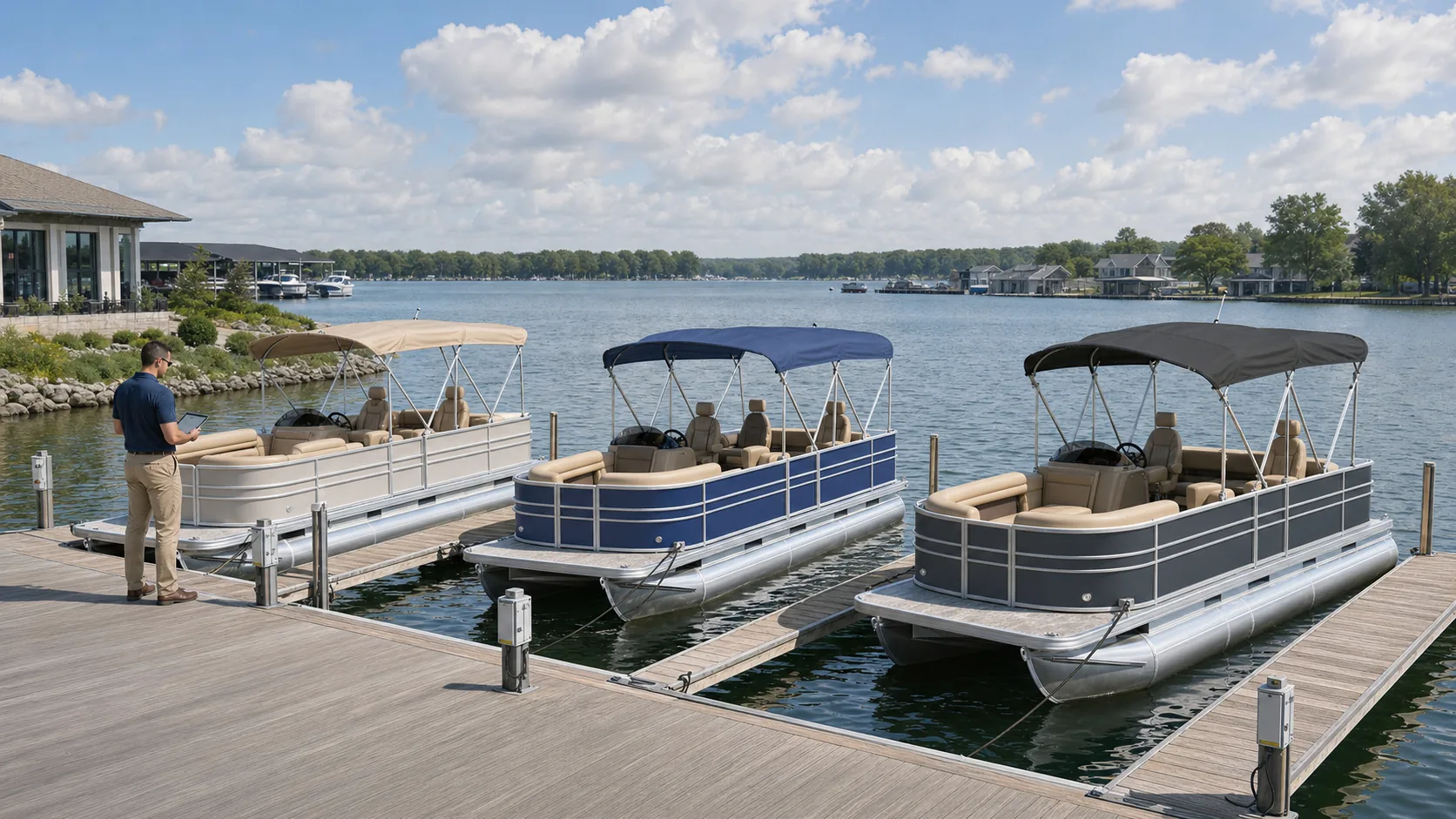
3. Avoid model duplication inside the first order
Two boats that look different can still compete for the same buyer. For each proposed model, write one sentence explaining why a customer would choose it instead of the next boat in the lineup.
Compare the buyer, use case, layout, essential equipment, visual position and expected quotation range. Do not publish or promise a price before the supplier confirms the final scope. The purpose is to identify overlap before inventory is committed.
If two boats have no clear difference in buyer or use, keep the stronger candidate and move the other to a future-order test.
4. Standardize the base configuration
A repeatable base package can simplify quoting, staff training, photography, showroom explanations and later reorders. Ask the supplier to identify the exact included scope and separate every option.
| Package layer | Purpose | Dealer decision |
|---|---|---|
| Base configuration | Create one clear comparison point | Functions required on every unit of that role |
| Controlled upgrade | Support a distinct buyer or price position | Small set of options with a clear sales reason |
| Local-supply items | Use local engine, electronics, trailer or service channels where planned | Interfaces, installation and commissioning responsibility |
| Future options | Preserve ideas without overloading the first order | Items to test only after market feedback |
Current option availability varies by series and configuration. Confirm seating, canopy, flooring, rail, color, branding, engine direction, trailer and other details in the formal quotation.
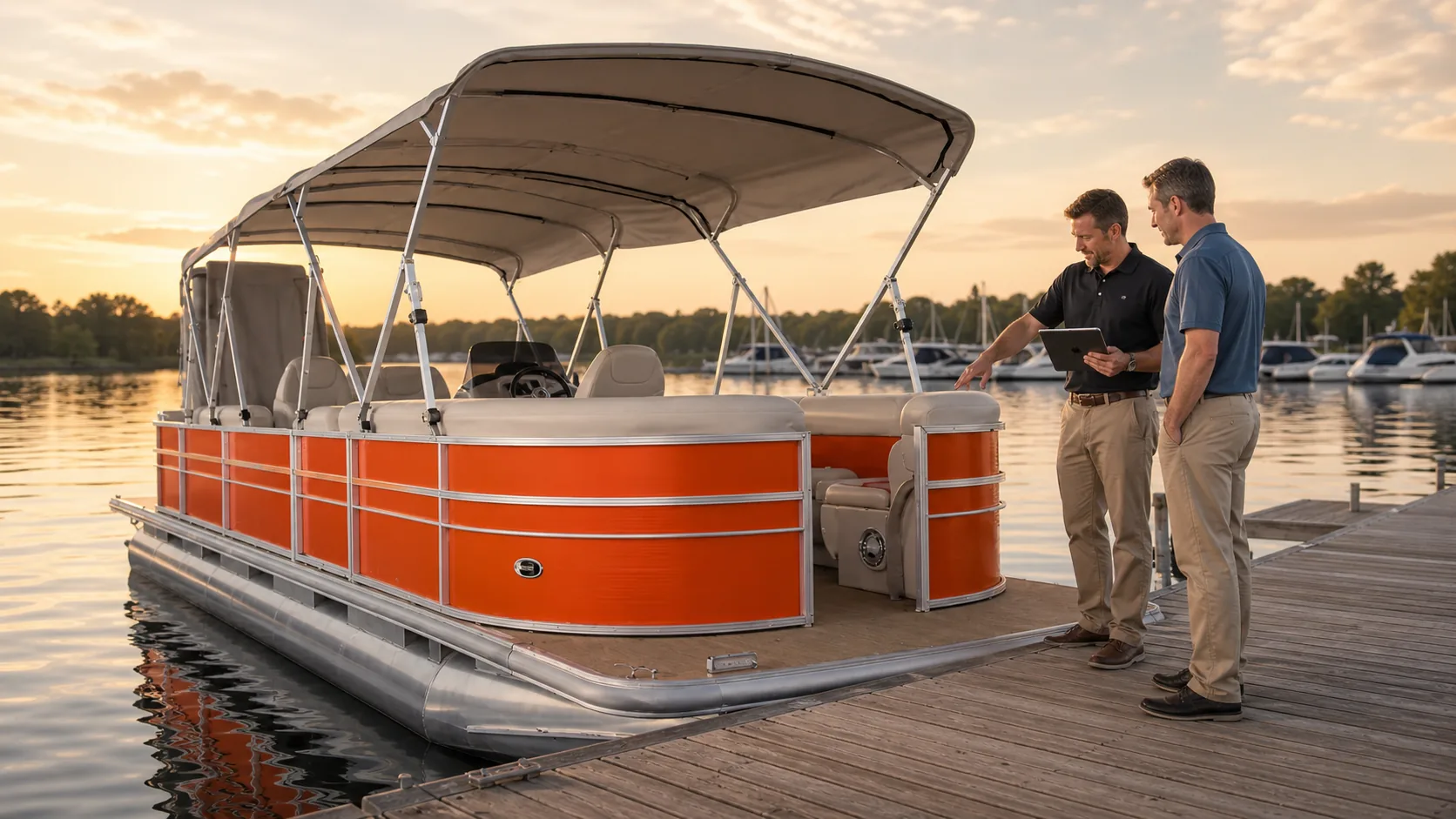
5. Match the model mix to dealer operations
The right product mix must also fit the dealership. Review how boats will be transported, stored, displayed, launched, photographed, rigged and handed over. A model that looks attractive on a product page may create avoidable friction if the dealer has not planned the local workflow.
Document:
- showroom or outdoor display space;
- launch and demonstration access;
- trailer and towing arrangements;
- engine and electronics installation responsibilities;
- cleaning, cover and storage process;
- sales-team training and quotation materials;
- customer delivery and after-sales contact.
6. Use product pages to narrow the first discussion
The Entertainment Series presents a ladder of leisure-focused pontoon directions, while other series may support fishing, sport or tourism applications. Use the visible product information to prepare questions, then verify current specifications and available options for the exact model under consideration.
Dealers should avoid turning a web summary into a purchase specification. The formal quotation, option record and supporting project documents remain the controlling sources.
7. Define what the first order must teach you
A trial order is valuable when it answers specific questions. Decide what evidence the dealership will collect after launch and before expanding the lineup.
| Learning area | Signal to collect | Possible next decision |
|---|---|---|
| Customer fit | Which buyer groups request each model role | Keep, reposition or remove a role |
| Configuration | Which included features and upgrades buyers discuss | Simplify or refine the package |
| Quotation clarity | Where staff or customers need more explanation | Improve sales materials and option records |
| Dealer workflow | Rigging, storage, display and delivery friction | Adjust local process or future scope |
| Supplier communication | Quality of revision, document and support handling | Improve the repeat-order brief |
Do not use one enquiry or one sale as proof of broad demand. Look for repeated patterns across the launch period and compare them with the original market hypothesis.
8. Compare complete commercial scope
Ask the supplier to identify what is included, optional, buyer-supplied and excluded. Clarify packing, shipment, trailer, engine, local assembly, commissioning and documentation responsibilities.
A complete comparison is more useful than a headline price. Taxes, duties, destination charges and regulatory tasks should be verified with qualified local providers. The aluminum boat manufacturer guide provides a broader supplier-evaluation framework.
9. Prepare a dealer first-order RFQ
- Company, territory and current sales channels
- Target buyer groups and water-use scenarios
- Required model roles: entry, core, upgrade or commercial
- Preferred product or series direction
- Expected first-order quantity direction
- Base configuration and controlled upgrade priorities
- Engine, electronics, trailer and other local-supply plans
- Branding, color and dealer presentation needs
- Destination, packing and handover boundary
- Required documents based on local verification
- Inspection and acceptance expectations
- Trial-order learning goals and possible reorder path
Build a lineup your team can explain and reorder
Use the boat catalog to shortlist platforms, then compare the pontoon range. Operators planning rental fleets can also use the pontoon fleet buying checklist.
Dealers can review the dealer program or submit the territory, target buyers, model roles, quantity direction and option priorities through the project quote form.
Always confirm current specifications, options, commercial terms and destination requirements in the formal project documents.
Share this article
Have a boat project in mind?
Share your market, quantity plan and boat use. Kinocean can help narrow the model direction before you request a detailed quote.