
A commercial pontoon boat for a resort is not simply a leisure boat with more seats. It is part of a guest experience, an operating schedule and a waterfront workflow. The best layout depends on how passengers arrive, board, move, sit, store belongings and leave the boat after each trip.
Before requesting a quote, give the manufacturer a clear operating brief. The nine decisions below help resort, hotel, yacht-club and tour operators turn a general idea into a practical boat program.
1. Define the experience you plan to sell
Begin with the product your guests will buy. A quiet sunset cruise, a short shuttle, a private hotel transfer and a sightseeing tour create different priorities.
Write down the route, typical trip duration, operating hours and expected guest profile. This prevents the project from becoming a list of attractive options without a clear operational purpose.
2. Map the boarding process
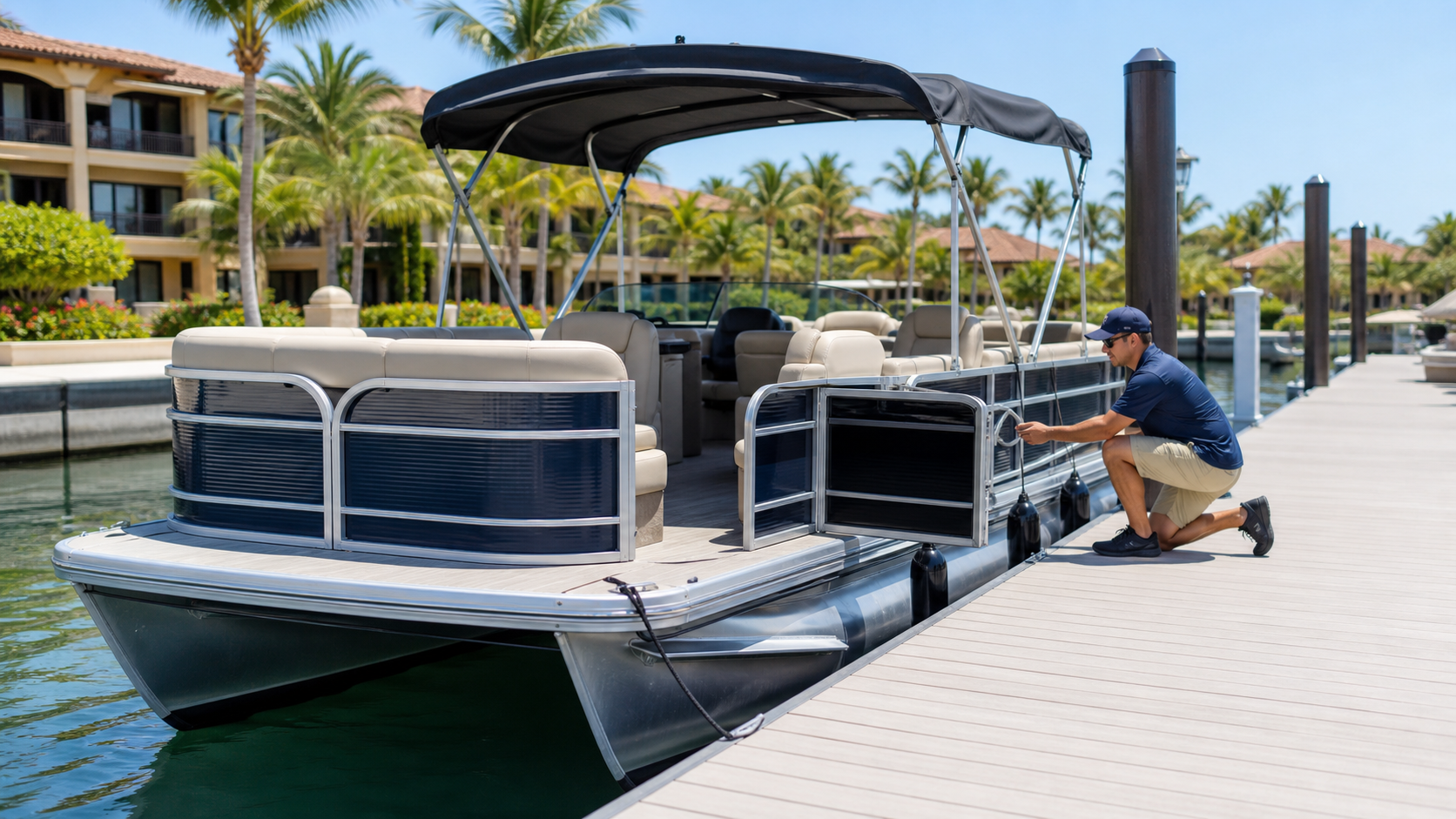
Boarding is one of the first details guests notice. Review the dock height, boarding side, gate position, step arrangement and the space passengers need to enter without blocking the crew.
If the boat will serve families, older guests or passengers carrying bags, the boarding route deserves more attention than a showroom-only layout.
3. Plan passenger flow, not only seat count
Maximum seating is not always the most useful commercial layout. Guests and crew still need clear paths between the gate, seats, storage and activity zones.
Ask where people will stand during boarding, where a guide may speak and how passengers move when the boat reaches a viewing point. A simple flow diagram is often more useful than adding another seat.
4. Match seating zones to trip duration
Short transfers can prioritize quick boarding and durable seating. Longer tours may need more personal space, supportive seating and better access to shade.
Consider whether groups should face forward, face each other or gather around shared social areas. The layout should support the experience without making crew supervision difficult.
5. Specify shade and weather exposure
Shade can be a central part of guest comfort, especially in warm resort markets. Define which seating zones need continuous coverage and which can remain open.
Also consider rain, wind and the direction of the sun during typical operating hours. The objective is not the largest canopy; it is the right coverage for the route and schedule.
6. Separate guest storage from operating storage
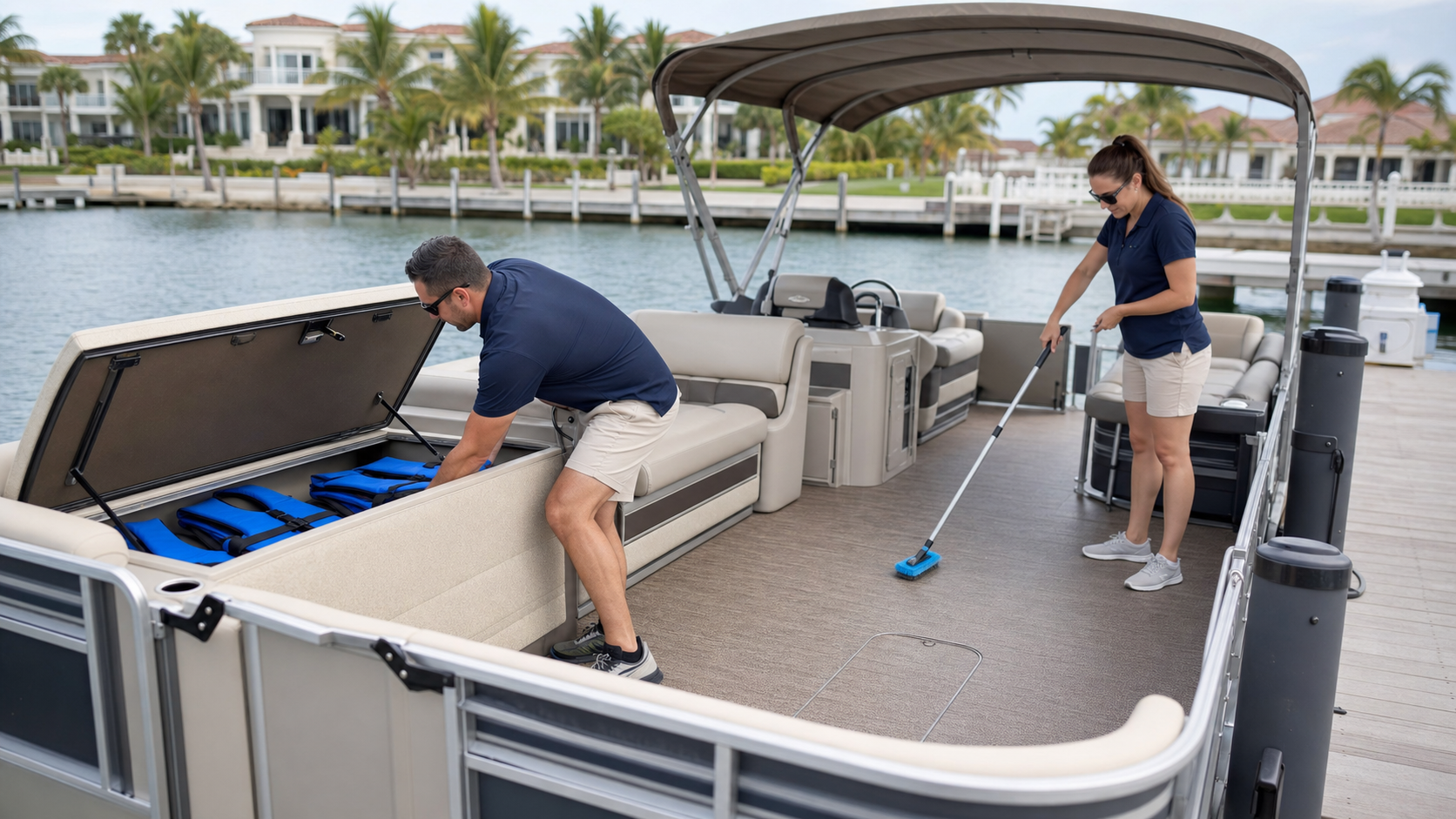
Guest bags, life jackets, cleaning equipment, mooring lines and crew supplies should not compete for the same space. List what must remain accessible during a trip and what can be stored away.
Well-planned storage helps the deck stay clear and reduces turnaround time between departures.
7. Design for cleaning and turnaround
Commercial boats may run repeatedly in one day. Flooring, seat surfaces, drainage access and uncluttered deck areas affect how quickly the crew can prepare for the next group.
Ask the operations team which areas become dirty first and which components require frequent handling. Their answers should influence the layout brief.
8. Define the crew and service zones
Clarify the helm position, crew movement, safety-equipment access and any service role on board. The crew should be able to monitor passengers and reach essential equipment without pushing through crowded seating.
Local operating and safety requirements vary. Confirm the applicable rules with the relevant authority before finalizing the boat specification.
9. Prepare a useful quotation brief
A manufacturer can respond more effectively when the first inquiry includes the market, use case and order direction.
| Information to provide | Why it matters |
|---|---|
| Country and operating location | Frames water, climate and local-market questions |
| Resort, hotel, club or tour use | Defines the commercial scenario |
| Typical route and trip duration | Influences comfort, shade and storage priorities |
| Expected quantity | Helps structure the project discussion |
| Dock and boarding conditions | Guides access and gate planning |
| Preferred seating and activity zones | Turns the guest experience into a layout brief |
| Branding and option requirements | Identifies customization topics early |
| Target operating date | Helps organize the quotation conversation without assuming a lead time |
From layout idea to a quote-ready project
The most useful commercial pontoon brief explains how the boat must operate. Start with the guest journey, then define boarding, flow, seating, shade, storage, cleaning and crew needs.
Kinocean works with buyers exploring pontoon programs for dealers, resorts and waterfront operators. Review the pontoon boat range, then share your project requirements with your target market, use case, expected quantity and preferred layout direction.
*Operational and regulatory requirements vary by location. Confirm local passenger, equipment and licensing obligations before purchase or operation.*
Share this article
Have a boat project in mind?
Share your market, quantity plan and boat use. Kinocean can help narrow the model direction before you request a detailed quote.