

These three buyer planning charts turn broad aluminum boat questions into a structured project brief. They cover pontoon boat use cases, aluminum fishing boat requirements and shallow-water jet boat review. Each chart is available as a web image and a one-page PDF so buyers, dealers and project teams can reference the same planning framework.
The content is based on Kinocean’s published product-category information and procurement planning principles explained in the manufacturer evaluation guide. The charts do not add specifications to any product page, and they do not replace technical review.
How to use and cite these charts
- Select the chart closest to the intended boat and operation.
- Discuss every field with the operator, dealer or project owner.
- Mark confirmed inputs, unknown inputs and items requiring local review.
- Attach the completed notes to the request for quotation.
- Compare quotations only after the drawing, specification, inclusions and exclusions match.
When citing a chart, use the chart title, Kinocean, this article URL and the access date. The source line below each chart identifies the Kinocean category page used for product context. Interpretive planning text is provided by Kinocean for buyer education. Final model specifications, options, documentation, production and commercial terms require project confirmation.
Chart 1: Pontoon Boat Use Case Matrix
Translate an activity into configuration questions
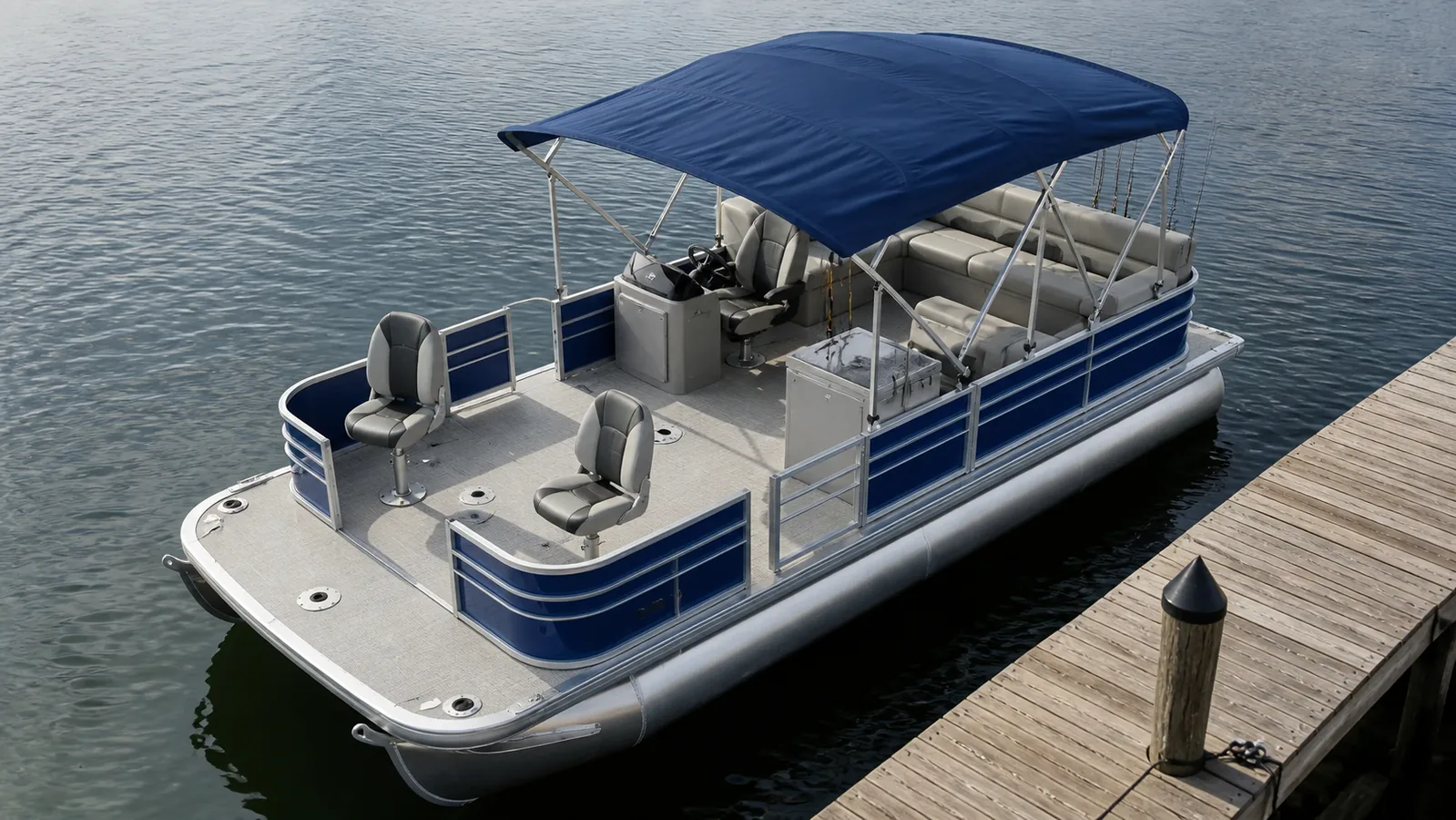
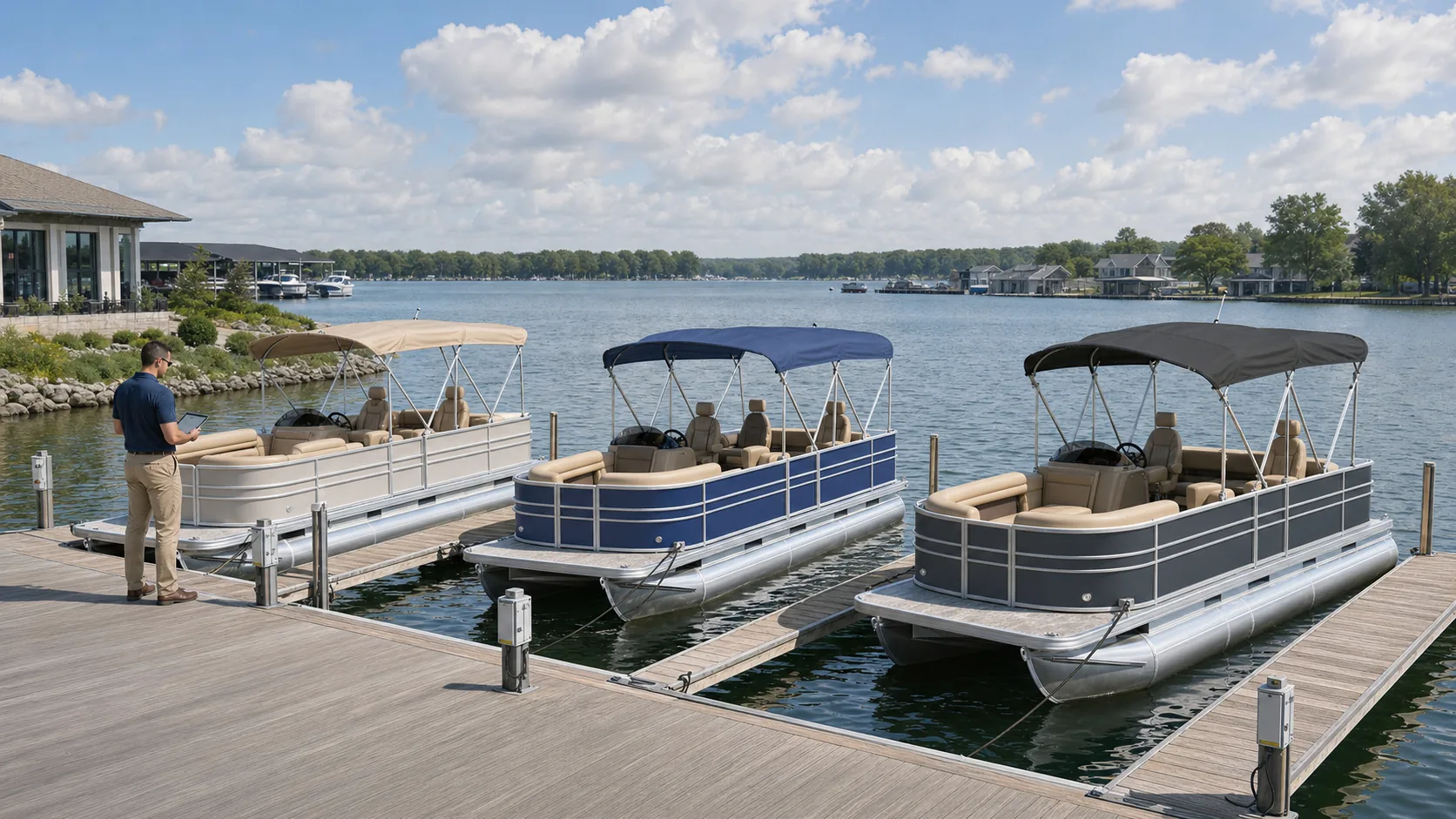
A pontoon project should begin with how people will use the deck. Leisure cruising, fishing, resort or rental work, and entertainment can share a pontoon platform while creating different priorities for passenger movement, seating, shade, storage, supervision, cleaning and equipment. The matrix prevents a buyer from treating an attractive layout as proof that it fits the intended operation.
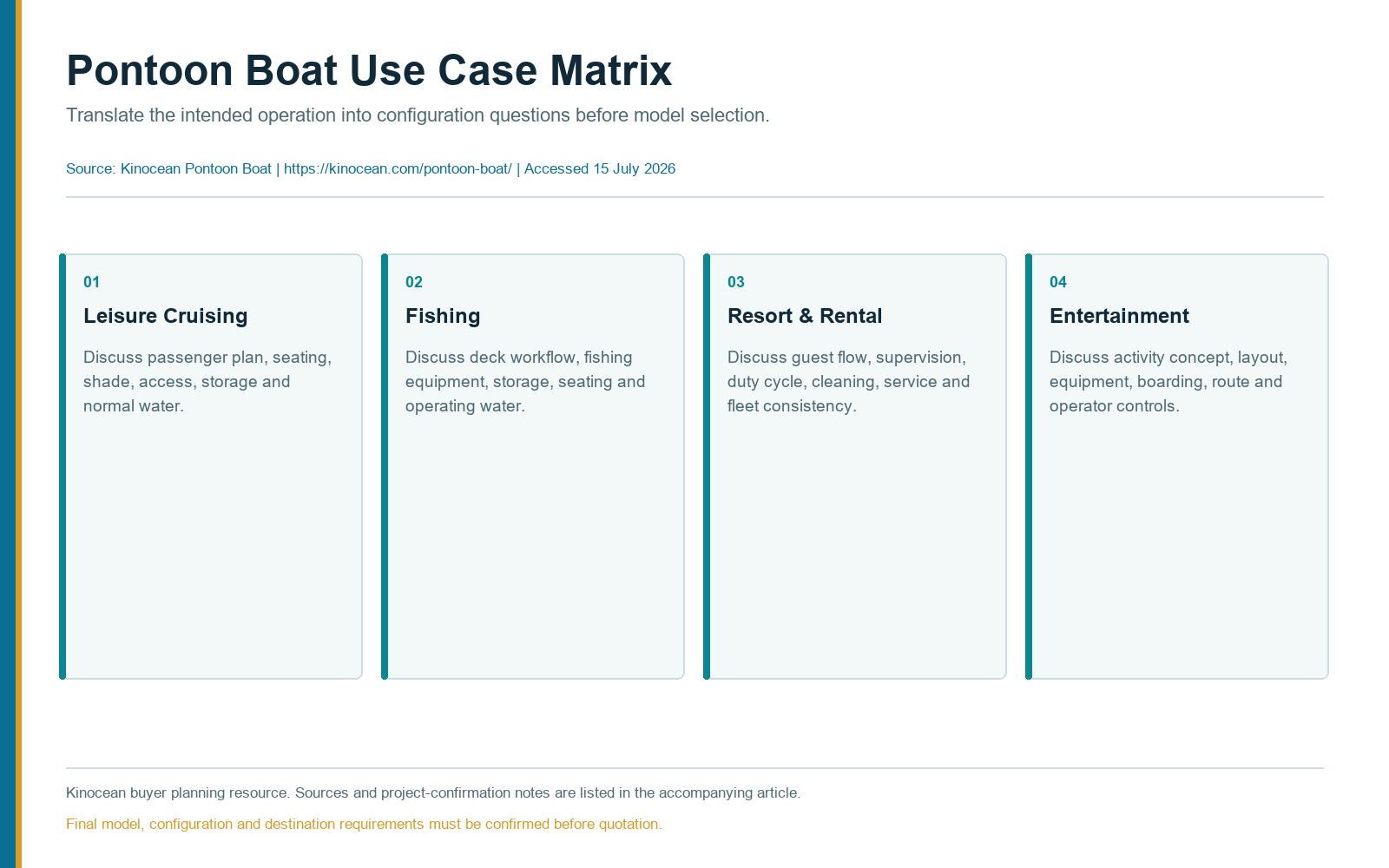
After choosing a use-case column, add the destination, normal water, route, duty cycle, passenger plan and local operating requirements. Then discuss boarding, rail and gate arrangement, deck workflow, furniture, shade, storage, equipment and propulsion as one configuration. Review the Kinocean pontoon boat category for product context. Final capacity, dimensions and equipment must come from the selected model documentation and quotation.
Chart 2: Aluminum Fishing Boat Buyer Checklist
Build a complete fishing-boat operating brief
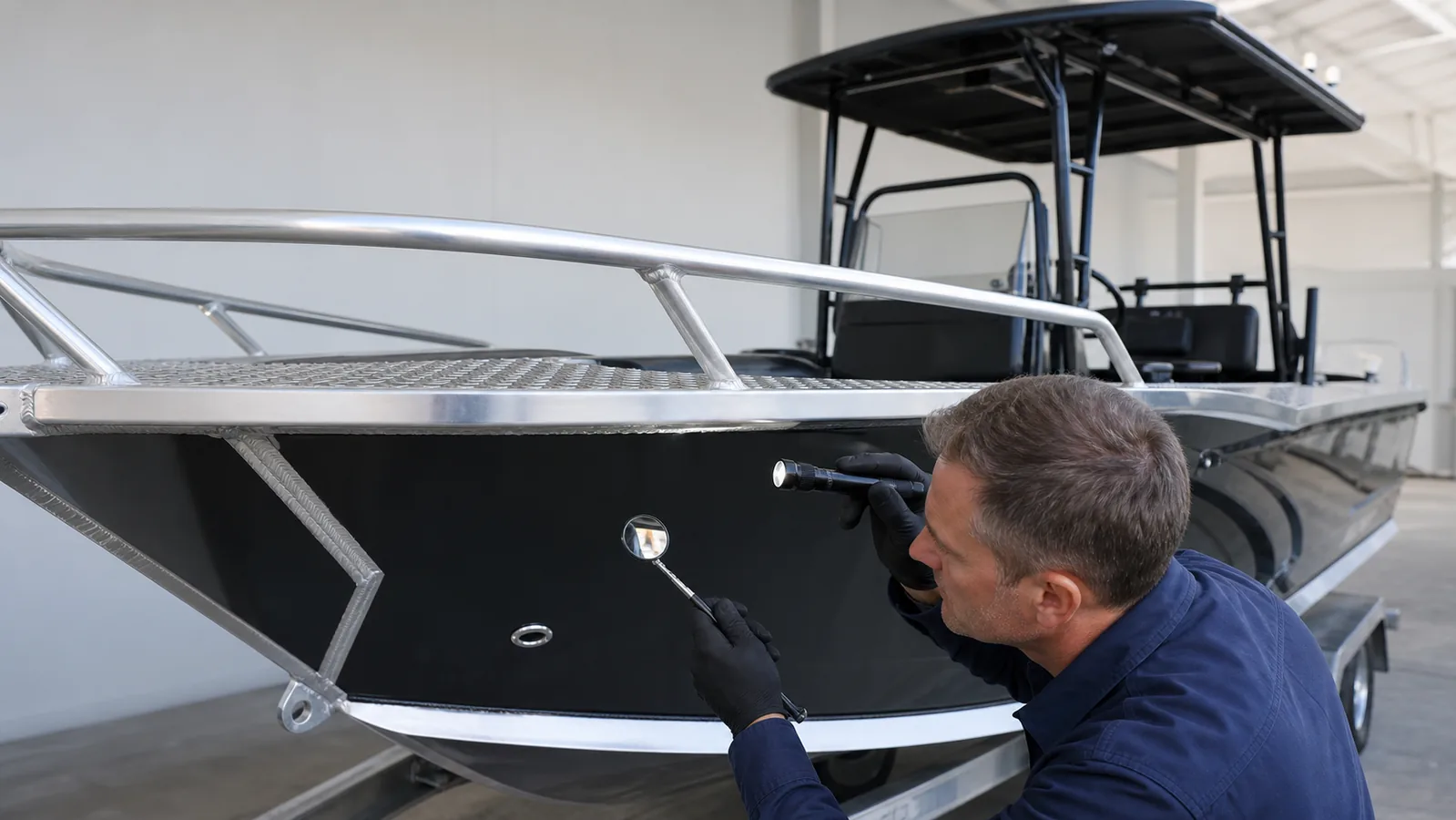
A fishing boat quotation becomes more useful when the buyer describes water, people, payload, deck work and support requirements together. A reference photo or length request cannot explain how crew move, where equipment and catch are stored, how propulsion will be serviced, or which electronics and documents the destination requires.
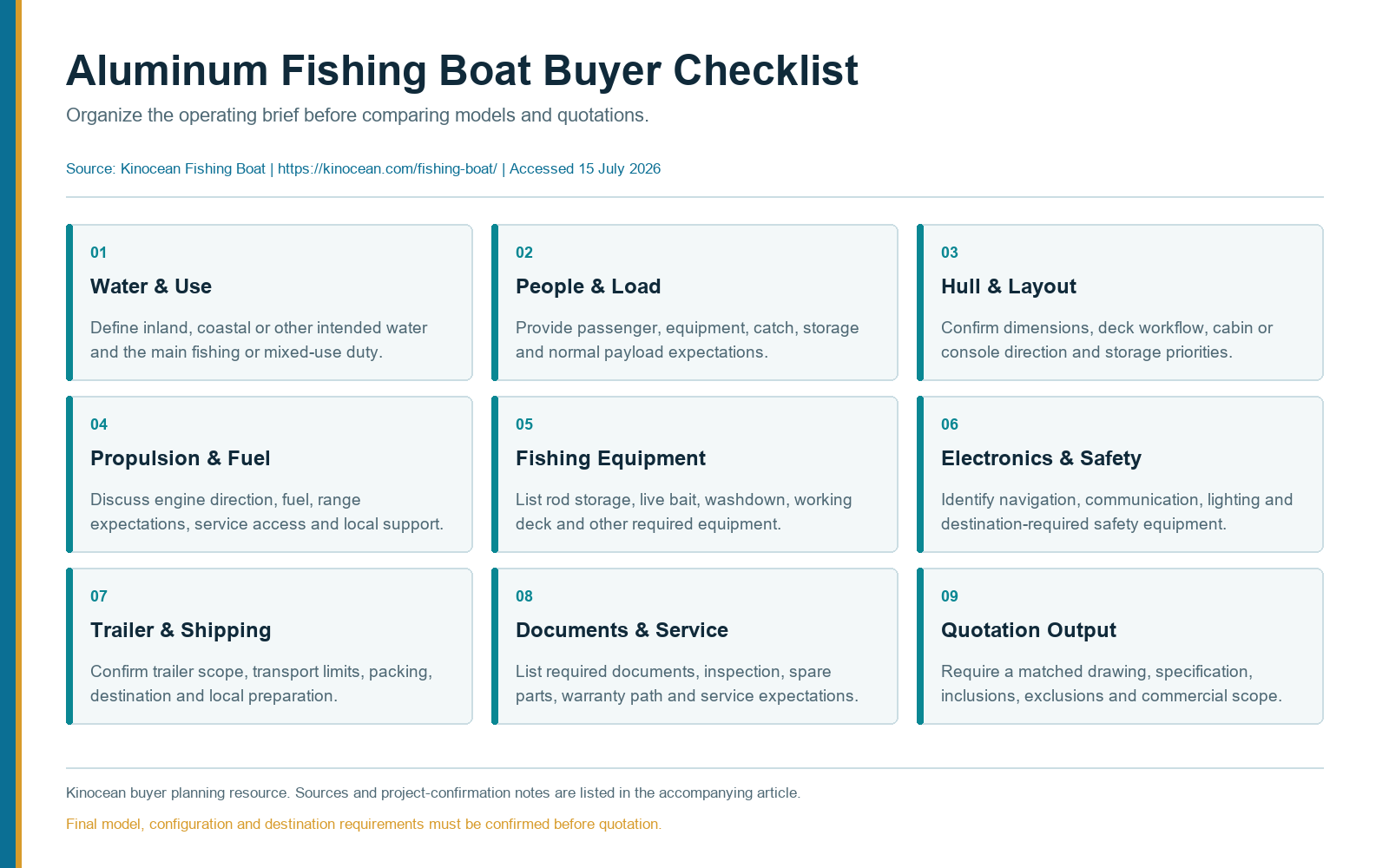
Complete the checklist in sequence. Start with inland, coastal or other intended water and the normal fishing or mixed-use duty. Add passengers, working payload, equipment and storage. Define the hull and layout direction, then discuss engine, fuel, range expectations and local service. Finish with fishing equipment, electronics, safety items, trailer and shipping limits, documents, inspection, parts and warranty communication.
The quotation output should identify the matched drawing and specification, inclusions, exclusions and open questions. For available category context, visit the Kinocean fishing boat range. Material, capacity, propulsion and document details remain model-specific.
Chart 3: Jet Boat Shallow-Water Application Map
Start with route evidence rather than a propulsion assumption
A jet boat may be considered for a shallow-water project, but shallow water is not one condition. Depth, bottom type, current, obstacles, debris and vegetation influence the review. Load, operating frequency, route length and speed expectations also affect the hull, engine and jet-package discussion. The map keeps these inputs connected.
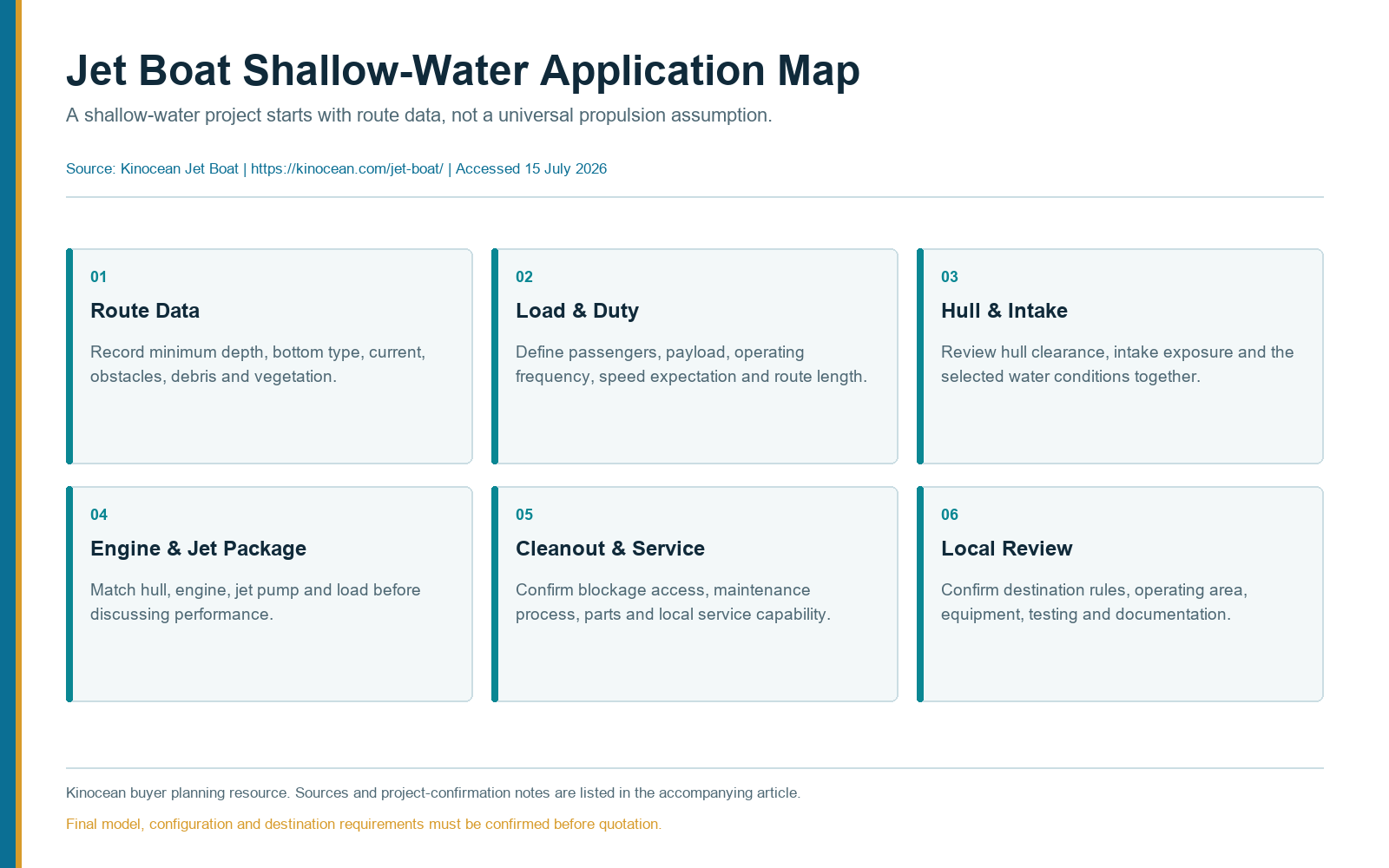
Record the route before discussing performance. Ask how hull clearance and intake exposure relate to the selected conditions. Match the hull, engine, jet pump and normal load as a system. Confirm blockage access, cleanout process, maintenance, parts and local service capability. Destination operating rules, equipment, testing and documentation require separate local review.
The map is a screening tool, not a statement that a jet boat is suitable for every shallow route. Debris, vegetation, bottom contact, changing water level and operator practice can create different risks. Review the Kinocean jet boat category and submit actual route information for configuration discussion.
Use the charts as one procurement workflow
The charts support three stages of a buying project. First, they help the operator describe the mission in language a manufacturer can use. Second, they help the purchasing team identify missing technical, document and service inputs. Third, they provide a common checklist when comparing direct manufacturer and local supplier routes.
After completing a chart, follow the evidence path on Proven Quality and request model-relevant drawings, records and documents. Then apply the manufacturer vs local supplier comparison to assign import, commissioning, registration and service responsibilities.
Source and interpretation boundaries
The source pages identify Kinocean product-category context. The matrices and checklists are editorial planning aids created for this article; their categories and prompts are not measured market data. They should therefore be cited as buyer-planning frameworks, not as survey results, performance tests or regulatory guidance.
Prepare the next project discussion
Choose one chart, add your operating notes and list every unknown. A clear request should include buyer type, destination, application, normal water and route, passenger or payload target, model direction, quantity, options, engine and trailer scope, documents and timing expectations. Dealers should also identify territory, product range, service capability and repeat-order goals.
Share this article
Have a boat project in mind?
Share your market, quantity plan and boat use. Kinocean can help narrow the model direction before you request a detailed quote.