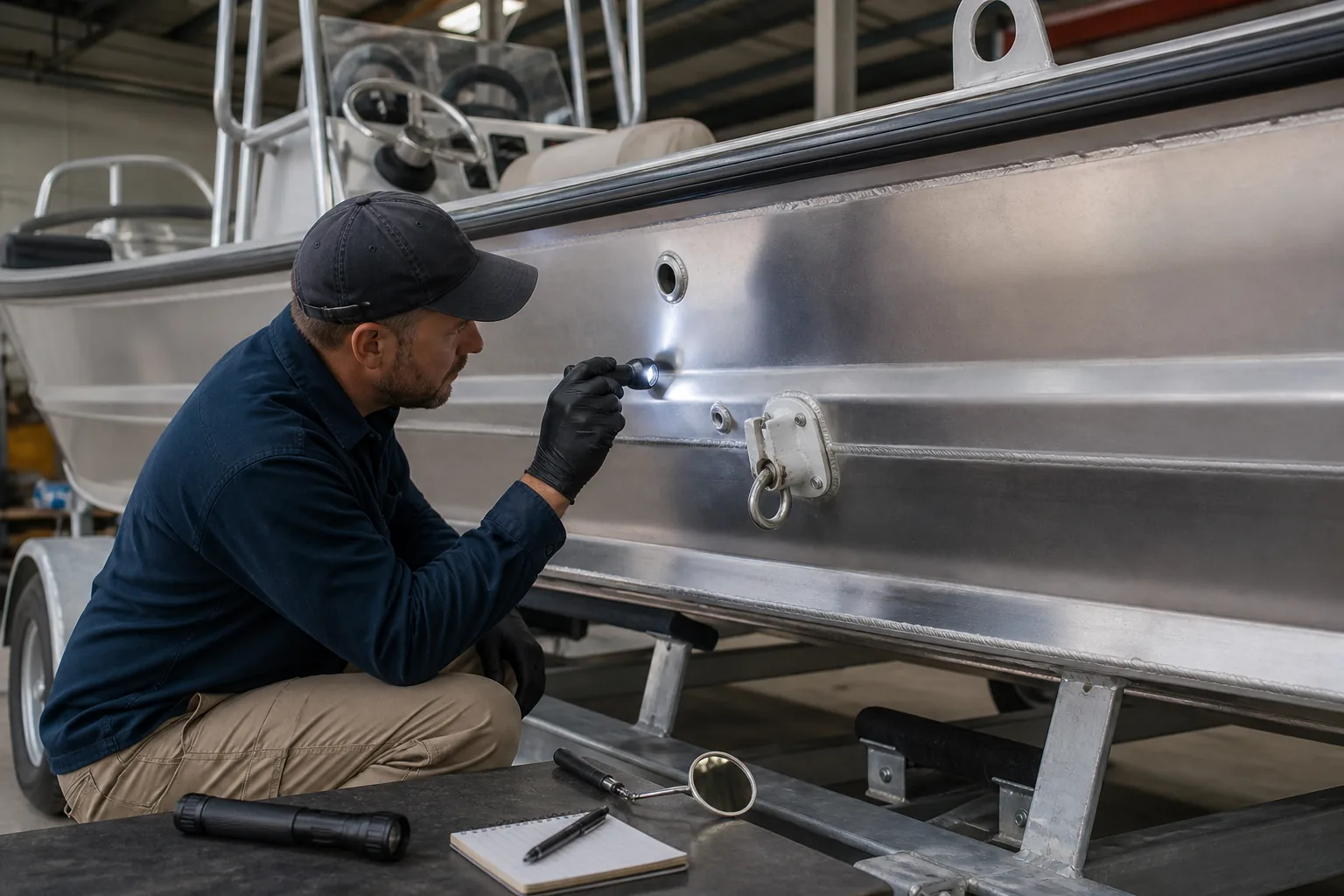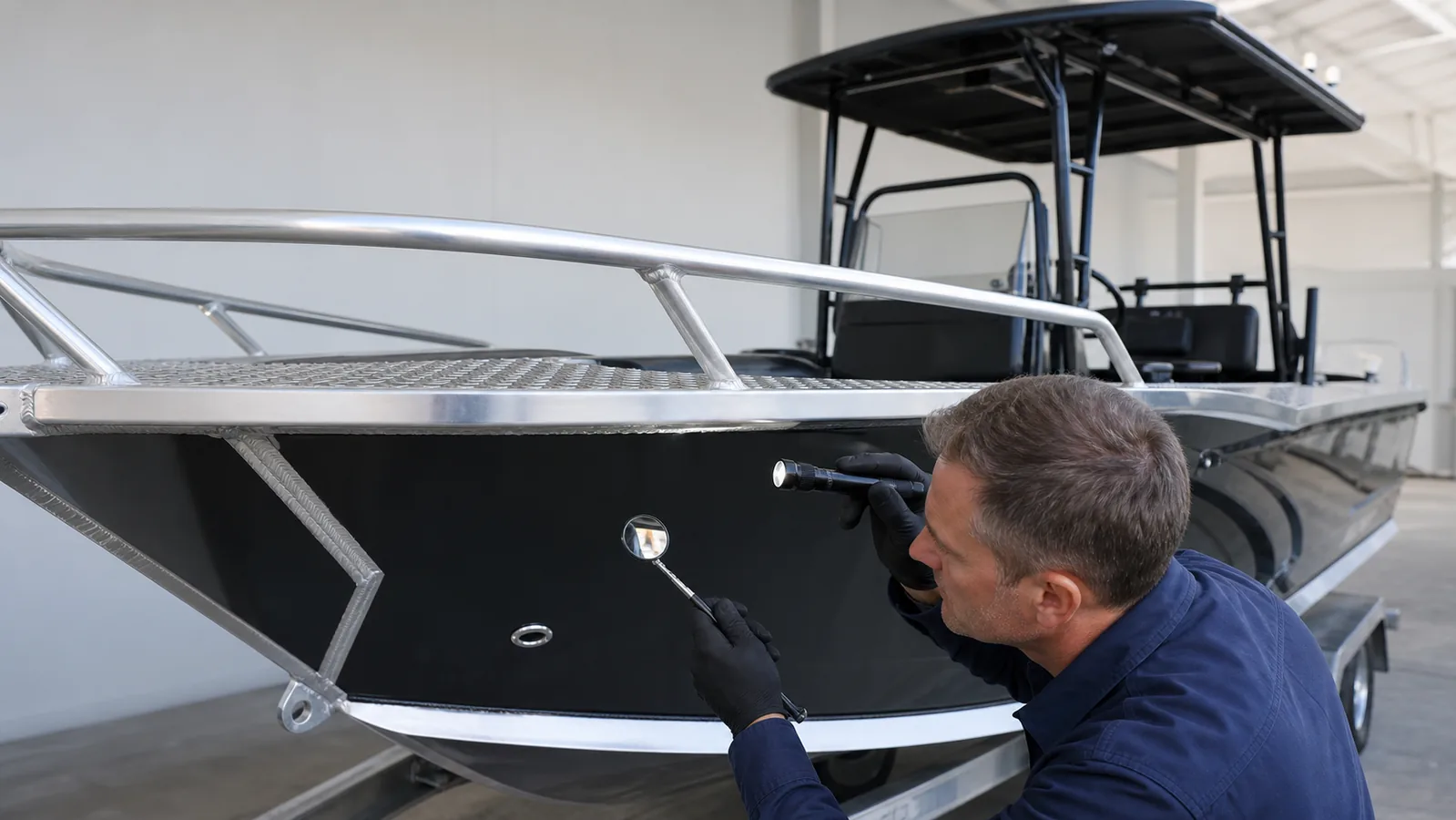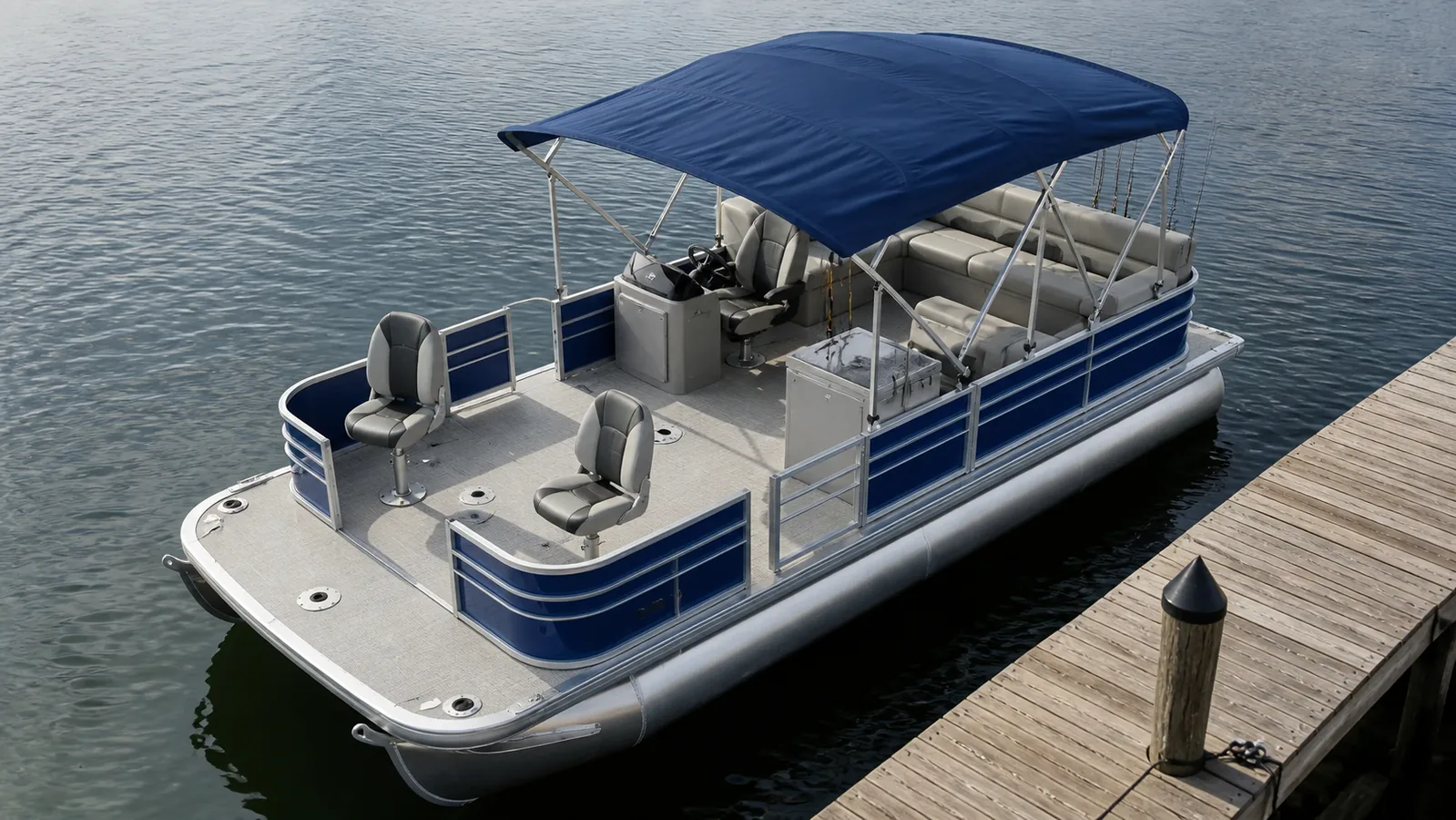


A pontoon rental fleet maintenance checklist should do more than remind staff to “check the boat.” It should connect every observation to the correct vessel, the right person and a clear return-to-service decision. That matters when a resort or rental operator runs several boats, rotates staff and needs to prepare the next guest trip without losing unresolved issues.
The checklist also belongs in the buying process. A layout that is difficult to inspect, clean or reset may create operating friction long after the quotation is approved. Buyers can use this guide to define the maintenance workflow before discussing a Kinocean pontoon boat configuration.
Build the maintenance plan around the operating day
Start with the real sequence of work rather than a generic maintenance template. Map what happens before the first departure, between rentals, after the final return and when a fault is found. A self-drive rental fleet may need a different handoff from a captained resort boat or yacht-club shuttle.
Document these operating inputs first:
- fleet size and boat identification method;
- trip length, daily turnover and seasonal use pattern;
- freshwater, saltwater or mixed operating environment;
- staff roles for inspection, cleaning, fueling and release;
- location of maintenance support and spare equipment;
- destination rules, insurer requirements and manufacturer instructions;
- the person authorized to remove or return a boat to service.
Transport Canada’s rental boat safety best practices recommend a system for regularly checking boats, motors and safety equipment, with maintenance and repair records. Operators should adapt the cadence and exact items to the boat, installed equipment, local rules and applicable manuals.
Use four connected checklist layers
One oversized checklist is difficult to use. Divide the system by decision point while keeping the same vessel identity and open-issue record.
| Checklist layer | Main purpose | Evidence to retain | Release decision |
|---|---|---|---|
| Opening readiness | Confirm the boat is ready for the operating day | Boat ID, date, inspector and exceptions | Available, restricted or held |
| Turnaround check | Identify changes after each trip | Condition notes, photos where appropriate and customer handoff | Ready for the next trip or escalated |
| Planned maintenance | Complete manual- and usage-based service work | Work order, service evidence and parts record | Closed by an authorized person |
| Seasonal close-out | Prepare storage, return or next-season planning | Final condition, open work and ownership | Stored, scheduled or not released |
Do not treat a checked box as proof that work was completed. A useful record identifies what was observed, what action followed and who closed the exception.
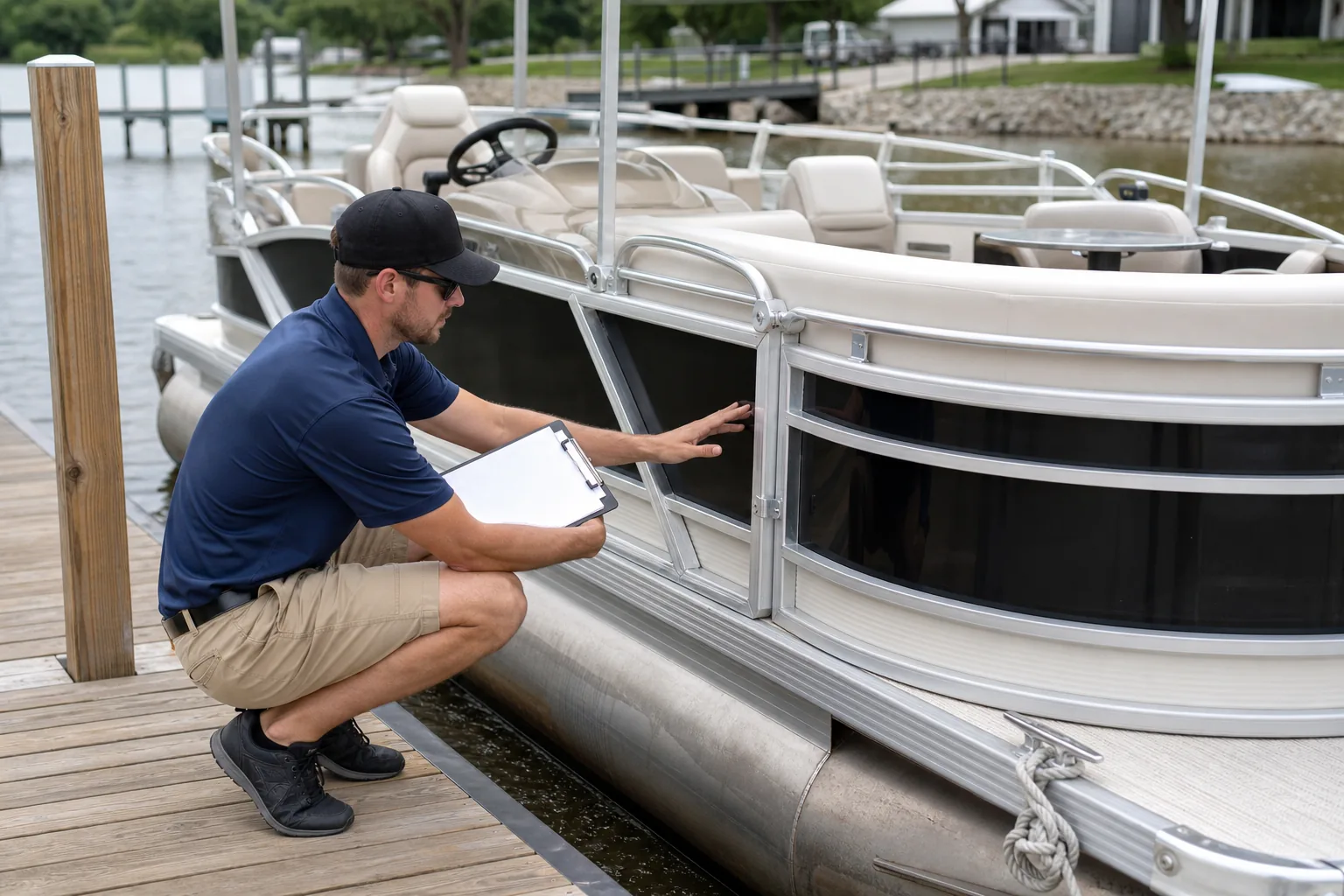
Define a practical opening inspection
The opening check should confirm the condition that staff can safely and reasonably observe before operation. Exact inspection items depend on the boat and local requirements, but the record can group them consistently:
- Boat identity and status: confirm the correct vessel, current availability and any unresolved restriction.
- Visible exterior condition: record accessible damage, loose items or changes from the previous close-out.
- Boarding and deck: check gates, handholds, walking areas, seating, shade equipment and storage access as applicable.
- Helm and controls: follow the boat and equipment manuals for the approved pre-operation checks.
- Required equipment: confirm the locally required safety and operating equipment for the route and customer group.
- Cleanliness and guest readiness: verify that the boat is prepared without hiding a maintenance concern behind a cosmetic reset.
- Exception ownership: assign every issue to a responsible person with a status and next action.
This is not a substitute for a qualified technical inspection, engine service procedure or legal safety checklist. The operating business should maintain those requirements separately and link them to the same vessel record.
Make turnaround checks fast and traceable
Between trips, staff need to compare the returned condition with the released condition. A short, consistent sequence is more useful than an unstructured walkaround.
Record customer-reported concerns before cleaning changes the evidence. Check accessible high-contact and high-movement areas, removable equipment, dock lines and the deck reset. If photos are used, tie them to the boat and time rather than leaving them in a personal phone gallery.
Use simple status language that every team member understands:
- Ready: no open exception prevents the next approved use.
- Restricted: a documented limitation applies and the authorized operator has approved it.
- Hold: the boat cannot return to service until the issue is reviewed and closed.
- Service: planned work is open and the next release owner is named.
Avoid informal labels such as “probably fine” or “watch it.” They do not tell the next shift what decision was made.
Connect maintenance records to configuration choices
Repeated fleet issues can reveal a configuration or procurement problem. Group observations by component or operating task, then review patterns by vessel, layout and use case.
Examples of useful questions include:
- Are staff repeatedly struggling to reach the same inspection or cleaning area?
- Does removable equipment have a defined storage and count process?
- Are different boats using unnecessarily different seating, covers, fittings or dock equipment?
- Can the operator isolate a problem to one vessel and configuration revision?
- Does a repeat order need a layout, option or local-installation change?
The pontoon fleet buying checklist helps buyers define the wider procurement scope. Use the maintenance record to improve the next specification rather than relying on memory at reorder time.
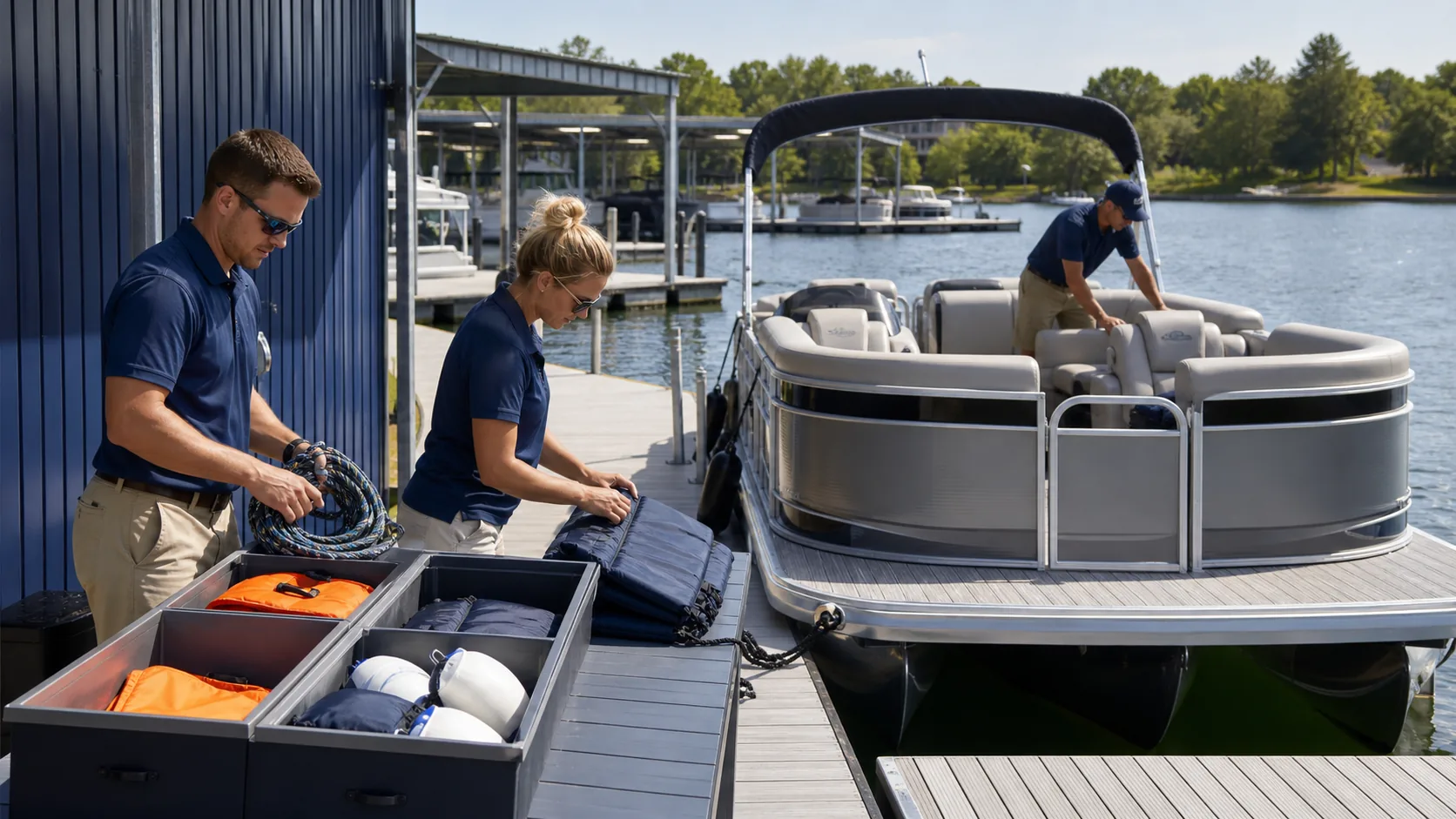
Standardize the fleet without hiding local differences
Standardization can reduce training and spare-part complexity, but only when the boats serve comparable routes and customer groups. Do not force one configuration across different operating conditions simply to simplify the spreadsheet.
Create a controlled fleet matrix:
| Record field | What to capture | Procurement value |
|---|---|---|
| Vessel and configuration | Boat ID, model direction and approved option revision | Connects issues to the correct build scope |
| Operating role | Rental, resort transfer, tour, fishing or mixed use | Separates unlike duty cycles |
| Local installation | Engine, electronics, safety equipment and other local scope | Prevents supplier and local work from being confused |
| Recurring issue | Observation category and frequency | Identifies where deeper review is justified |
| Resolution | Service, training, process or configuration change | Shows whether the action addressed the cause |
| Reorder decision | Keep, change, test or remove | Turns operating evidence into a clearer quotation |
For resort-specific layout questions, review the commercial pontoon boat guide. Final passenger limits, equipment, inspections and operating procedures must be confirmed for the destination and selected boat.
Ask maintenance questions before requesting a quote
A supplier cannot design the operator’s complete maintenance program, but the first quotation can avoid obvious scope gaps. Include these questions in the project brief:
- How often will each boat operate and turn around between users?
- Which areas must staff inspect, clean and reset quickly?
- Which covers, seating, gates, shade, flooring and storage choices need operating review?
- What equipment will be factory-installed, buyer-supplied or installed locally?
- Which manuals, configuration records and handover information are expected?
- How will the buyer identify each unit and approved option revision?
- What inspection evidence is required before shipment and local commissioning?
- Which spare, service and reorder questions should be discussed before the first batch?
Avoid assuming that a website image represents the final configuration. Ask for the quoted model, included equipment, options, exclusions and local-supply boundary in writing.
Compare maintenance scope before approving a fleet order
Use the same questions for each shortlisted configuration. A lower initial quotation may cover a different equipment or handover scope, so record what is included and what your local team will supply.
| Buying decision | Question to resolve | Record with the quotation |
|---|---|---|
| Inspection and cleaning access | Can staff reach the areas they need to check, clean and reset? | Approved layout and any access details requiring review |
| Fleet consistency | Which seating, covers, fittings and equipment can be kept consistent across the batch? | Model and option list for each unit |
| Handover information | Which manuals, unit records and maintenance information are included? | Document list and the party responsible for each item |
| Local work and support | Which installation, commissioning, spare-parts and service tasks need separate arrangements? | Factory scope, buyer scope and unresolved items |
Treat an unanswered question as an open quotation item. Final configuration, documentation and support arrangements need written confirmation for the selected boat and destination.
Prepare a pontoon fleet inquiry
Copy the following brief into the project-details field on the quote form. Add the information you already know and flag any undecided items for discussion.
- Company and buyer type: rental operator, resort, club, dealer or other business
- Destination and operating water: country, site and freshwater or saltwater use
- Order plan: first-batch quantity, any later fleet expansion and target purchasing date
- Boat direction: preferred series, layout and intended guest use
- Operating pattern: typical trips, turnaround and seasonal use
- Maintenance priorities: cleaning access, equipment consistency and local service arrangements
- Supply boundary: factory-installed, buyer-supplied and locally installed equipment to discuss
- Documents to review: destination requirements and requested handover information
Review the Kinocean pontoon boat range, then request a fleet quotation with your destination, quantity and operating priorities.
Maintenance, inspection, safety and release procedures vary by boat, equipment, jurisdiction and operation. Follow the current manufacturer and equipment manuals, applicable law, insurer requirements and qualified professional advice.
Share this article
Have a boat project in mind?
Share your market, quantity plan and boat use. Kinocean can help narrow the model direction before you request a detailed quote.