

An aluminum fishing boat maintenance checklist should reflect how the boat is actually used. Saltwater exposure, trip frequency, local storage, installed equipment and the operator’s service capacity all change the plan. A useful fleet checklist therefore records conditions and actions instead of applying one fixed interval to every boat.
For dealers and charter operators, maintenance planning also belongs before the quotation. The buyer should understand which systems are included, which equipment will be installed locally and how each boat will be identified after handover. This guide organizes those questions around the current Kinocean aluminum fishing boat range.
Start with the operating profile
Write one page describing the intended service before building the checklist:
- target country and operating area;
- saltwater, brackish or mixed-water use;
- charter, rental, dealer resale or private-project role;
- typical trip pattern and periods of higher utilization;
- trailered, dry-stored or in-water storage plan;
- engine, electronics, trailer and safety-equipment responsibility;
- local technician, service provider and spare-parts access;
- applicable manuals, legal requirements and insurer conditions.
Do not use a generic blog to choose engine service intervals, cleaning products, coatings or sacrificial-anode materials. Those decisions must follow the exact hull finish, installed equipment, manufacturer instructions and operating environment.
Separate post-trip care from planned maintenance
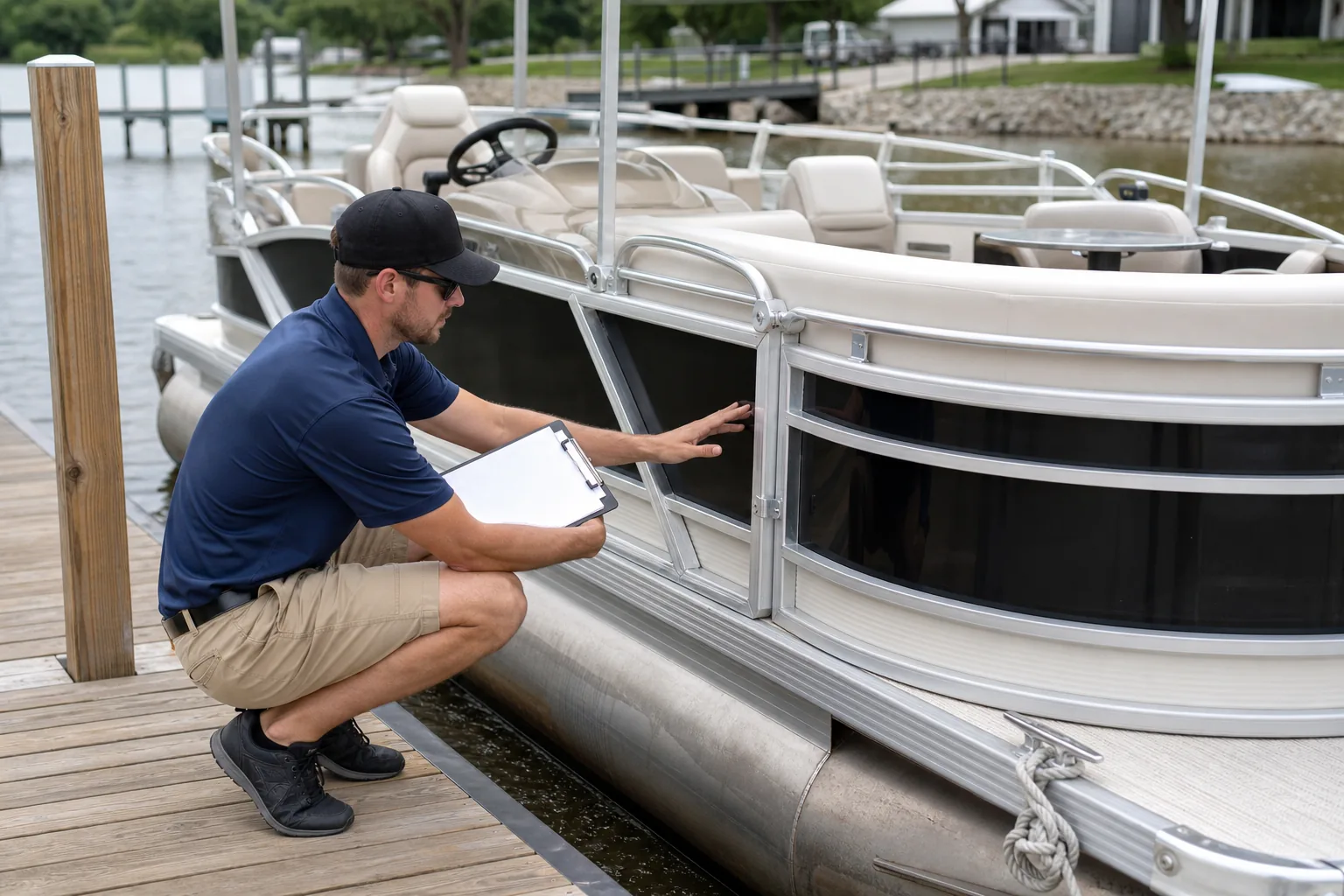
Post-trip care observes and resets the boat after use. Planned maintenance completes manual- or condition-based service work. Mixing the two can leave a serious issue recorded as “cleaned” without a technical decision.
| Work layer | Typical record | Owner | Close-out evidence |
|---|---|---|---|
| Post-trip reset | Exposure, visible condition, washdown and loose-item status | Operating crew | Boat ID, date, exceptions and handoff |
| Opening readiness | Current status and approved pre-operation checks | Assigned operator | Ready, restricted or held status |
| Planned service | Manual-, usage- or condition-based work | Qualified service owner | Work order and service evidence |
| Seasonal or storage review | Hull, systems, equipment and open repairs | Fleet manager or qualified provider | Storage or return-to-service approval |
| Recurring-issue review | Repeated observations across boats | Fleet and procurement owners | Process, training or configuration action |
The exact fields can differ by operation, but the same vessel identity should follow the boat from trip record to service record.
Create a careful saltwater return routine
North River Boats’ aluminum boat care guidance recommends a freshwater rinse after saltwater use. That is another manufacturer’s guidance, not a maintenance specification for a Kinocean boat. Confirm the cleaning method and approved products against the exact finish, engine installation and applicable owner’s manuals.
Build the return routine around these decisions:
- Record the boat, trip, operating water and reported concerns.
- Secure the boat in the approved washdown or service location.
- Follow hull, deck and equipment cleaning instructions for the selected configuration.
- Observe accessible areas for damage, residue, loose hardware, standing water or another change that needs review.
- Keep engine and equipment procedures separate and follow their specific manuals.
- Assign each exception to a responsible person and change the vessel status when required.
- Close the record only when the authorized person confirms the next action.
Use the flushing procedure specified for the installed engine and its current manual; procedures can differ between engines and installations.
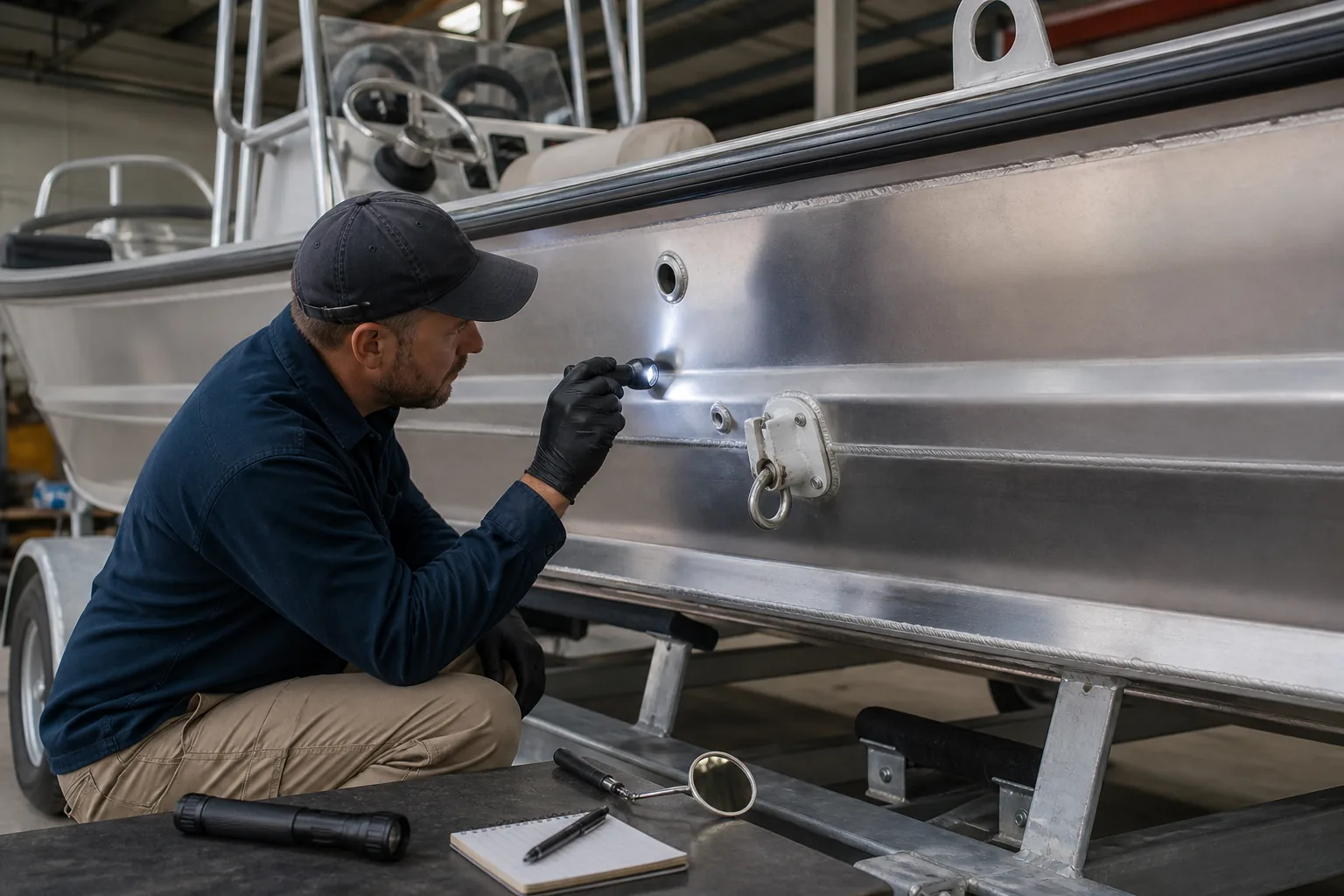
Organize the planned maintenance record by system
Maritime New Zealand’s small fishing vessel checklist uses practical maintenance categories such as hull and structure, engine, fuel, cooling, propulsion, steering, safety equipment, communications and evidence of completed work. Its legal scope does not automatically apply to every Kinocean buyer, but the category structure is useful for building a traceable record.
Use system categories that match the actual boat:
- hull, structure and accessible weld areas;
- deck, rails, gates, storage and drainage;
- steering, controls and helm equipment;
- engine, fuel and cooling systems under the applicable manuals;
- electrical, battery, lighting and installed electronics;
- trailer, lifting or storage equipment when included in the operating scope;
- livewell, washdown or other fishing systems when installed;
- locally required safety and communication equipment;
- documents, service evidence and open limitations.
Do not mark a system “not applicable” until the approved configuration and local installation scope are clear.
Record observations without diagnosing beyond competence
An operator can record an accessible condition without claiming the root cause. Use neutral evidence:
- location on the boat;
- visible condition or operator-reported symptom;
- date and operating context;
- photo or document reference where appropriate;
- immediate restriction or containment;
- person assigned to assess the issue;
- action taken and closure evidence.
Avoid unsupported labels such as “galvanic corrosion,” “structural crack” or “electrical fault” unless a qualified person has made that determination. The record should help the right person investigate, not replace that investigation.
Link pre-shipment evidence to the operating baseline
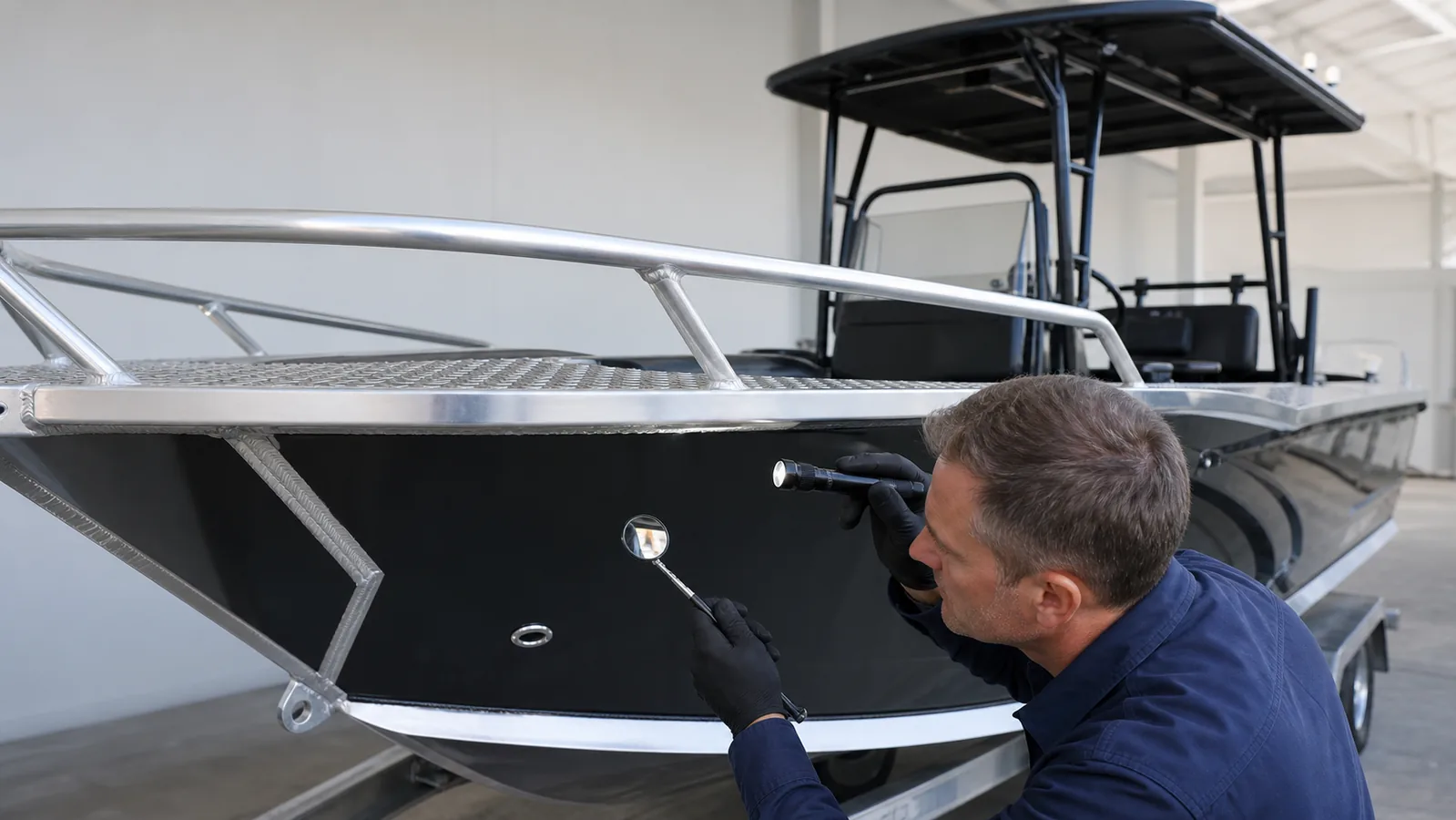
The first maintenance record should begin before regular service. Preserve the approved specification, option list, inspection evidence, shipping condition, local installation and commissioning notes for each unit.
Use the aluminum fishing boat pre-shipment inspection checklist to define the factory-stage evidence. At handover, connect that evidence to:
- vessel or unit identity;
- approved model and configuration revision;
- standard, optional, buyer-supplied and locally installed equipment;
- manuals and maintenance information received;
- shipping observations and locally completed work;
- baseline photos and open issues;
- authorized return-to-service decision.
This boundary prevents a local rigging issue, shipment observation or later operating change from being confused with the original factory scope.
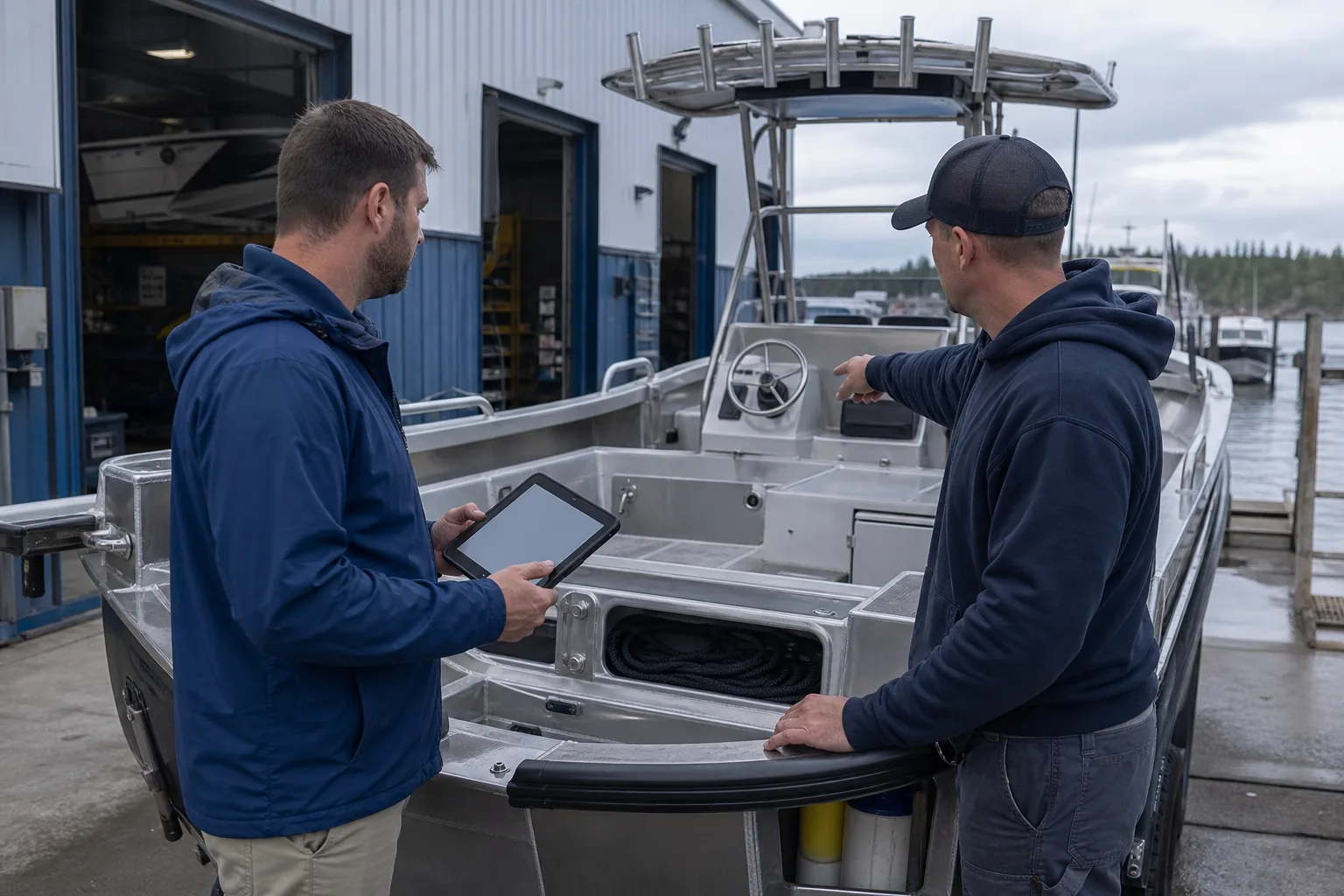
Use the fleet record to improve repeat orders
Dealers and fleet operators should review patterns, not only individual repairs. Compare observations across similar boats and operating roles.
| Review question | Evidence needed | Possible decision |
|---|---|---|
| Is one location difficult to clean or inspect? | Repeated notes from comparable boats | Review access or process before reorder |
| Are local installations creating inconsistent records? | Unit-level installation and service evidence | Standardize the local scope |
| Is an option rarely used but repeatedly serviced? | Use records and maintenance history | Keep, test or remove the option |
| Are crews reporting the same handoff problem? | Trip notes, photos and closure time | Improve training or configuration clarity |
| Can the supplier identify the exact revision? | Approved option list and unit record | Reduce ambiguity in repeat quotations |
An issue pattern does not automatically prove a design defect. Separate operating conditions, training, local installation, maintenance execution and configuration before reaching a conclusion.
Ask maintenance questions during supplier evaluation
The center-console supplier checklist helps buyers compare market fit, configuration and inspection evidence. Add these operating questions before approving the first order:
- Which hull, deck and equipment details require model-specific care instructions?
- Which manuals and maintenance information will accompany the quoted boat?
- What is factory-installed, optional, buyer-supplied or locally installed?
- How will the buyer identify the configuration and option revision for each unit?
- Which areas need practical access for inspection, cleaning and service?
- What pre-shipment and handover evidence will be provided?
- Which local rules, documents and commissioning steps remain the buyer’s responsibility?
- How will changes be recorded before a repeat order?
Do not assume that a material name or marketing description defines the complete maintenance method. Confirm the exact boat, finish, equipment and project documents.
Compare maintenance scope in fishing boat quotations
For a dealer batch or charter fleet, compare the same maintenance and handover questions across the shortlisted boats. Record answers against the exact model and option list so local installation and later operating work remain identifiable.
| Quotation item | Buyer question | Evidence to request |
|---|---|---|
| Hull finish and installed systems | Which care instructions apply to the quoted finish and equipment? | Applicable manuals and configuration details |
| Inspection and service access | How will the operator reach the components that require routine checks? | Layout or installation information for the selected configuration |
| Engine, electronics and fishing equipment | What is included, optional or installed locally? | Itemized scope and responsibility for installation and commissioning |
| Batch identification and support | How will parts, service questions and repeat orders be matched to the correct unit? | Unit identity, approved option revision and agreed support contact |
These are questions for quotation review, not promises that every item is supplied with every Kinocean boat. Confirm the agreed scope before approving the order.
Prepare a dealer or fleet inquiry
Copy this brief into the project-details field on the quote form. Include confirmed requirements and identify the points you want to compare.
- Company and buyer type: dealer, importer, charter operator or other business
- Destination and operating area: country, site and saltwater or mixed-water use
- Order plan: first-batch quantity, repeat-order needs and target purchasing date
- Preferred boat and equipment: model, engine direction and fishing-system priorities
- Use and storage: trip pattern, seasonal use and storage method
- Local installation: engine, electronics, trailer or other work to arrange locally
- Service priorities: inspection access, local technician and spare-parts questions
- Handover requirements: documents, unit records and inspection evidence to review
Compare the Kinocean aluminum fishing boat range, then request a dealer or fleet quotation with the model direction, quantity and destination.
Maintenance, cleaning, inspection and safety requirements vary by hull finish, engine, installed equipment, jurisdiction and operation. Follow current manufacturer and equipment manuals, applicable law, insurer requirements and qualified professional advice.
Share this article
Have a boat project in mind?
Share your market, quantity plan and boat use. Kinocean can help narrow the model direction before you request a detailed quote.