

Should a buyer purchase an aluminum boat directly from a China manufacturer or from a local supplier? There is no universal answer. The decision depends on configuration needs, order pattern, importing capability, local preparation, service expectations, timing and the evidence available for the selected boat.
This comparison is a decision framework rather than a price verdict. Use it after preparing an operating brief and reviewing the aluminum boat manufacturer evaluation guide. Final model specifications, options, documentation, production and commercial terms require project confirmation.
Understand the three procurement routes
Direct China manufacturer
The buyer communicates and contracts with a manufacturer or its export entity. The route may provide closer access to drawings, configuration decisions, production information and repeat supply. The buyer usually takes a larger role in specification approval, inspection, freight, import, local equipment, commissioning and service coordination.
Local supplier or dealer
The buyer purchases through a business in or near the destination market. That supplier may hold inventory, select models for local demand, arrange local equipment, support registration, commission the boat and provide a nearby service contact. Configuration may be limited to the supplier’s stocked or approved range, and the buyer may have less direct access to factory engineering.
Hybrid manufacturer and local support
The boat is configured or supplied through the manufacturer while a local dealer, marine workshop, engine dealer or project partner handles defined destination tasks. This route can preserve factory-level specification control while giving the buyer a local service path, but only when responsibilities are written clearly.
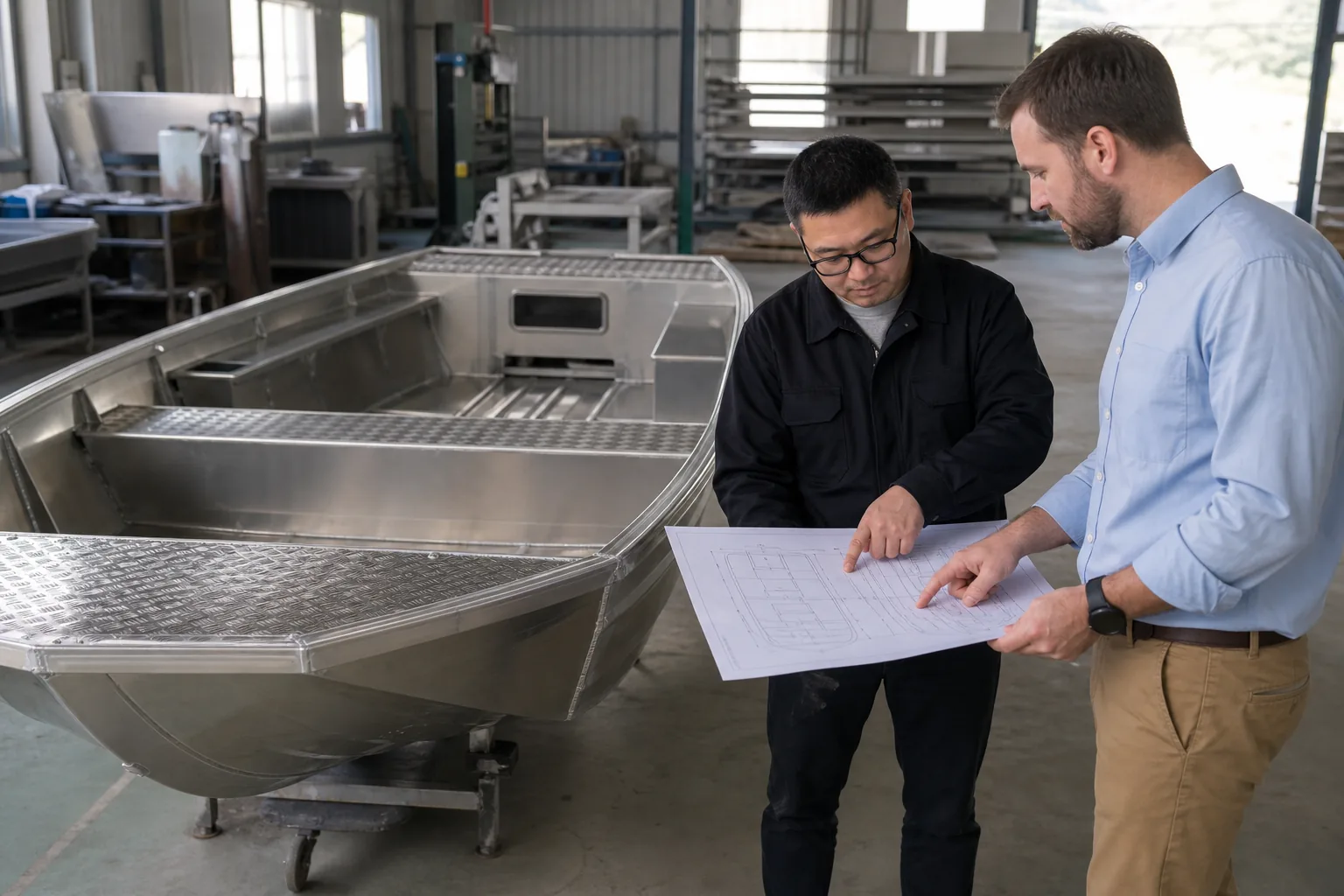
Direct manufacturer vs local supplier comparison
The table describes common route differences, not fixed promises. Individual manufacturers and local suppliers vary. A buyer should replace assumptions with written scope for the actual seller, model and destination.
When direct manufacturer sourcing can fit
Direct sourcing can be practical for a dealer developing a product range, a tourism operator planning several configured boats, an OEM partner requiring brand and layout control, or a technical buyer able to manage importing and local preparation. It can also help when the buyer wants direct clarification of drawings, materials, equipment and production changes.
The route requires active project ownership. The buyer should be ready to approve a controlled specification, clarify destination documents, arrange inspection, understand packing and freight, and identify qualified local support. Communication across time zones and languages should be tested early through a structured request rather than treated as an afterthought.
Kinocean presents aluminum boat categories and project support for overseas buyers. Review the company and group context, examine available evidence on Proven Quality, and request the documents and commercial terms that apply to the chosen model.
When a local supplier can fit
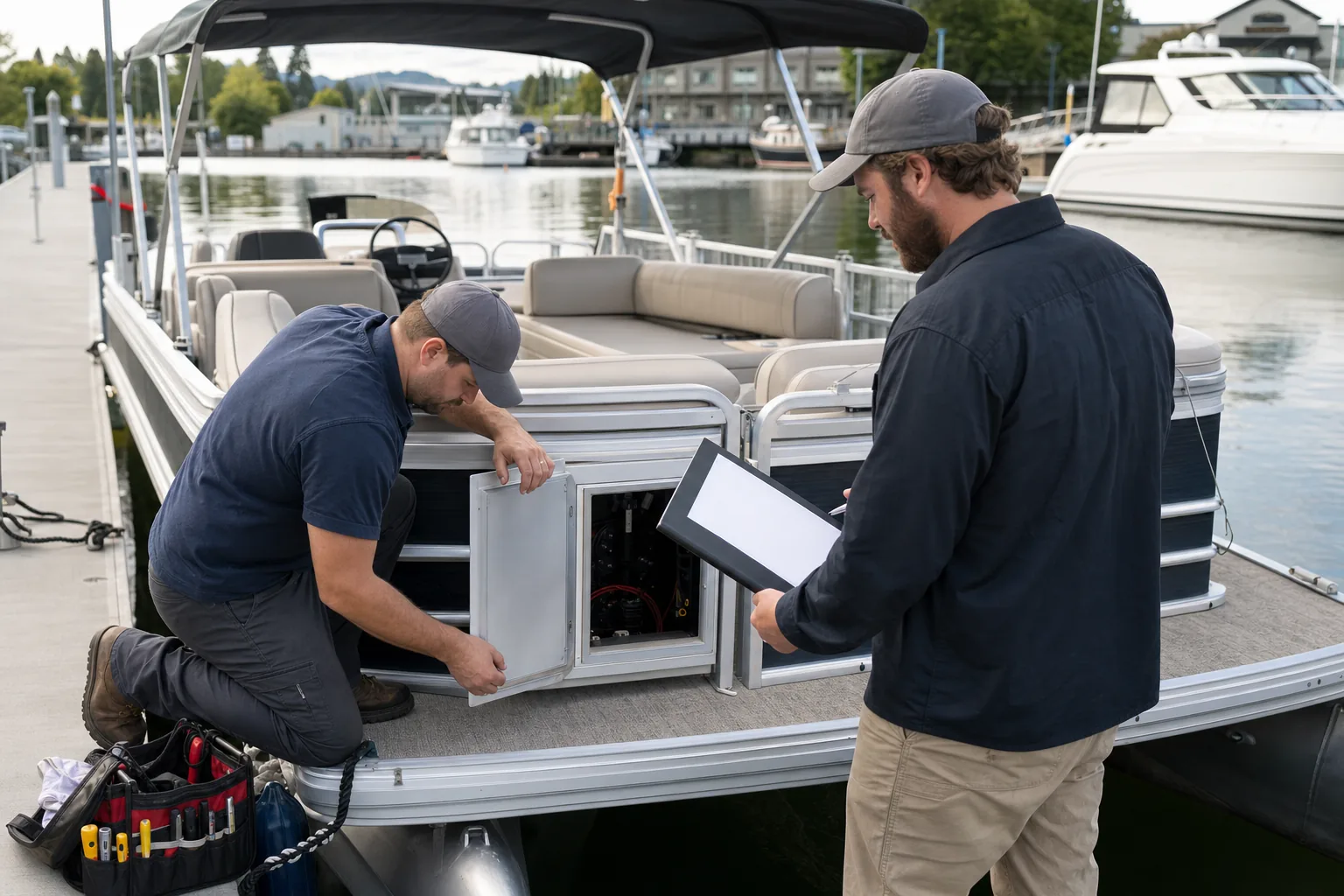
A local route can be practical when the buyer needs a boat already in stock, wants a familiar local contract, relies on registration or financing assistance, or needs nearby commissioning and service. It may reduce the number of separate companies the buyer must coordinate. A local supplier may also understand common water, equipment, towing and operating expectations in that market.
Convenience does not remove the need for technical review. Confirm who manufactured the boat, which model and revision are offered, how options affect documents, what condition the boat will be delivered in, and who supports the hull, engine, electronics and trailer. Ask whether replacement parts and technical information come from local stock or from the original manufacturer.
A local quotation may include costs that do not appear in a factory quotation, such as freight, import, storage, preparation, engine installation, local equipment and handover. Those services have value and should be compared transparently rather than hidden inside a headline price difference.
How a hybrid route can reduce gaps
A hybrid project assigns factory and destination roles intentionally. For example, the manufacturer may control the hull, layout, production inspection, packing and core documents. A local engine dealer may specify and commission propulsion. A marine workshop may install destination electronics and complete local checks. A dealer may manage customer communication and routine parts.
The written responsibility matrix should identify the contract party, technical approver, importer, document reviewer, installer, commissioning party, warranty contact and parts path. It should also explain how evidence moves between them. Without this matrix, a hybrid route can create a gap in which each party believes another is responsible.
Businesses interested in repeat local representation can review the Kinocean dealer program. Territory, order expectations, training, support and commercial conditions should be confirmed directly for each market.
Compare total landed project cost
The correct comparison is not factory unit price versus local retail price. It is the total cost of achieving an accepted, usable boat at the required location. Build a worksheet that separates the following components:
- Boat, selected options and engineering or customization work.
- Engine, controls, rigging, fuel system and commissioning.
- Trailer, cradle, packing, container or other transport preparation.
- Inspection, testing, documentation and third-party services.
- Origin handling, freight, insurance and destination handling.
- Duties, taxes, customs support, storage and local transport.
- Local safety equipment, electronics, registration and preparation.
- Parts inventory, training, warranty administration and service access.
- Financing cost, schedule risk and internal project-management time.
Some items may not apply, and amounts vary by destination and project. Ask both sellers to state inclusions and exclusions. Commercial and tax advice should come from qualified providers for the destination.
Normalize two quotations before deciding
Place both offers against one approved requirements sheet. Confirm that hull version, dimensions, material, layout, engine and equipment are comparable. Align currency, Incoterm, packing, delivery point, documents, testing, preparation, warranty communication and spare parts. Note whether taxes and local work are included.
Then record unresolved technical and commercial questions. A lower figure with missing engine controls, inspection, packing or destination work may not remain lower when scopes are aligned. A higher local figure may contain services the buyer can perform internally. The purpose is not to favor one route; it is to expose the work and risk attached to each route.
A practical route-selection sequence
- Define the use case, operating water, load, configuration and destination.
- Decide which importing, inspection, installation and service tasks your team can manage.
- Request matched technical and commercial scopes from direct and local candidates.
- Check manufacturer identity, quality evidence and model-specific documents.
- Calculate total landed project cost and list responsibility gaps.
- Choose the route whose controls and support match the project, then approve the final drawing and scope.
The pontoon, fishing and jet boat planning charts can help a team prepare the first operating questions before requesting quotations.
Frequently asked questions
Is buying from a China aluminum boat manufacturer always less expensive?
No. Buyers should compare total landed project cost, including specification work, options, inspection, packing, freight, import costs, local preparation, engine or trailer scope, documentation and service responsibilities.
When can direct manufacturer sourcing be a practical route?
It may fit buyers who need deeper configuration, repeat supply, controlled drawings, private branding or a defined product program and who can manage importing, local preparation and service responsibilities.
When can a local supplier be a practical route?
It may fit buyers who value local inventory, local-language communication, commissioning, registration assistance, financing or nearby service and who accept the available model and configuration range.
Can a buyer combine factory supply with local support?
Yes. A hybrid route can combine manufacturer configuration with local sales or service support when warranty, spare parts, commissioning, customer communication and commercial responsibilities are clearly assigned.
What should be compared in two boat quotations?
Compare the same model scope, drawing revision, material, propulsion, equipment, testing, documents, packing, freight responsibility, local preparation, warranty path, spare parts and exclusions rather than comparing headline prices alone.
Share this article
Have a boat project in mind?
Share your market, quantity plan and boat use. Kinocean can help narrow the model direction before you request a detailed quote.